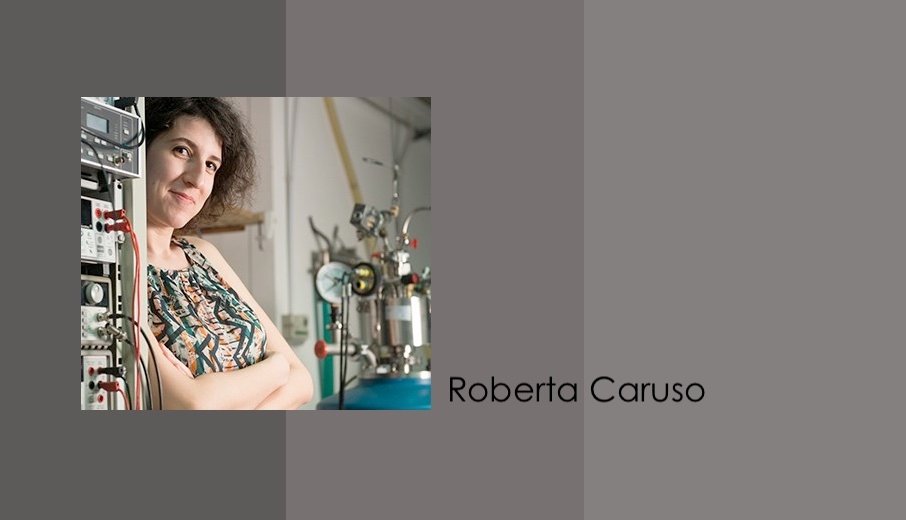
Author: Roberta Caruso
I have been involved with EPS Young Minds since its beginning in 2010. As I grew up, I became more and more involved, until former YM Chair Dr Antigone Marino – recognizing my drive as a young scientist – asked me to join the Action Committee. Later, I was elected Chair from 2018 to 2020, within the European Physical Society. During those years, I focused on building a solid and close-knit network of early career researchers throughout Europe, fostering personal and scientific relationships. My term ended just as the pandemic began, but I was able to witness first-hand the network’s tenacity in adapting to new challenges and continuing to support its members.
Being a member of the Action Committee of EPS Young Minds was a turning point I didn’t see coming. Being part of Young Minds gave me much more than organizational experience. It gave me motivation and drive at times when my academic career felt uncertain and not particularly successful. On several occasions, I found myself questioning my professional value, and it was this project that helped me stay grounded. Through my involvement, I also learned more about myself as a scientist. While I genuinely enjoy tinkering in the lab, I gradually realized that I am not the person who “builds” science from scratch. I am not the one with sudden, brilliant intuitions about physical processes or microscopic mechanisms, nor someone who can effortlessly design experiments to test new ideas. Instead, I am someone who loves information: collecting large amounts of it, connecting it, and using it in sometimes unexpected contexts. In other words, I am a very good learner—perhaps even an excellent one—but not a natural inventor.
Young Minds was the ideal environment for developing and valuing this way of thinking. It allowed me to engage with science broadly, exchange ideas across disciplines, and reflect on the wider implications of research. At the same time, it helped me build a strong international network of colleagues, mentors, and friends that continues to shape my career. The best part is that this network now extends far beyond the specific research field I specialized in, giving me perspectives and opportunities I would never have encountered otherwise.
Looking back now, I find that colleagues frequently remember me for my leadership in YM just as much—if not more—than for my scientific papers. At the time, I wasn’t sure if that was a good thing, but I see now that YM gave me a “label.” It distinguished me from the mass of other researchers. It proved I wasn’t just another physicist in a lab coat; I was someone who could lead, organize, and build.
Academia is tough, highly competitive, and there is no “easy mode” for success. But if you are willing to put in the work, Young Minds can genuinely help kickstart your career, beyond all those numbers that nowadays define career progression for academic researchers.
One final thought: don’t settle. If your current research environment doesn’t appreciate or support the service work you do for the scientific community through EPS, that is their loss. If they don’t see how this makes you a better, more connected scientist, maybe it is time to consider moving somewhere that does. You might not realize it now, but you really are building a global profile for yourself, even though maybe this isn’t the conventional way to do it. Don’t let a local mindset hold you back: if you think there’s value in building communities and networks, EPS Young Minds might be the right place for you.