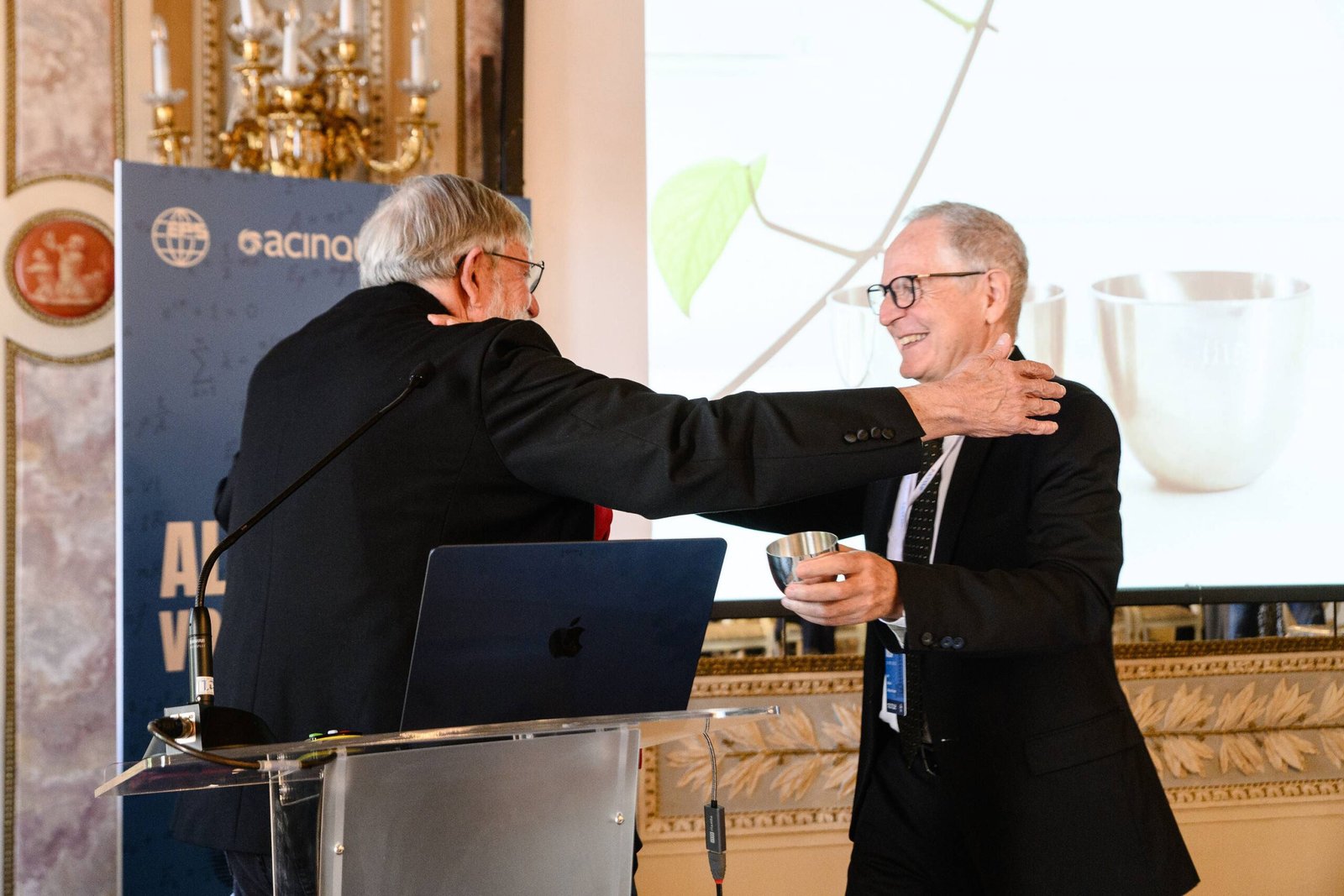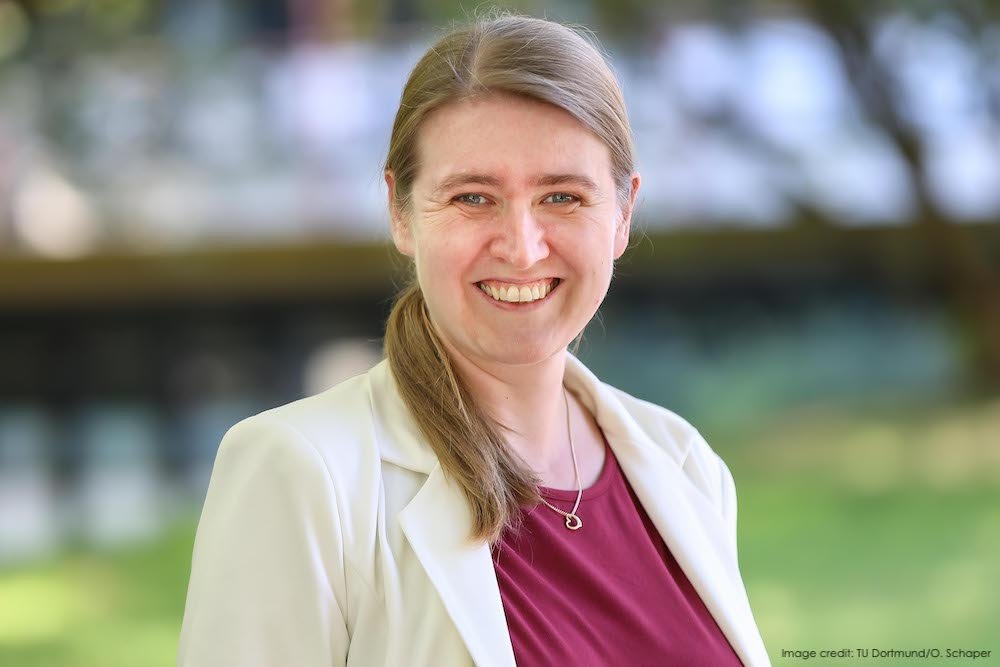
Professor Doris Reiter, researcher at the Faculty of Physics of the Technical University of Dortmund, Germany, was awarded the 2023 EPS Emmy Noether Distinction “for her groundbreaking contributions to theoretical photonics and quantum technology, transformative leadership, and innovative outreach, exemplified by the SUPER scheme and the QuanTour project.”
Petra Rudolf, chair of the EPS Equal Opportunities Committee, interviewed Prof. Reiter.
Why did you choose physics?
After school, I had a clear idea of what I didn’t want to study, which helped narrow things down. From the remaining options, physics stood out. I think I was looking for a real challenge, and physics certainly offered that. I was fascinated by Star Trek, environmental questions, and nuclear physics. Ending up in solid-state and quantum physics wasn’t part of a grand plan, but looking back, I couldn’t be happier with where I landed.
What is the most rewarding aspect of your career and what difficulties did you encounter?
Receiving the Emmy Noether Distinction is deeply rewarding, because it reflects my scientific achievements. At the same time, it also acknowledges the effort I have put into building networks and contributing to the scientific community. In my everyday work, the most satisfying moments are when something suddenly makes sense. When it just clicks, and you know you’ve understood something.
My career didn’t start out with a strong network or good mentoring. On top of that, I had close colleagues who actively worked against me. I still feel the effects today, as we are often judged by our previous achievements. I think, as a community, we greatly underestimate the impact of networking power. In addition, as a female physicist, I still feel that it takes more effort to win people over. And in a group of a dozen people, it only takes one to spread doubt. That alone can be enough to make things significantly harder.
What are your recommendations to encourage diversity?
This is a complex question, because it touches on so many different aspects. I support quotas, because I believe that without them, real change does not happen. Open conversations about diversity are also essential, not only to normalize the topic but to raise awareness that there is still a long way to go.
In addition, we need structural changes that go beyond just discussions about starting a family or securing permanent positions. Evaluation criteria and hiring practices also need to evolve, because that is where many of the hidden barriers remain.
What is your take on work-life-balance?
I always say that health should be a priority, both physical and mental. It saddens me to see so many, especially older colleagues, who are overworked and dealing with serious health problems. I think life is a marathon. Maybe it feels good to be ahead for the first 30 or 40 years, but I wonder whether that really balances out if the later years are cut short. Maybe I will see this differently when I am older, but right now I try to look after myself so that I can keep going in a sustainable way. I also try to pass that mindset on to my students.