On 26th June, the Real Observatorio Astronómico de Madrid was officially recognised as an EPS Historic Site of Physics, joining the European Physical Society’s programme honouring locations that have made outstanding contributions to the development of physics in Europe. The recognition celebrates more than two centuries of scientific achievement in astronomy, geodesy, physics and related disciplines, while highlighting the Observatory’s enduring role in the advancement of scientific knowledge.
The designation acknowledges not only the historical importance of the institution but also its continued contribution to modern research. Since its foundation in 1790, the Observatory has been home to generations of scientists, engineers and technical specialists whose work has helped shape both Spanish and European science. Throughout its history, the institution has successfully adapted to changing scientific priorities and technological developments while maintaining its commitment to excellence in research and public service.
Speaking during the ceremony, Rafael Bachiller, Director of the Observatory, emphasised that the distinction should be understood as a tribute to the many generations of professionals who have worked there over more than two centuries. He noted that their collective efforts have established the Observatory as an integral part of Spain’s and Europe’s scientific heritage.
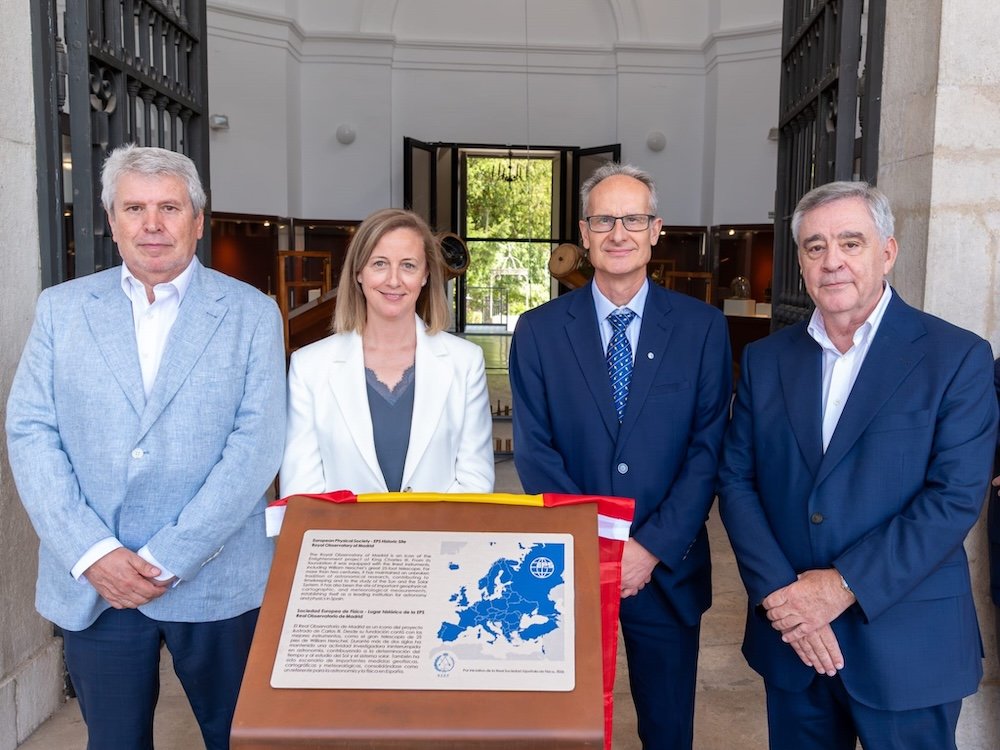
Left: Standing behind the commemorative plaque (from left to right): Luis Viña, President of the Spanish Royal Society of Physics (RSEF); Laura Barbas, Director General of the Spanish National Geographic Institute (IGN); José María de Teresa, President of the European Physical Society (EPS); and Rafael Bachiller, Director of the Real Observatorio Astronómico de Madrid.
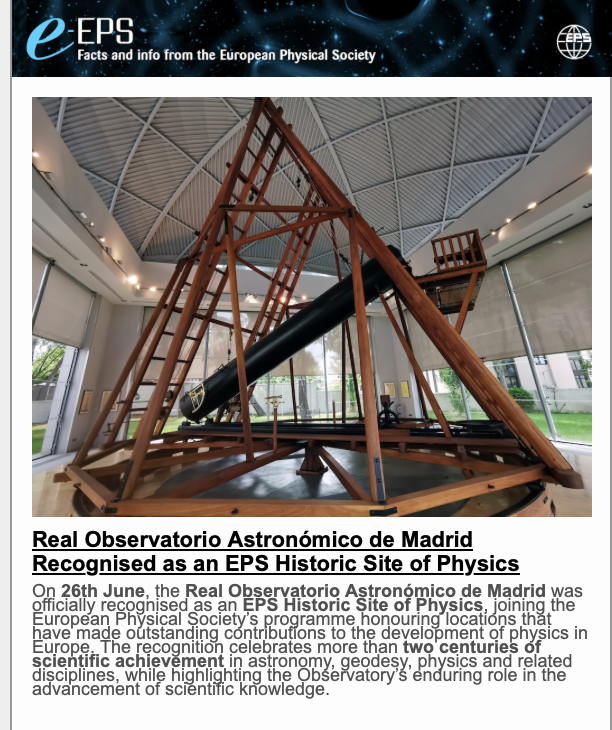
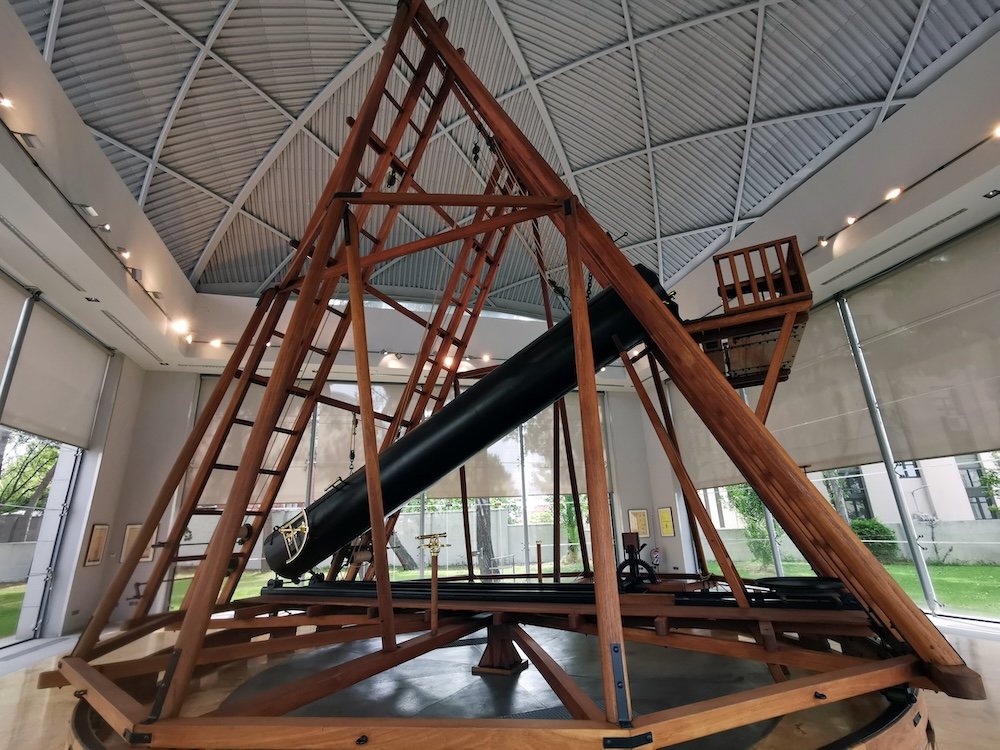
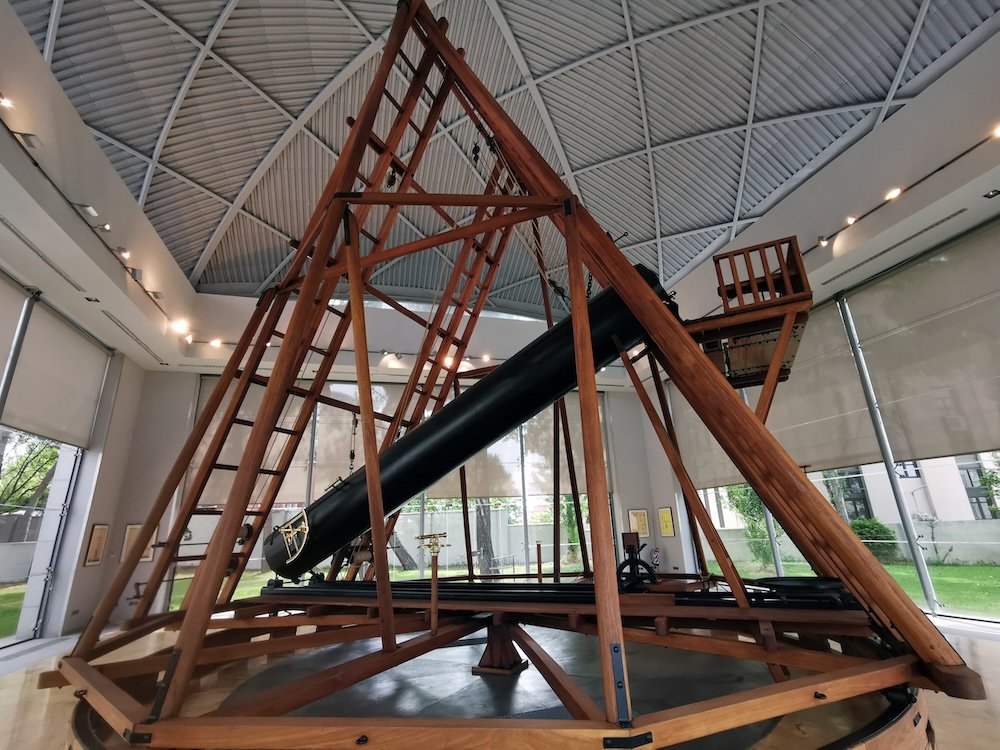
Middle: Faithful reconstruction of Herschel’s 25-foot (7.6 m) reflecting telescope, which can be seen by visitors at the Real Observatorio Astronómico de Madrid.
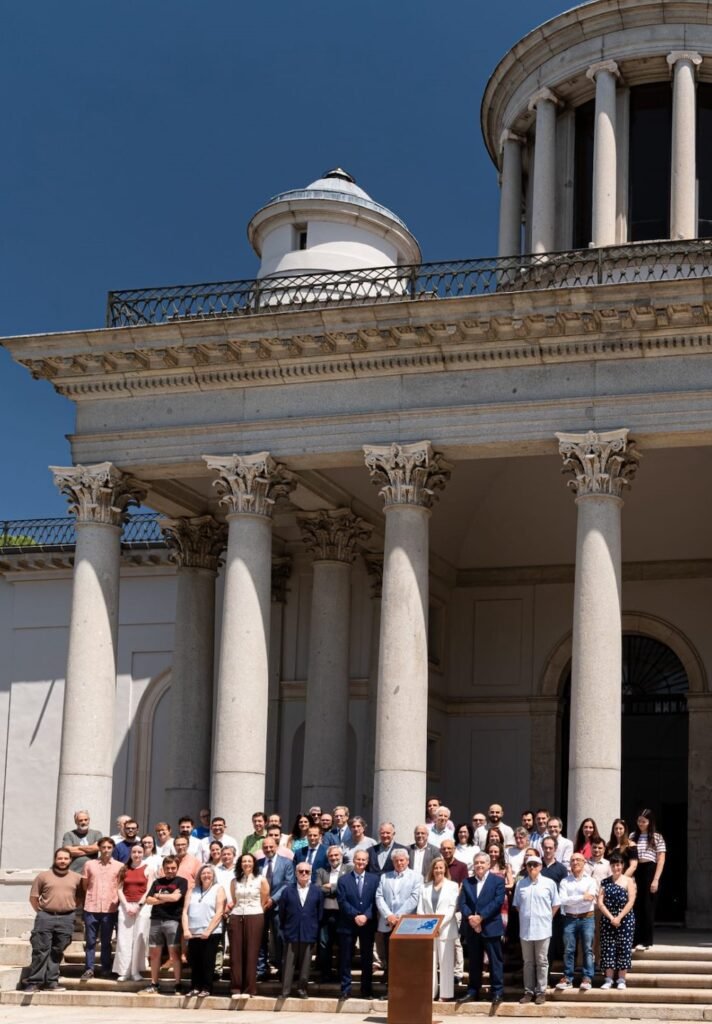
Right: Observatory staff and other participants gathered in front of the Villanueva Building, the oldest and most prominent building on the campus of the Real Observatorio Astronómico de Madrid.
One of the Observatory’s greatest historical treasures is its 25-foot Herschel reflecting telescope. Conceived at the height of the Enlightenment and inspired by the revolutionary designs of William Herschel, it was among the largest and most advanced telescopes in the world at the beginning of the nineteenth century—widely regarded as the second-largest modern reflecting telescope of its time. It symbolised Spain’s determination to participate in the forefront of European astronomical research. Although the original instrument no longer survives, a faithful reconstruction based on the original plans now enables visitors to appreciate the scale and technological sophistication of this remarkable achievement.
The Observatory’s history has not been without challenges. It has endured periods of war, political upheaval and profound technological transformation, yet it has consistently preserved its scientific mission. In recent decades, increasing light pollution over Madrid has made traditional optical astronomy increasingly difficult, prompting a strategic transition towards radio astronomy. Today, the Observatory forms, together with the Yebes Observatory, a unified scientific facility within the Spanish National Geographic Institute (Instituto Geográfico Nacional, IGN). Researchers operate major radio telescopes located at Yebes and remotely control additional facilities, including the IRAM 30-m telescope at Pico Veleta. The institution also participates in leading European research infrastructures such as the NOEMA interferometer in the French Alps and the ALMA observatory in Chile’s Atacama Desert. Alongside astronomy, the Observatory maintains internationally recognised activities in volcanology and seismology.
The ceremony was presided over by Laura Barbas, Director General of the Spanish National Geographic Institute, who reaffirmed the Institute’s long-standing commitment to the Observatory. Since 1904, the IGN has been responsible for its preservation, scientific development and continued projection as a centre of research and innovation.
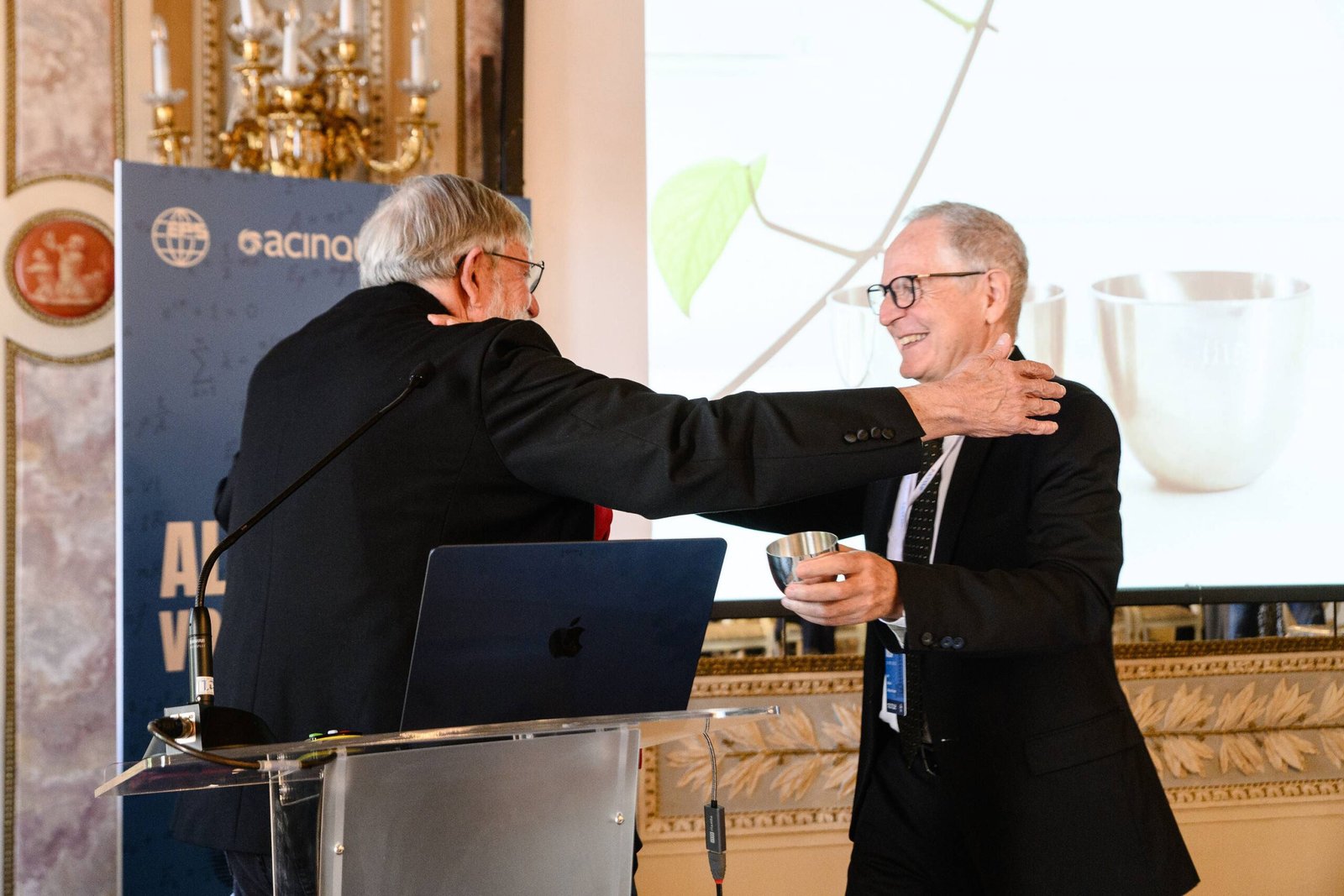
During the event, Luis Viña, President of the Spanish Royal Society of Physics, reviewed the Observatory’s remarkable scientific history and placed the new designation within the broader context of Spain’s recognised scientific heritage. Before this recognition, only three Spanish sites had received the EPS Historic Site distinction: Observatori Fabra in Barcelona, recognised for its historic contributions to astronomy, meteorology and geophysics; the Residencia de Estudiantes in Madrid, acknowledged for its unique role as an intellectual centre visited by distinguished scientists including Albert Einstein and Marie Curie; and the Bergara Laboratory, where tungsten was first isolated in 1783. Addressing the audience, José María de Teresa, President of the European Physical Society, noted that the Society has now designated 80 EPS Historic Sites across 26 countries, recognising locations of outstanding importance in the history of physics. Nominations for the distinction are evaluated by the EPS Historic Sites Committee, chaired by Professor Karl Grandin, Director of the Centre for the History of Science at the Royal Swedish Academy of Sciences, who is also responsible for the presentation of the Nobel Prize medals and diplomas during the Nobel Prize Award Ceremony. By marking these places with commemorative plaques, the programme aims to increase public awareness of the historical foundations of contemporary science and to safeguard this shared European legacy for future generations.
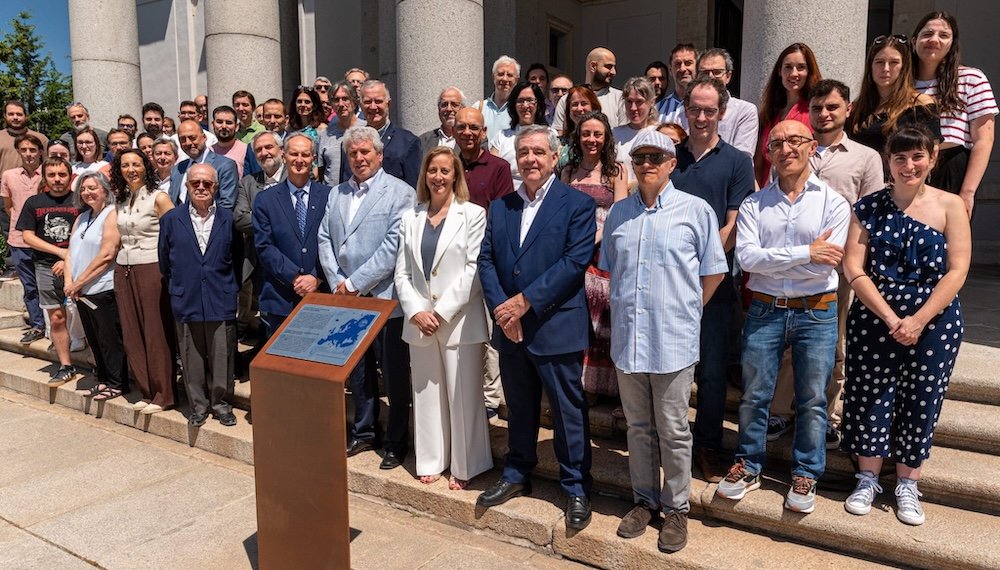
Left: Group photograph of Observatory staff, dignitaries and invited guests beside the commemorative plaque in front of the historic Villanueva Building.
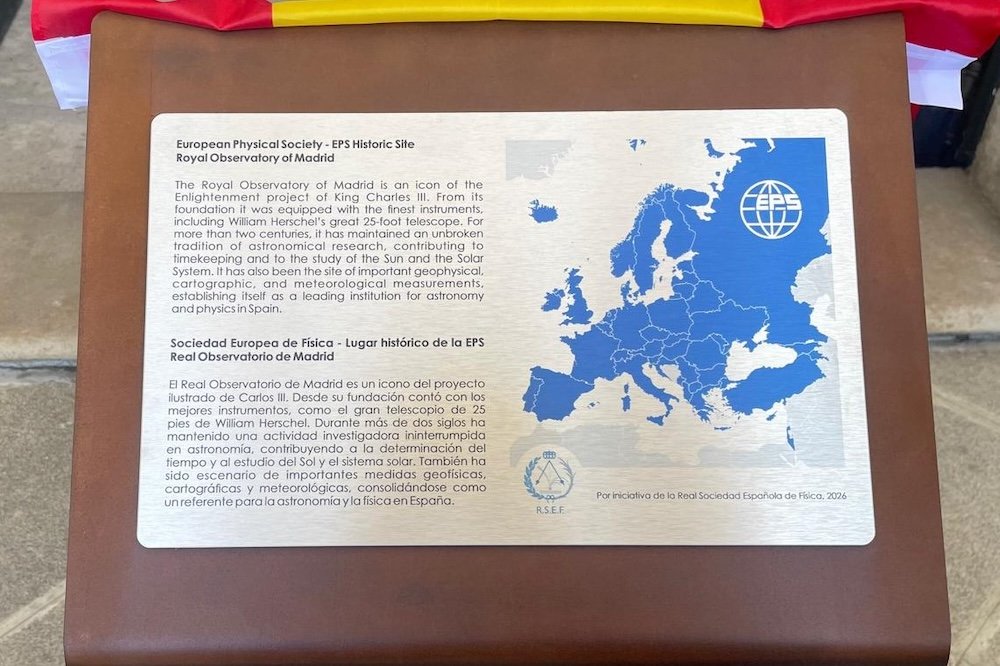
Right: The commemorative plaque, unveiled during the designation ceremony, marking the designation of the Real Observatorio Astronómico de Madrid as an EPS Historic Site.
Following the speeches, the commemorative plaque was officially unveiled to be installed in a prominent location within the Observatory. Participants were then invited to tour the historic facilities, guided by Director Rafael Bachiller. The visit illustrated the remarkable continuity of scientific endeavour at the site, where visitors can appreciate both the historic astronomical instruments that served earlier generations of researchers and the sophisticated technologies employed by scientists today.
The recognition further strengthens the international standing of the Real Observatorio Astronómico de Madrid. It complements other important distinctions already held by the institution. Its iconic Villanueva Building was designated a Bien de Interés Cultural (Cultural Heritage Site) in the category of Monument by Royal Decree 764/1995 of 5 May 1995. Since 25 July 2021, the Real Observatory has also formed part of the UNESCO World Heritage property “Paseo del Prado and Buen Retiro, a Landscape of Arts and Sciences”, widely known as the Landscape of Light. Together, these recognitions underline the Observatory’s exceptional scientific, historical and cultural significance, and reaffirm its place among Europe’s most important landmarks in the history of astronomy and physics.