

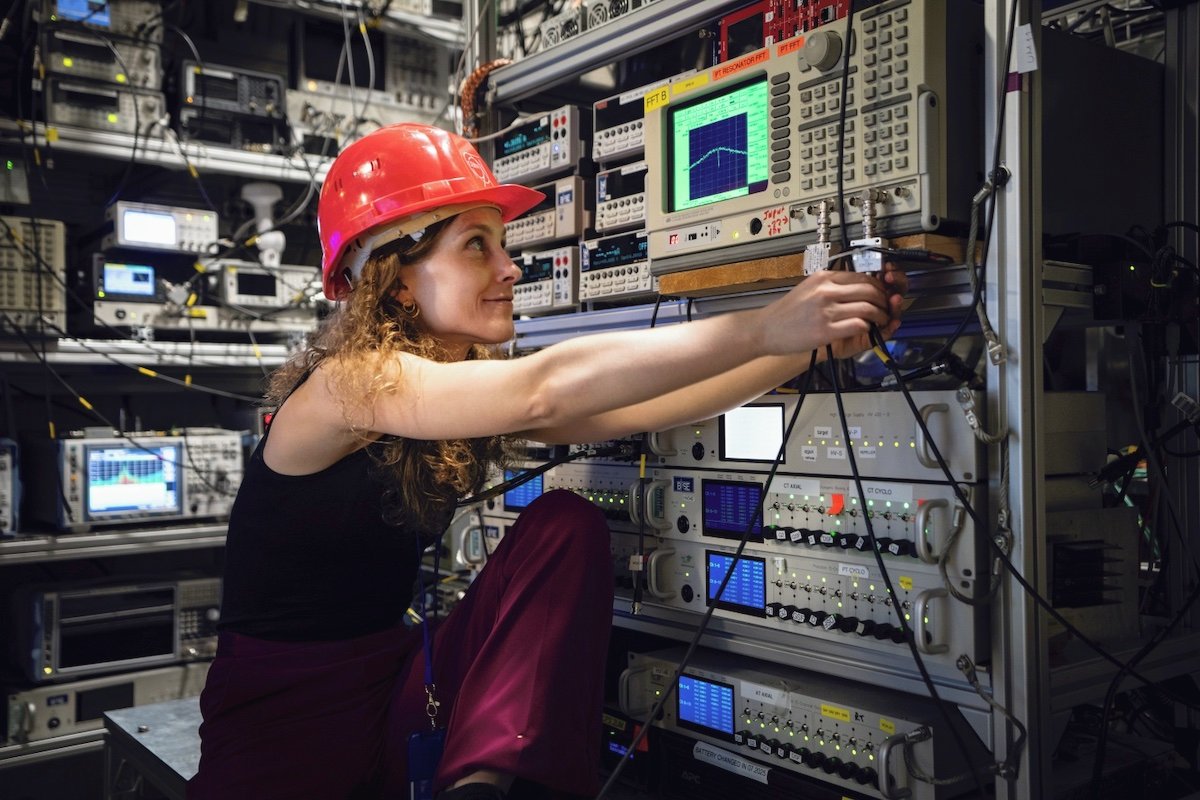
Demonstration of first antimatter quantum bit paves the way for substantially improved tests of nature’s fundamental symmetries Geneva, 23th July 2025. In a breakthrough for antimatter research, the BASE collaboration at CERN has kept an antiproton – the antimatter counterpart of a proton – oscillating smoothly between two different quantum states for almost a minute while trapped. The achievement, reported in a paper published today in the journal Nature, marks the first demonstration of an antimatter quantum bit, or qubit, and paves the way for substantially improved comparisons between the behaviour of matter and antimatter. Particles such as the antiproton, which has the same mass but opposite electrical charge to a proton, behave like miniature bar magnets that can “point” in one of two directions depending on their underlying quantum mechanical spin. Measuring the way these so-called magnetic moments flip, using a technique called coherent quantum transition spectroscopy, is a powerful tool in quantum sensing and information processing. It also enables high-precision tests of the fundamental laws of nature, including charge-parity-time symmetry. This symmetry rules that matter and antimatter behave identically, which is at odds with the observation that matter vastly outweighs antimatter in the Universe. Particles have quantum characteristics that defy our common sense, such as the characteristic of interfering with themselves, as demonstrated in the double slit experiment. Interactions with the surrounding environment can quickly suppress these interference effects through a process known as quantum decoherence. Preserving coherence is essential for controlling and tracking the evolution of quantum systems, like the transitions between the spin states of a single antiproton. Although coherent quantum transitions have been observed before in large collections of particles and in trapped ions, they have never been seen for a single free nuclear magnetic moment – despite the latter featuring prominently in physics textbooks. The BASE collaboration has now achieved this at CERN’s antimatter factory. In some respects, the feat can be likened to pushing a child on a playground swing. With the right push, the swing arcs back and forth in a perfect rhythm. Now imagine that the swing is a single trapped antiproton oscillating between its spin “up” and “down” states in a smooth, controlled rhythm. The BASE collaboration has achieved this using a sophisticated system of electromagnetic traps to give an antiproton the right “push” at the right time. And since this swing has quantum properties, the antimatter spin-qubit can even point in different directions at the same time when unobserved. The BASE experiment studies antiprotons produced at CERN’s antimatter factory by storing them in electromagnetic Penning traps and feeding them one by one into a second multi-trap system to, among other things, measure and change their spin states. Using this set-up, the BASE collaboration has previously been able to show that the magnitudes of the magnetic moments of the proton and antiproton are identical within a just few parts-per-billion. Any slight difference in their magnitudes would break charge-parity-time symmetry and point to new physics beyond the Standard Model of particle physics. However, this previous result was based on an incoherent spectroscopy technique in which the quantum transitions were disturbed by magnetic field fluctuations and measurement interference. In a substantial upgrade of the experiment, these decoherence mechanisms were suppressed and eliminated, culminating in the first coherent spectroscopy of an antiproton spin. The BASE team has now accomplished this for a period – called spin coherence time – of 50 seconds. “This represents the first antimatter qubit and opens up the prospect of applying the entire set of coherent spectroscopy methods to single matter and antimatter systems in precision experiments,” explains BASE spokesperson Stefan Ulmer. “Most importantly, it will help BASE to perform antiproton moment measurements in future experiments with 10- to 100-fold improved precision.” While qubits are the basic building blocks of quantum computers, where they allow information to be stored not just in one of two states but via a potentially limitless superposition of those states, the antimatter qubit demonstrated by BASE is unlikely to have immediate applications outside fundamental physics. An even bigger leap in the precision of antiproton measurements is expected using BASE-STEP, which was designed to allow trapped antiparticles to be transported by road to magnetic environments that are “calmer” than the antimatter factory. “Once it is fully operational, our new offline precision Penning trap system, which will be supplied with antiprotons transported by BASE-STEP, could allow us to achieve spin coherence times maybe even ten times longer than in current experiments, which will be a game-changer for baryonic antimatter research,” says lead author of the paper Barbara Latacz. Image: Physicist Barbara Latacz working in the BASE experiment – credit: CERN
UPSaclay-STAR-φ Postdoctoral Programme – Call opened until 31 July !
The Graduate School of Physics at Université Paris-Saclay is launching a new postdoctoral fellowship programme: UPSaclay-STAR-φ, supported by the EU Marie Skłodowska-Curie COFUND programme, 2024 call. The programme will recruit up to 41 international postdoctoral researchers over two calls, for 24-month research projects in one of the 40 laboratories of the Graduate School, at the SOLEIL synchrotron, or at the French National Metrology Lab (LNE). Application deadline: July 31st, 2025Expected start of fellowships: Early 2026 (flexible up to October 2026) Applicants will propose their own research project aligned with the School’s wide-ranging fields—from fundamental to applied physics. Learn more and start preparing your application: http://www.cofund-physics.universite-paris-saclay.fr/ The UPSaclay-STARϕ programme has received funding from the European Union’s COFUND action, a part of the Marie Skłodowska-Curie Actions Program within the European Commission MSCA framework. UPSaclay-STARϕ Grant Agreement ID : 101216532 Co-funded by the European Union. Views and opinions expressed are however those of the author(s) only and do not necessarily reflect those of the European Union or MSCA. Neither the European Union nor the granting authority can be held responsible for them.
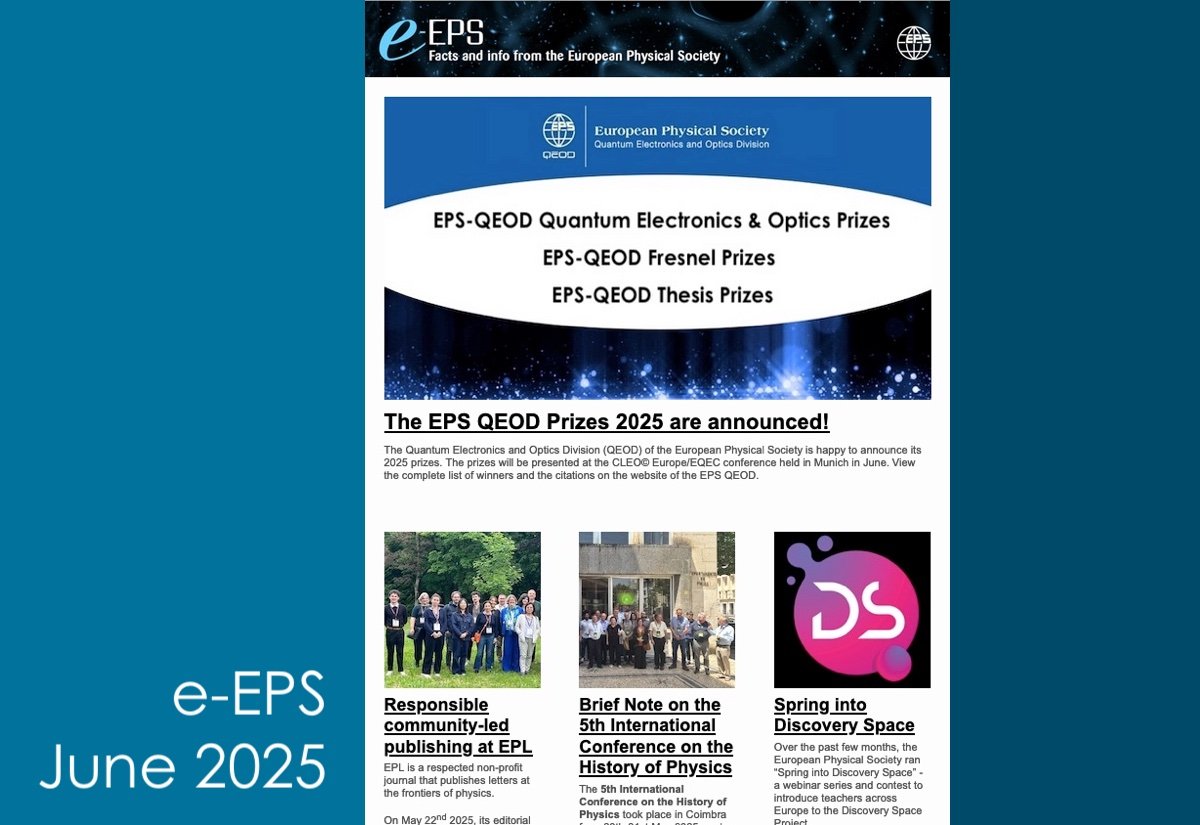
The latest issue of e-EPS is out!
Read the June 2025 issue of e-EPS here. e-EPS is the Society’s monthly newsletter.
Prestigious ERC grant for Professor Marco Durante
EU once again provides millions in funding for GSI research on tumor therapy – Investigating the FLASH effect 17th June 2025 – Press release of the European Research Council Professor Marco Durante, Head of the Biophysics Department at GSI Helmholtzzentrum für Schwerionenforschung and Professor at the Department of Physics at TU Darmstadt, Institute of Condensed Matter Physics, has been granted a prestigious European Union research funding award for established scientists: The European Research Council (ERC) has awarded him the renowned Advanced Grant. The biophysicist will be able to use the millions in funding to realize an ambitious research project to improve tumor therapy. As lead scientist and together with his team he will conduct research into even more effective treatments for cancer and investigate a promising radiotherapy method that uses ultra-short pulses of heavy ion beams with ultra-high dose rates. ERC Advanced Grants are awarded on the basis of the scientific excellence of the projects submitted and are aimed at established researchers from all disciplines whose highly innovative projects go considerably beyond the current state of the art and open up new areas of research. They are endowed with a maximum of 2.5 million euros each over a period of five years. Professor Marco Durante is an internationally recognized expert in the fields of radiation biology and medical physics, especially for therapy with heavy ions and radioprotection in space. He made important scientific progress in the field of biodosimetry of charged particles, optimization of particle therapy, and shielding of heavy ions in space. This award means a renewed recognition for the biophysicist and a seamless follow-up to a previous award: Professor Marco Durante had already received an “ERC Advanced Grant” for his research project “BARB” in 2020. The latest experiments in this field, which focused primarily on improving the precision of tumor therapy, were recently completed and are now being published in impactful scientific journals. The experience gained at BARB is also highly relevant for his new ERC-funded project entitled “Heavy Ion FLASH (HI-FLASH)”. In the HI-FLASH research project, Professor Marco Durante wants to use very heavy ions at ultra-high intensity against brain cancer. Patients are currently treated either with high-energy protons or carbon ions for many solid cancers, including brain malignancies. Nevertheless, the prognosis for glioblastoma (GBM) – an aggressive, fast-growing brain tumor in adults – is still dismal. This is where the new project comes in. Ions heavier than those previously used could be highly beneficial in treating of extremely resistant, hypoxic and fatal tumors such as glioblastoma. Unfortunately, the use of very heavy ions is constrained by their excessive normal tissue toxicity. Professor Durante’s approach is to enable very heavy ion therapy with acceptable toxicities by using the so-called FLASH effect. The focus on very short and high-intensity radiation pulses, where the treatment dose is delivered in sub-second timescales. The use of such particles with ultra-high dose rate (UHDR) may result in significantly sparing the normal tissues whilst maintaining tumor control. „Although the molecular mechanism is still unclear, the FLASH effect considerably broadens the therapeutic window and has already proven to be very promising in radiotherapy. While my group at GSI/FAIR has pioneered the first demonstration of the FLASH effect with high-energy carbon ions, UHDR use of even heavier ions, 20Ne, could be very effective for very resistant tumor”, explains Marco Durante. This is exactly what HI-FLASH will be investigating over the next five years in order to exploit the full potential for the best possible patient care. The new research project will compare toxicity and tumor control with neon ions at conventional and ultra-high dose rates and, for comparison, with high-energy protons, which are poorly effective in treating GBM but are known to spare normal brain at UHDR. The GSI accelerators on the campus in Darmstadt are perfectly suitable for this pioneering research. GSI/FAIR is the only facility world-wide where the FLASH effect can be explored with ions heavier than carbon. The GSI synchrotron can accelerate ions of all naturally occurring chemical elements to high energies and intensities, and the future FAIR accelerator center will significantly expand these possibilities. “If successful, HI-FLASH will pave the way for the use of heavy ions in cancer treatment, improving outcomes for patients with highly resistant and lethal tumors”, explains Marco Durante. Professor Marco Durante said, “I would like to thank the European Research Council for giving me another great chance with their ERC Advanced Grant funding and enabling me to significantly advance our research in the field of tumor therapy with charged particles. I look forward to realizing HI-FLASH together with my team and the experts of the GSI Biophysics and Accelerator departments. The next five years offer an extraordinary opportunity to transfer basic research into concrete medical progress.” Professor Thomas Nilsson, the Scientific Managing Director of GSI and FAIR, emphasized, “I am extremely pleased for Marco Durante and the recognition of his scientific work with this high-profile grant. Such successes also underline the excellent research quality at GSI/FAIR and demonstrate the unique opportunities and research perspectives offered by our exceptional infrastructures. The ERC grants are a clear sign of how forward-looking our research activities are.” Professor Maria Leptin, President of the European Research Council, said, “I warmly congratulate you on this success. I am confident that this grant will help you to develop your research at the highest level and to generate exciting results.“ About Professor Marco Durante Professor Marco Durante has over 30 years’ experience in heavy-ion biophysics. He studied physics and got his PhD at the University Federico II in Italy. His post doc positions took him to the NASA Johnson Space Center in Texas and to the National Institute of Radiological Sciences in Japan. During his studies, he specialized in charged particle therapy, cosmic radiation, radiation cytogenetics and radiation biophysics. He has received numerous awards for his research, including the Galileo Galilei prize from the European Federation of Organizations for Medical Physics (EFOMP), the Warren Sinclair award of the US National Council of Radiation
The EPS QEOD Prizes 2025 are announced!
The Quantum Electronics and Optics Division (QEOD) of the European Physical Society is happy to announce its 2025 prizes. The prizes will be presented at the CLEO© Europe/EQEC conference held in Munich in June. View the complete list of winners and the citations on the website of the EPS QEOD. Cristina Benea-Chelmus wins the 2025 EPS Fresnel Prize Ileana-Cristina Benea-Chelmus, head of the Hybrid Photonics Lab in EPFL’s School of Engineering, has been selected to receive the 2025 Fresnel Prize for Applied Aspects from the European Physical Society for her contributions to terahertz and microwave photonics. Read the article on the website of EPFL STI.

The European particle physics community gears up in Venice to prepare the future of the field
Geneva, 16 June 2025. Scientists from all around the world will gather in Venice Lido, Italy, from 23 to 27 June to discuss the future direction of the particle physics field in the coming years, and to define the scientific goals to be achieved. The update of the European Strategy for Particle Physics (ESPP) is an open, inclusive and evidence-driven process that takes place every 5 to 7 years and takes into account the worldwide particle physics landscape and developments in related fields. Launched in March 2024, the 2026 ESPP update “aims to develop a visionary and concrete plan that greatly advances human knowledge in fundamental physics, in particular through the realisation of the next flagship project at CERN”. After receiving 263 submissions for the update in March 2025, the European Strategy Group and the Physics Preparatory Group have digested them all and are now ready to present and discuss them during a community-wide Open Symposium. As the particle physics community drafts the roadmap for the future of the field, it will continue to discuss a successor to the Large Hadron Collider. More than 50 national and national-laboratory submissions taking a position on this specific topic have been received. Identifying a successor to the LHC is essential to allow CERN to maintain its leading position in the particle physics field. When possible projects and the input received are discussed in Venice, a wide range of factors will be considered, from sustainability to cost and timeline, with the goal of drafting an ambitious roadmap that enables major steps forward in our understanding of the Universe. An online press briefing will be held on Friday, 27 June at 14:00 CEST, at the end of the symposium. Media representatives interested in attending the briefing should register by writing to the CERN press office at press@cern.chbefore 25 June. On-site participation in the symposium will not be possible, but a livestream will be available. The link can be obtained from the same e-mail address. Further information:
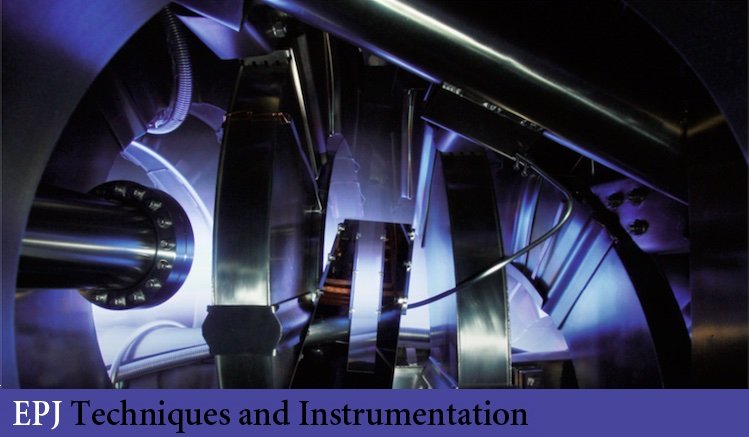
Call for Early Career Editors at EPJ Techniques & Instrumentation
Author: C. Damián Rodriguez The European Physical Journal (EPJ), the European Physical Society (EPS), and the EPS Young Minds Programme (YMs) have launched a collaborative initiative to refresh the Editorial Board of EPJ Techniques and Instrumentation (EPJ T&I). This effort opens the door for Early Career Researchers to become involved in the editorial processes of an international, peer-reviewed open access journal. Eligible candidates are either senior PhD students (in their third year or beyond) or postdoctoral scientists within six years of receiving their PhD, not holding a permanent position. EPJ T&I publishes a broad range of articles related to novel experimental and computational techniques and methodologies as well as instrumentation across the physical and applied sciences. Its content spans from original research and reviews to short commentary pieces that encourage discussion and innovation in scientific methods and tools. Its scope also considers practical tutorials or toolboxes addressing specific techniques or methodologies that could be of interest to a broad early career audience. The journal is indexed in all major citation databases, including Web of Science, and it is known for its focus on methodological advances that drive scientific discovery. The Associate Editors selected in this call will be entrusted with handling the peer-review process for manuscripts in their respective fields. They will work closely with several highly experienced Editors-in-Chief, helping evaluate referee reports and recommending publication decisions. The aim is to ensure scientific rigor, relevance, and high editorial standards across all published work. This role offers not only financial remuneration on a per-article basis but also a great opportunity for professional growth. Indeed, Associate Editors will receive highly specialized training tailored to their responsibilities and gain firsthand insight into the whole editorial cycle, from the paper submission to its definitive publication in the journal. Beyond technical skills, participants will enhance their writing, organizational, and interpersonal abilities, while expanding their academic network through close collaboration with both junior and senior researchers. This initiative, born from the collaboration of EPS Young Minds and EPJ, provides a unique opportunity for Early Career Researchers in physics to engage directly with scientific publishing, contribute to the scientific community, and build editorial experience in a supportive and international collaborative environment. The link to the official webpage of the call can be found here.
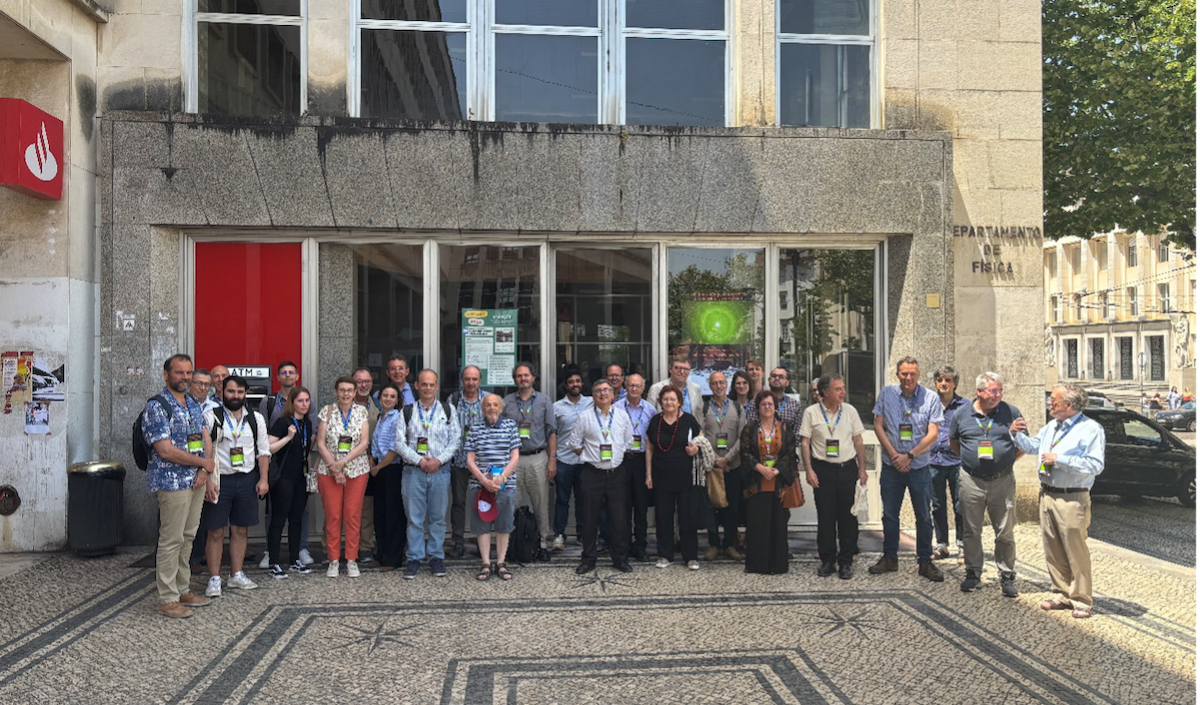
Brief Note on the 5th International Conference on the History of Physics
The 5th International Conference on the History of Physics took place in Coimbra from 29 to 31 May 2025, under the sponsorship of the Institute of Physics, the History of Physics Group of the European Physical Society, Springer, and the Portuguese Physical Society—represented locally by Professor José Paixão, who enthusiastically and promptly offered his support for hosting the event at his university. The central theme of the conference was “Physics of the Early Decades of the Twentieth Century,” in alignment with the United Nations General Assembly’s designation of 2025 as the International Year of Quantum Science and Technology (IYQ). This commemorates the centenary of two foundational developments in quantum mechanics: the matrix formulation by Werner Heisenberg, Max Born, and Pascual Jordan, and the wave-mechanics formulation by Erwin Schrödinger. This conference marked the fifth edition in an ongoing series aimed at bringing together physicists interested in the history of their discipline with professional historians of science. It is founded on the belief that these two communities—each with its own perspectives and methodologies—can greatly benefit from dialogue and collaboration. The history of physics has the power to inspire future generations: by shedding light on the lives and achievements of past scientists and deepening our understanding of enduring conceptual challenges, it serves both as a guide and a source of inspiration. The programme featured four plenary lectures. The opening talk was given by renowned historian of science Helge Kragh, titled “Antimatter: Its Early History, ca. 1930–1970.” The second lecture, by Dr Michael Jewess, was titled “From the Old Quantum Theory to Quantum Mechanics and Chemical Bonding in the First Half of the Twentieth Century.” Roberto Lalli presented “European Cooperation in Nuclear Fusion Research from the 1950s to the 1970s: The Mutual Impact of Plasma Physics and Controlled Thermonuclear Technology.” The final plenary, delivered by Carlos Fiolhais, was “A Brief History of Science at the University of Coimbra.” (Photo) Over two and a half days, several engaging oral presentations—and a few posters—offered insights into recent research on the history of physics. A book of abstracts was also produced and can be accessed here. A highlight of the conference was the award of the Peter Schuster History of Physics Prize to Dr Michael Eckert, who has devoted most of his career to the history of physics at the Research Institute of the Deutsches Museum. (Photo.) The award was given by Professor Heinz Krenn representing theAustrian Physical Society and Professor Malcolm Cooper representing the Institute of Physics, who read a tribute to the awardee written by Professor Dieter Hoffmann (in absentia). The social programme included a visit to the old University, namely the “Paço das Escolas”, built on the site of Coimbra’s ancient citadel (“Alcáçova”). Participants also visited the Baroque Library, which includes a former student prison in its basement, and the Old Physics Cabinet, an EPS-recognised historical site housing a rich collection of 18th- and 19th-century scientific instruments. The richness of the presentations and the warm, collegial atmosphere among participants were key to the success of this memorable event. Authors: Isabel Malaquias José António Paixão
Art and Science relation
Author: Dina Izadi By combining art and science, we can create powerful learning experiences that foster curiosity, understanding, and appreciation for the world around us. In the early 1920s, Niels Bohr was struggling to reimagine the structure of matter. Previous generations of physicists had thought the inner space of an atom looked like a miniature solar system with the atomic nucleus as the sun and the whirring electrons as planets in orbit. This was the classical model. But Bohr had spent time analyzing the radiation emitted by electrons, and he realized that science needed a new metaphor. The behavior of electrons seemed to defy every conventional explanation. As Bohr said, “When it comes to atoms, language can be used only as in poetry.” Ordinary words couldn’t capture the data. How can we change the world by combination art and science? Supporting methods of science learning that are connected to imagination and artistic process can change the world of science and industry in future. Implementing such methods in interactive learning, can extend and develop innovative practices in science education. What is ISAC Talk Community? Imagination in Science by Art in different Cultures (ISAC) Talk, is an international Community. It started with the sparks of our own interests in Ariaian Young Innovative Minds Institute (AYIMI) and ADIB Science and Technology Institute (ADIB) jointly, to excite others by fascinating topics hoping that enthusiasm comes through for all who are working in science and art but with different cultures. To inspiring all to fall in love with science needs to know the art which can be combined with it. To improve this community, it should be accessible to others and creating more documents that’s much better anyone can use. To keep going we should hear the story of students, teachers and faculties then making a clear service across the countries who are interested to join this community. This collaboration may lead us to remove constraints that push our students and teachers to be creative. ISAC Talk Community Structure Volunteers from all countries may gather in our different working groups and categories as a way to improve the main aim of ISAC Talk Community while taking or giving experience and sharing knowledge which help others to learn more.This community is divided in different working groups as follows: Artistic Working Group This working group form and foster new relationships with artists from all over the world and work with the existing Local Committees, to ensure good communication with ISAC Talk Community. The relationships with artists are in the following categories: Scientific Working Group This working group focus on the use of different tools can make things a lot easier in various phases of scientific work. • Searching and summarizing key findings from scientific studies and research,• Tool for searching, summarizing key findings from scientific papers and supporting the scientific writing process• For Courses and events on the scientific topics Affiliated Organizations in ISAC Talk Community Our Partners consist of all communities, unions, societies,… who join in different sections and categories by filling the ISAC Talk MOU. Volunteers from all countries may gather in our different working groups . ISAC Talk Executive Committee consist of volunteer members of affiliated organizations in their own countries who are willing to hold this event . The main members are as follows (it depends on affiliated members if any other members or changes are needed): – President – Vice president – Secretary – Treasurer – IT & Social media manager Each Executive Committee is responsible to collect the registration fee for providing prize, medals, certificates, and also awards to the selected projects in their own country. The Grants Every year, ISAC Talk Community awards grants to the applicants who develop the main aims in supporting interactions between this community and other societies and organizations in other countries. Successful applicants which have been selected by the Executive Committee, can be announced publicly. International ISAC Talk Festival and Rules We are going come together to hold various events in ISAC Talk Community which are useful in explaining scientific concepts by art especially when those concepts are complex. What are the Main Aims That’s a great question! Art can be incredibly useful in explaining scientific concepts, especially when those concepts are complex. Here are some items that are particularly helpful to answer: ” Why is art so effective in explaining science?” By combining art and science, we can create powerful learning experiences that foster curiosity, understanding, and appreciation for the world around us. This event is often used as practice for those are planning to do well in Art and Science but in a novelty method. This program is going to investigate: ISAC Talk Community holds festival in different categories. Ariaian Young Innovative Minds Institute (AYIMI) and ADIB Science and Technology Institute (ADIB) jointly in Iran, are the main organizers of this event. All who are interested are invited to join us and compete in identified groups (3-6 members) or individually in various offered categories every year. Any invited countries are represented by an Affiliation Organization (AO) which has accepted to cooperate with our institutes. The Aos are accepted as the volunteers to be the LOC of International ISAC Talk Festival too. Our partners in each country act as the LOC in this festival and collect the registration fee to award the participants in the event and as the grants which are devoted each year to support more students from different countries. Grants are awarded to those who are going to attend tournaments, conferences or events and their applications have been accepted by vote among all the partners. Categories Submission the projects and artwork in different patterns and categories are accepted. Categories both in science and art: All research articles in any field of science are accepted to be presented in our contest as in conference and the best articles will be given prizes. The articles will be published on our journal but as the rules the participants who have been awarded in IAC are free
Spring into Discovery Space
Author: Michael Gregory Over the past few months, the European Physical Society ran “Spring into Discovery Space” – a webinar series and contest to introduce teachers across Europe to the Discovery Space Project. Discovery Space is an EU-funded project to develop an Exploratory Learning Environment to facilitate students’ inquiry and problem-solving through learning scenarios featuring virtual and remote labs. Students are guided through differentiated learning pathways, customized by their input as they progress through learning scenarios covering a variety of topics. For more information on Discovery Space, please see: https://discoveryspace.eu/. The EPS congratulates the two 1st Prize winners: Combined, these two enthusiastic teachers used the Discovery Space platform for over 400 student-implementations of learning scenarios! In recognition of their efforts, and to support them to go further, they have been awarded a trip to Marathon, Greece, to attend the Discovery Space Summer School from July 6-11th. (For more information on the summer school, see: https://esia.ea.gr/discovery-space-summer-school/) The Spring into Discovery Space webinar series featured weekly webinars throughout April and May, hosted by EPS project officer Michael Gregory and guest hosts from Discovery Space Partners across Europe. NUCLIO (Núcleo Interativo de Astronomia e Inovação em Educação, Portugal) generated the most enthusiasm, with over 150 teachers registered for their webinars on the Mission to Mars and Earth’s Annual Journey Learning Scenarios. Recordings of the webinars are published in a playlist on the EPS YouTube channel: Spring Into Discovery Space Playlist: https://www.youtube.com/playlist?list=PLNQWWp2JS_aRW80n8EBpzFgrzG0T_6emF EPS will follow-up with another webinar series, “Fall into Discovery Space,” in September and October, culminating with an in-person workshop at EPS headquarters in Mulhouse, France, October 18-19th. For more information, check out the August issue of e-EPS, and check back on our Current Projects: https://eps.org/what-we-do/education/current-projects/ Discovery Space is funded by the European Union under grant agreement No 101086701. Views and opinions expressed are however those of the author(s) only and do not necessarily reflect those of the European Union or the European Education and Culture Executive Agency (EACEA). Neither the European Union nor EACEA can be held responsible for them.