

Deadline Extended to 30th October 2026 The board of the Nuclear Physics Division (NPD) of the European Physical Society (EPS) calls for nominations for the 2026 EPS Nuclear Physics Division Prize for Applied Nuclear Physics. This is a prize sponsored by the division, consisting of a diploma of the EPS and 3000 €, which will be awarded during the 2027 Applied Nuclear Physics conference in Bologna, 14-18 June 2027. Nominations should comprise: 1. A short citation (max. 50 words), describing succinctly the achievements of the nominee and the reasons for awarding the prize. The award citation will be based on the words provided. 2. A detailed statement of the nominee’s major scientific achievements (max. 2 pages) 3. The nominee’s CV (max. 1 page). 4. A maximum of two letters of support from renowned personalities of the field, underscoring the relevance of the scientific work of the nominee. Nominations should be sent to the Scientific Secretary Raquel Crespo and to the Chair Araceli Lopez-Martens of the NPD board by the deadline of 30th October 2026. Prize Rules 1. The Prize can be awarded to any physicist working within a European Institution. 2. The Prize will be awarded every three years and timed so that it can be presented at the division-supported Applied Nuclear Physics conference. 3. The Prize shall consist of a Diploma of the EPS and a total prize money of EUR 3000 (to be shared if more than one laureate). 4. The Prize shall be awarded to one or more researchers. 5. The Prize shall be awarded without restrictions of nationality, sex, race or religion. 6. The board of the EPS Nuclear Physics Division shall request nominations for the Prize from EPS members and members of the board will actively seek nominations from a broad cross-section of the scientific community. 7. Self-nominations for the award shall not be accepted. 8. Nominations shall be reviewed by the EPS nuclear physics division board. The criteria for the prize will be the quality and significance of the work as evidenced by refereed scientific publications and the impact thereof, and letters of support from renowned researchers in the field. 9. The final recommendation of the board and a report shall be submitted for ratification to the Executive Committee of the EPS
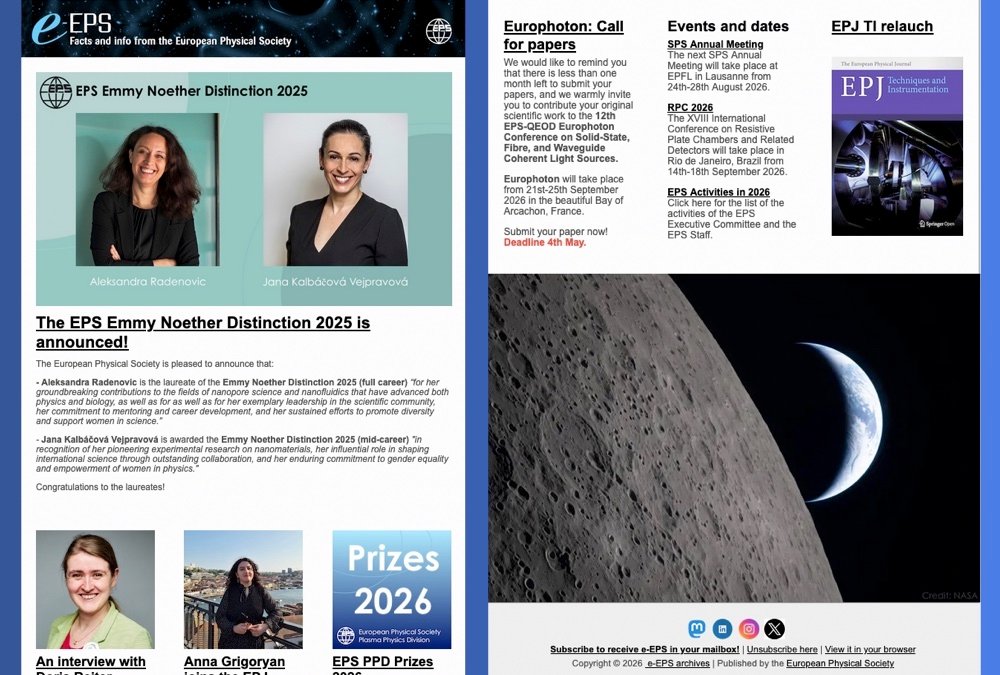
The April 2026 issue of e-EPS is out!
Read the latest issue of our online newsletter here!
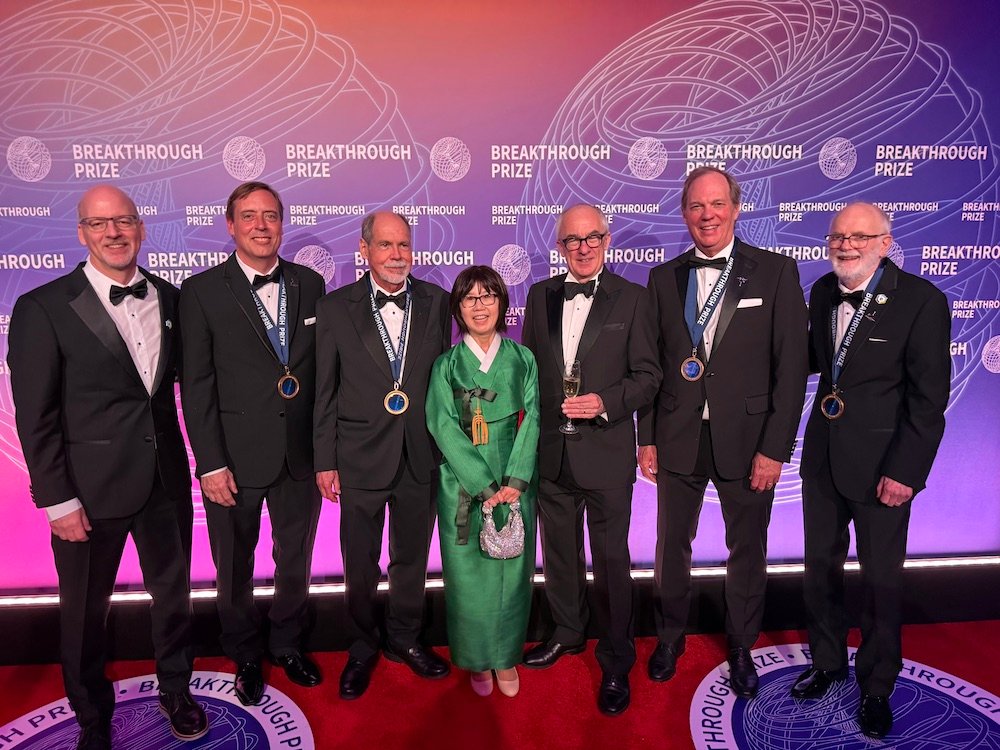
Muon g-2 Experiment Pioneers Win Breakthrough Prize in Fundamental Physics
Recognition honours experiments and scientific collaborations at three institutions that explored the subtle wobble of a subatomic particle GENEVA, UPTON, N.Y., and BATAVIA, Ill. – Joint press release. The Muon g-2 Collaborations at CERN — the European Organization for Nuclear Research — and two U.S. Department of Energy National Laboratories — Brookhaven National Laboratory and Fermi National Accelerator Laboratory (Fermilab) — are the recipients of this year’s Breakthrough Prize in Fundamental Physics. Over a period of more than 60 years, experiments at these three renowned research institutions pursued a quest to measure, as precisely as possible, the subtle wobble of the muon — a tiny subatomic particle that offered an opportunity to test physicists’ fundamental understanding of particles and forces. The Breakthrough Prize Foundation citation recognizes the awardees’ “multi-decade, groundbreaking contributions to the measurement of the muon’s anomalous magnetic moment, pushing the boundaries of experimental precision and igniting a new era in the quest for physics beyond the Standard Model.” The prizewinners are the living co-authors of the publications that reported the results from the measurement campaigns at CERN, Brookhaven, and Fermilab. The $3 million prize will be split among all living co-authors at all three institutions. Two pairs of scientists representing the experiments at Brookhaven and Fermilab will accept the prize on behalf of the group at a gala celebration at the Barker Hangar in Santa Monica, California, on Saturday, April 18, 2026. They are: William M. Morse of Brookhaven Lab and Bradley Lee Roberts of Boston University, who helped lead the “muon g-2” experiment at Brookhaven from construction in 1990 to the publication of final results in 2004; and Chris Polly of Fermilab and David Hertzog of the University of Washington, who helped lead a follow-up “Muon g-2” experiment at Fermilab from 2013 through publication of final results in 2025. The award also recognizes an earlier series of “g-2” experiments conducted at CERN from 1959 to 1979. Popularly known as the “Oscars® of Science,” the Breakthrough Prizes were created in 2012 by a group of Silicon Valley innovators to recognize the world’s top scientists working in the fundamental sciences — the disciplines that ask the biggest questions and find the deepest explanations. Additional prizes were awarded in a variety of categories, including the Life Sciences and Mathematics. Background: mystery of the muon The muon has been a bit of an enigma since its discovery in 1936. It shares certain characteristics with electrons, including its negative charge and a form of internal magnetism, dubbed “g,” but is 200 times heavier. Was it just a heavy cousin of the electron, or something else? Measuring its magnetism might point to clues. Early calculations suggested the value of g should be 2 for both electrons and muons. But experiments in the 1940s revealed that electrons have a tiny bit of extra magnetism. Physicists expressed this “anomalous magnetic moment” as “g-2,” to represent the amount that g differs from the calculated value of 2. Over time, physicists realized that the electron’s tiny deviation from 2 is caused by interactions with a sea of “virtual particles” popping in and out of existence. By measuring the g-factor of muons, physicists could see if these interactions were affecting muons, too. If they observed more deviation than expected, that discrepancy might point to a hole in their understanding of the virtual particles causing the magnetic disturbance — and possibly the existence of yet-to-be-discovered particles. Method: comparing measurements with predictions The experiments at all three institutions recognized by this prize were driven by this same basic principle: Measure the muon g-2 value with the highest precision possible and compare those measurements with the best predictions available at the time. They all used a similar experimental setup: sending a beam of muons into a magnetic ring and using sensitive detectors to measure the degree to which these tiny spinning particles began to wobble, or “precess,” away from perfect alignment as they sailed around the ring. Results: from CERN, Brookhaven Three separate experiments at CERN from 1959 to 1979, each with increasing precision, measured the muon’s g-factor as slightly higher than two, exactly as predicted by the theory-based calculations. This confirmed the predictions and firmly established the muon’s identity as a heavy cousin of the electron. Improved experimental techniques and expanded knowledge of particles and forces motivated new muon g-2 experiments. That’s when Bill Morse and Lee Roberts entered the scene. Together with Vernon Hughes of Yale University (deceased in 2003), they built and led the “E821 g-2” experiment at Brookhaven Lab. When the first Brookhaven muon g-2 results were published in 2001, it set off a worldwide spark of excitement. The findings revealed a tantalizingly larger-than-predicted anomaly, but not enough of a difference between experiment and theory to claim a discovery. Results published in 2002 improved the precision of Brookhaven’s measurement. The final result, published in 2004, deviated further from the prediction, but was still just a hint that muons might be affected by something unknown. The continuing mystery launched an effort among physicists to improve the precision of both the theoretical predictions and the experimental measurements. Fermilab: moving muons to Illinois In 2013, under the guidance of Morse, Roberts, David Hertzog, and Chris Polly — working with a large international team — Brookhaven Lab’s g-2 muon storage magnet embarked on an epic land-and-sea journey from Long Island, New York, to Fermilab outside of Chicago. There it was set up to repeat the experiment using Fermilab’s higher-intensity muon beam and new state-of-the-art technologies. In parallel, an international collaboration of theorists formed the Muon g-2 Theory Initiative to improve the theoretical calculation. In 2020, the Theory Initiative published an updated, more precise muon g-2 prediction based on a technique that uses input data from other experiments. The discrepancy between experiment and the prediction from that technique continued to grow in 2021 when Fermilab announced its first experimental result, confirming the Brookhaven result with a slightly improved precision. At the same time, a new theoretical prediction came out based on a new technique that heavily relies on computational power. This new predicted value
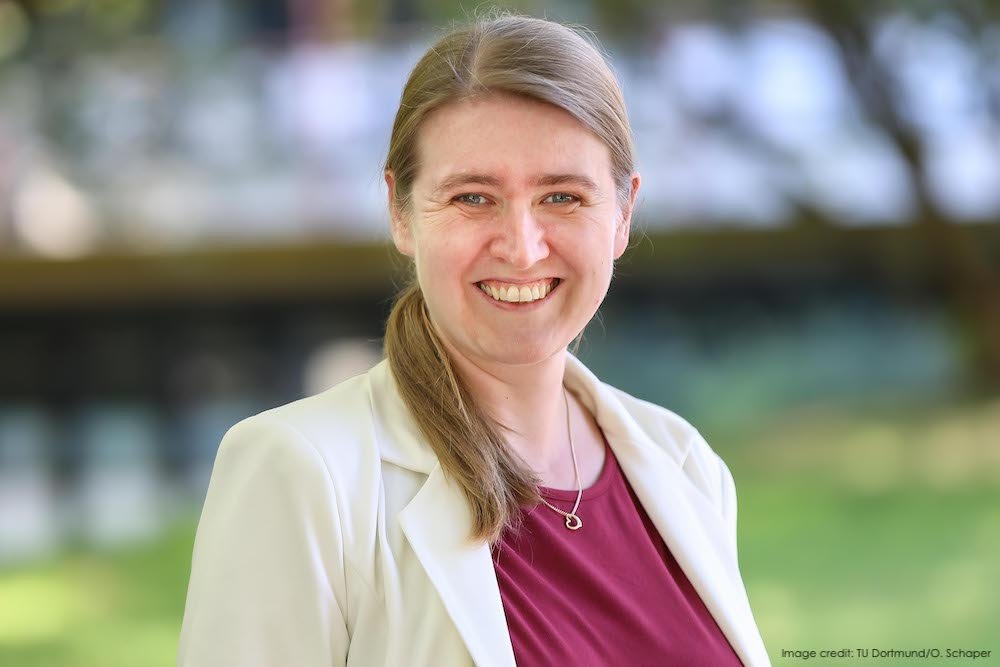
An interview with Doris Reiter
Professor Doris Reiter, researcher at the Faculty of Physics of the Technical University of Dortmund, Germany, was awarded the 2023 EPS Emmy Noether Distinction “for her groundbreaking contributions to theoretical photonics and quantum technology, transformative leadership, and innovative outreach, exemplified by the SUPER scheme and the QuanTour project.” Petra Rudolf, chair of the EPS Equal Opportunities Committee, interviewed Prof. Reiter. Why did you choose physics? After school, I had a clear idea of what I didn’t want to study, which helped narrow things down. From the remaining options, physics stood out. I think I was looking for a real challenge, and physics certainly offered that. I was fascinated by Star Trek, environmental questions, and nuclear physics. Ending up in solid-state and quantum physics wasn’t part of a grand plan, but looking back, I couldn’t be happier with where I landed. What is the most rewarding aspect of your career and what difficulties did you encounter? Receiving the Emmy Noether Distinction is deeply rewarding, because it reflects my scientific achievements. At the same time, it also acknowledges the effort I have put into building networks and contributing to the scientific community. In my everyday work, the most satisfying moments are when something suddenly makes sense. When it just clicks, and you know you’ve understood something. My career didn’t start out with a strong network or good mentoring. On top of that, I had close colleagues who actively worked against me. I still feel the effects today, as we are often judged by our previous achievements. I think, as a community, we greatly underestimate the impact of networking power. In addition, as a female physicist, I still feel that it takes more effort to win people over. And in a group of a dozen people, it only takes one to spread doubt. That alone can be enough to make things significantly harder. What are your recommendations to encourage diversity? This is a complex question, because it touches on so many different aspects. I support quotas, because I believe that without them, real change does not happen. Open conversations about diversity are also essential, not only to normalize the topic but to raise awareness that there is still a long way to go. In addition, we need structural changes that go beyond just discussions about starting a family or securing permanent positions. Evaluation criteria and hiring practices also need to evolve, because that is where many of the hidden barriers remain. What is your take on work-life-balance? I always say that health should be a priority, both physical and mental. It saddens me to see so many, especially older colleagues, who are overworked and dealing with serious health problems. I think life is a marathon. Maybe it feels good to be ahead for the first 30 or 40 years, but I wonder whether that really balances out if the later years are cut short. Maybe I will see this differently when I am older, but right now I try to look after myself so that I can keep going in a sustainable way. I also try to pass that mindset on to my students.
Call for nominations for the 2026 EPS Europhysics Prize
The EPS Europhysics Prize is given in recognition of a prominent and well-identifiable discovery, breakthrough, or contribution to condensed matter physics by one or more individuals in the area of condensed matter physics, which, in the opinion of the selection committee, represents scientific excellence. The award recognises research for which a significant portion of the work was carried out in Europe, and may be given for either pure or applied research at the discretion of the Society. Only complete nominations will be considered. Self-nominations are not possible. For a nomination to be complete, it must include: Nominations of female candidates are particularly welcomed; indeed, the selection committee reserves the right not to award the 2026 Europhysics Prize should no female candidates be proposed. Nominations may be made by email, by sending all materials in a single file, before May 15th, 2026, to the CMD Board Chair, eps.cmd.chair@gmail.com (Please cc erich.runge@tu-ilmenau.de). For more information about the prize, including previous recipients: https://eps.org/cmd/
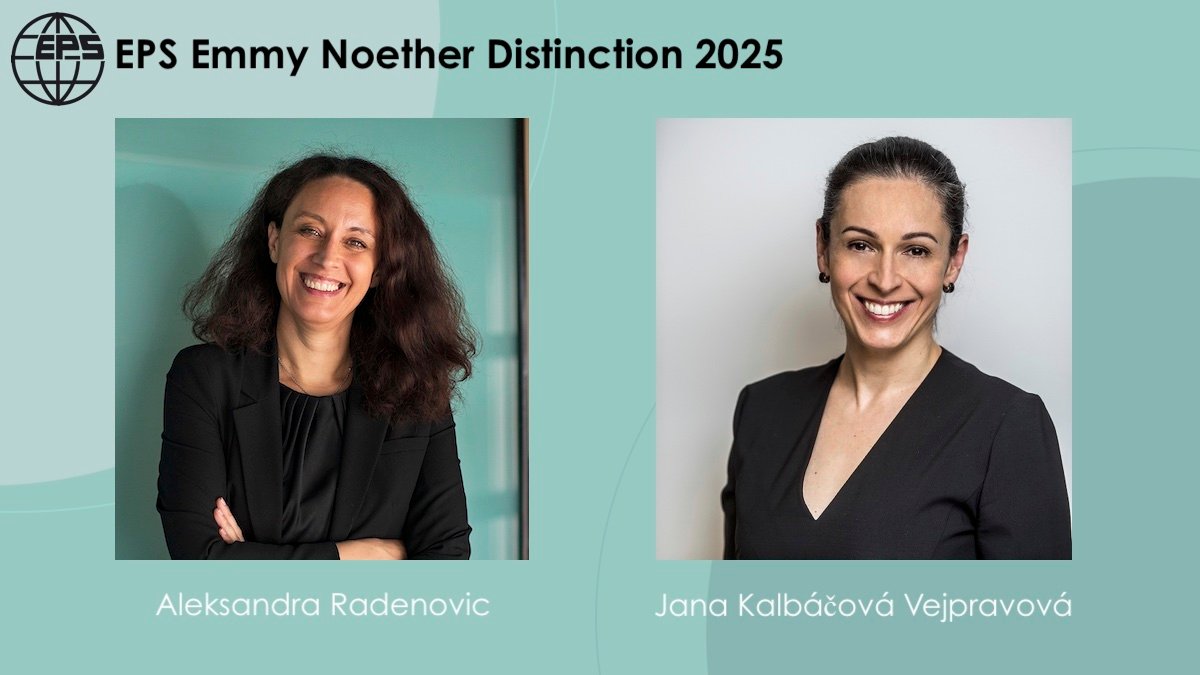
The EPS Emmy Noether Distinction 2025 is announced!
Mulhouse, 10th April 2026. The European Physical Society is pleased to announce that Aleksandra Radenovic, a Swiss and Croatian biophysicist, is a full professor of Biological Engineering in the School of Engineering and Co-Director of the Bioengineering Institute. Professor Radenovic studied physics at the University of Zagreb (Croatia), finishing with a thesis on Raman spectroscopy of betacarotene, and received her Ph.D. in Biophysics from the University of Lausanne (Switzerland) in 2003 with a dissertation entitled “Development of low-temperature atomic force microscope for biological applications”. She spent 3 years as a postdoctoral fellow at the University of California, Berkeley, and before joining EPFL, she also worked at the National Institute of Dental and Craniofacial Research of the NIH, Bethesda, Maryland, and at Janelia Farm in Ashburn, Virginia. Professor Radenovic is a leading figure of her generation in nanofluidics and nanoscale bioanalytical physics, whose work has fundamentally advanced the use of two-dimensional materials for single-molecule sensing, energy conversion, and neuromorphic systems. Her research is characterised by exceptional originality, breadth, and experimental sophistication, bridging nanotechnology, biophysics, photonics, and materials science. Her scientific impact is marked by several transformative breakthroughs. She pioneered the use of molybdenum disulfide (MoS₂) nanopores and membranes, demonstrating their unique ion selectivity and enabling applications ranging from single-molecule biosensing and DNA analysis to osmotic energy harvesting and desalination. Her work revealed unprecedented efficiencies in nanofluidic power generation and uncovered novel transport phenomena, including ionic Coulomb blockade. Beyond sensing, she has opened new directions towards nanofluidic memristive devices and ionic neural networks for brain-inspired computation. Equally groundbreaking is her development of advanced experimental methodologies. She introduced innovative single-molecule localisation microscopy approaches based on defect emitters, enabling, for the first time, direct visualisation of proton transport dynamics on two-dimensional materials. In parallel, she developed glass nanocapillary and nanopipette techniques combined with scanning ion conductance microscopy, achieving unprecedented spatial resolution in probing biomolecular interactions. Alongside her scientific research, Aleksandra Radenovic has been a member of many selection panels of funding agencies and research institutions, assumed important editorial tasks, and served as President of the Swiss Biophysical Society (2019-2023). She devoted considerable time to mentoring, for example, in the Swiss-Croatian Tenure Track Pilot Program and led initiatives promoting diversity and gender equality. As President of the EPFL-Women-in-Science-and-Humanities Foundation, she advocates for and supports women in research. The foundation provides a mental and financial push to women researchers at key moments in their paths, organises networking events, and presents the annual Erna Hamburger Award, recognizing the most outstanding and influential women in science, serving as role models. When serving as President of the EPFL School assembly, she promoted a bottom-up approach in addressing the needs of the diverse student population at EPFL. Jana Kalbáčová Vejpravová studied chemistry at Charles University in Prague before transitioning to condensed matter physics and materials research, obtaining her PhD there in 2007 with a thesis entitled Impurities in Rare Earth Metallic Systems: from Super-Purified Metals to Heavy Fermion Superconductors. Following postdoctoral appointments at Hasselt University (Belgium) and the National Institute for Materials Science in Tsukuba (Japan), she served as Head of Department at the Institute of Physics of the Czech Academy of Sciences (2011–2017). She subsequently returned to Charles University, where she is now Full Professor (since 2021), Chair of the Doctoral School “Physics of Nanostructures and Nanomaterials”, and group leader at the Department of Condensed Matter Physics. Her research focuses on the experimental physics of low-dimensional systems—including carbon nanotubes, graphene, other two-dimensional materials, and magnetic nanoparticles—with particular emphasis on advanced magnetometry and cryogenic magneto-optical and nuclear spectroscopies. Professor Vejpravová has established a world-leading programme in high-precision magneto-optical measurements. Her laboratory is among the very few worldwide capable of combining high magnetic fields with cryogenic magneto-optical spectroscopy, including magneto-Raman and chiral photoluminescence, enabling the disentanglement of spin and valley interactions in emerging quantum materials. Her work has delivered fundamental insights into electron interactions, notably exciton–lattice dynamics, and has advanced the field by moving from idealised systems to realistic mesoscopic platforms such as folded transition metal dichalcogenides and isotope-engineered van der Waals heterostructures. Beyond her scientific achievements, Professor Vejpravová is a committed advocate for gender equality and an outstanding mentor. She has actively worked to dismantle structural barriers for women in physics, notably through sustained collaborations with leading female scientists in Taiwan (NTU, NTNU, Academia Sinica), enhancing the visibility and impact of women researchers internationally. Her leadership has been recognised by her inclusion among the Forbes Top Female Researchers in Czechia (2023). She has supervised more than 30 early-career researchers and plays a central role in graduate education. She has led or co-managed around twenty competitive research projects, including an ERC Starting Grant, and serves on numerous international evaluation panels and scientific boards. Through outreach activities, policy engagement, and media contributions, she promotes science to wider audiences. For these efforts, she was awarded the F. Behounek Award by the Czech Ministry of Education, Youth and Sport for the promotion of Czech science. More info
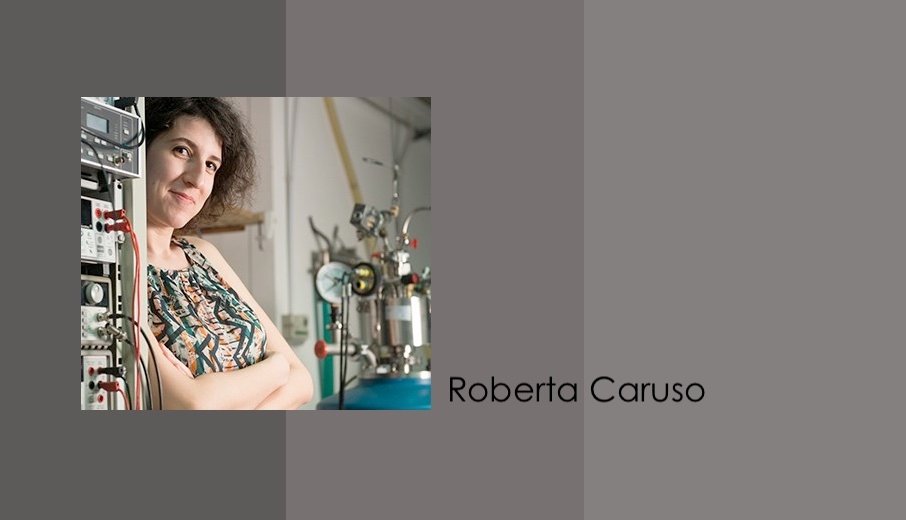
EPS Young Minds: Roberta Caruso
Author: Roberta Caruso I have been involved with EPS Young Minds since its beginning in 2010. As I grew up, I became more and more involved, until former YM Chair Dr Antigone Marino – recognizing my drive as a young scientist – asked me to join the Action Committee. Later, I was elected Chair from 2018 to 2020, within the European Physical Society. During those years, I focused on building a solid and close-knit network of early career researchers throughout Europe, fostering personal and scientific relationships. My term ended just as the pandemic began, but I was able to witness first-hand the network’s tenacity in adapting to new challenges and continuing to support its members. Being a member of the Action Committee of EPS Young Minds was a turning point I didn’t see coming. Being part of Young Minds gave me much more than organizational experience. It gave me motivation and drive at times when my academic career felt uncertain and not particularly successful. On several occasions, I found myself questioning my professional value, and it was this project that helped me stay grounded. Through my involvement, I also learned more about myself as a scientist. While I genuinely enjoy tinkering in the lab, I gradually realized that I am not the person who “builds” science from scratch. I am not the one with sudden, brilliant intuitions about physical processes or microscopic mechanisms, nor someone who can effortlessly design experiments to test new ideas. Instead, I am someone who loves information: collecting large amounts of it, connecting it, and using it in sometimes unexpected contexts. In other words, I am a very good learner—perhaps even an excellent one—but not a natural inventor. Young Minds was the ideal environment for developing and valuing this way of thinking. It allowed me to engage with science broadly, exchange ideas across disciplines, and reflect on the wider implications of research. At the same time, it helped me build a strong international network of colleagues, mentors, and friends that continues to shape my career. The best part is that this network now extends far beyond the specific research field I specialized in, giving me perspectives and opportunities I would never have encountered otherwise. Looking back now, I find that colleagues frequently remember me for my leadership in YM just as much—if not more—than for my scientific papers. At the time, I wasn’t sure if that was a good thing, but I see now that YM gave me a “label.” It distinguished me from the mass of other researchers. It proved I wasn’t just another physicist in a lab coat; I was someone who could lead, organize, and build. Academia is tough, highly competitive, and there is no “easy mode” for success. But if you are willing to put in the work, Young Minds can genuinely help kickstart your career, beyond all those numbers that nowadays define career progression for academic researchers. One final thought: don’t settle. If your current research environment doesn’t appreciate or support the service work you do for the scientific community through EPS, that is their loss. If they don’t see how this makes you a better, more connected scientist, maybe it is time to consider moving somewhere that does. You might not realize it now, but you really are building a global profile for yourself, even though maybe this isn’t the conventional way to do it. Don’t let a local mindset hold you back: if you think there’s value in building communities and networks, EPS Young Minds might be the right place for you.
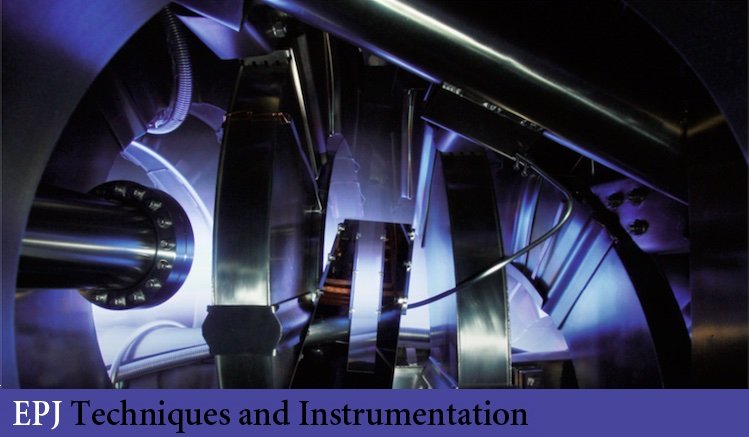
EPJ TI relaunch
After a period of intense preparation, the official relaunch of European Physics Journal Techniques and Instrumentation (EPJ TI) is ready. The journal returns with a refreshed vision and a brand new homepage, available at: https://link.springer.com/journal/40485. A key highlight of this relaunch is the newly restructured Editorial Board, developed in close collaboration with EPS Young Minds. The board now welcomes a group of Early Career Researcher (ECR) Associate Editors, selected through a highly competitive recent call. Candidates included advanced PhD students and postdoctoral researchers within six years of completing their PhD and not holding a permanent position. These ECR Associate Editors will bring fresh perspectives and join the Board alongside the newly appointed Editors-in-Chief, forming a dynamic and forward-looking editorial team. As EPJ TI continues to grow, the board will further expand, reflecting the journal’s evolving scope and ambitions. With its renewed energy and international outlook, EPJ TI is ready to serve as a vibrant platform for cutting-edge research in Techniques and Instrumentation.

Anna Grigoryan joins the EPJ Steering Committee
Author: Tsovinar Karapetyan The Steering Committee of EPJ is pleased to welcome Anna Grigoryan as the new representative of EPS Young Minds in the Scientific Advisory Committee. She is replacing Carlos Damián Rodríguez Fernández, continuing the collaboration established two years ago. Anna Grigoryan is a PhD student and researcher in experimental nuclear physics at the A.I. Alikhanyan National Science Laboratory in Yerevan, Armenia. Working within the Experimental Physics Department, her research focuses on nucleon structure and spin phenomena in semi-inclusive deep inelastic scattering. Her work specifically explores dihadron production and beam-helicity asymmetries using data from the HERMES experiment at DESY. Through this research, she contributes to advancing the understanding of the three-dimensional structure of the nucleon. Anna is also actively involved in international scientific collaborations. She is a member of the Structure and Spectroscopy of Hadrons Project (SHARP) COST Action and contributes to the EPS Technology and Innovation Group (EPS TIG). Beyond her research, Anna is deeply engaged in outreach and community leadership. As a member of the EPS Young Minds Action Committee, she has played a key role in organising international masterclasses and physics events at her institution, helping to promote education and public engagement in particle and nuclear physics. Anna Grigoryan’s appointment highlights the important role of early-career researchers in shaping scientific communities. Readers are encouraged to follow EPS Young Minds initiatives and participate in upcoming events to support the next generation of physicists.
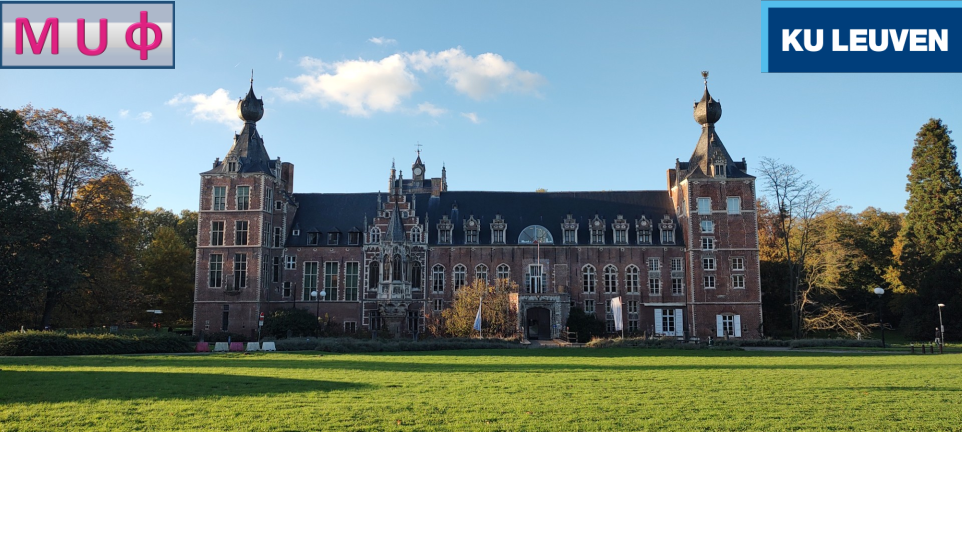
Women in Nonequilibrium Statistical Physics: Call for submission
The meeting will bring together researchers working on nonequilibrium statistical physics across theory, numerics, and experiments to discuss recent advances and current challenges in the field (active and living matter, glasses and driven systems, stochastic thermodynamics, foundations of nonequilibrium theory, quantum dynamics). The conference is open to participants of all genders, early-career researchers are particularly encouraged to apply. Deadline for submission: 7th June 2026. You will find more info at: https://indico.fys.kuleuven.be/event/162/