

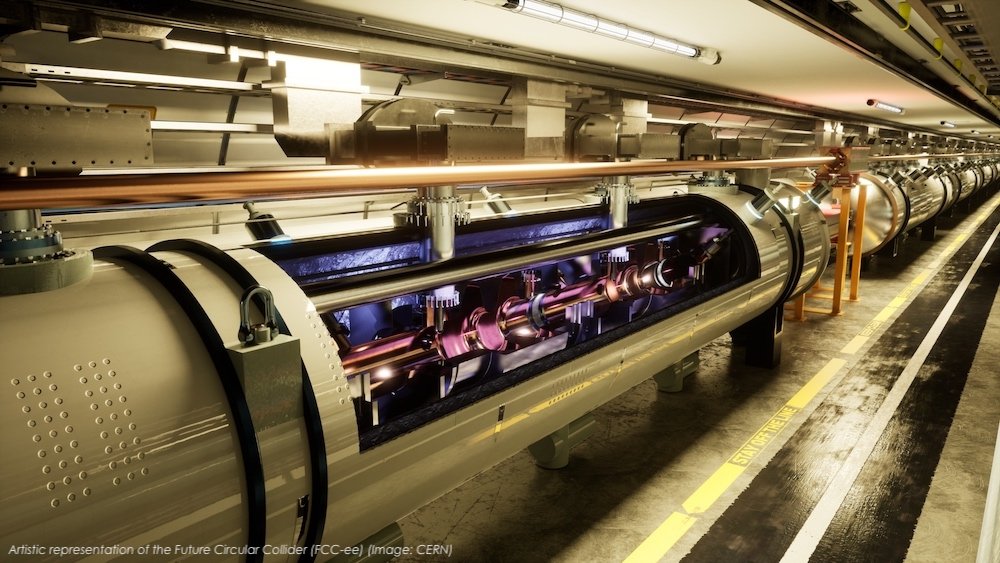
Budapest, 22 May 2026. Today, following more than two years of intense work of the European particle physics community under the auspices of the European Strategy Group, the CERN Council updated the European Strategy for Particle Physics, which sets out an ambitious scientific vision for the field. The 2026 Strategy update offers a clear path to maintain European leadership in high-energy physics while attracting global collaboration to CERN, advancing technology and bringing many potential benefits to society. The recommendations address a broad range of topics and goals relating to research in high-energy physics in Europe and beyond. The aim of this Strategy update, initiated in March 2024, was for the particle physics community to develop a concrete plan for greatly advancing knowledge in fundamental physics through the construction of a new flagship project at CERN. Following extensive consultation among particle physicists in Europe and beyond, and the consideration of more than 260 written submissions, the Strategy recommendations were submitted to the CERN Council in December 2025 [December Press Release]. Furthering our understanding of the Higgs boson has been a driving force behind the planning for the long-term future of particle physics. The discovery of the Higgs boson at CERN’s Large Hadron Collider (LHC) in 2012 marked the beginning of a new era in particle physics. It confirmed a spectacular prediction of the Standard Model of particle physics and provided a radical new tool to explore outstanding mysteries about the content, structure and evolution of the Universe. The Strategy recommendations confirmed that the full exploitation of the scientific potential of the LHC through the completion of its high-luminosity upgrades remains the highest medium-term priority for European particle physics. For the longer term, the electron–positron Future Circular Collider (FCC-ee) was recommended as the preferred option for the next flagship project at CERN, thereby maintaining Europe’s leadership in the field. The FCC-ee would offer the broadest exploratory programme in fundamental physics, with outstanding discovery potential. It would provide a visionary physics programme addressing many of the open questions in particle physics, notably about the Higgs boson, that are critical to understanding the foundations of the Standard Model and opening up opportunities for discovering new physics beyond the Standard Model. At the same time, the FCC-ee would drive the development of new technologies and train thousands of early-career scientists, engineers and technicians. The 2026 update of the European Strategy builds on the previous update in 2020, which had already emphasised the importance of ensuring Europe’s continued scientific and technological leadership, and recommended an electron-positron “Higgs factory” as the highest-priority next facility after the LHC reaches the end of its operational lifetime in 2041[Press Release]. Based on the 2020 Strategy update, CERN and international partners conducted a feasibility study for a possible Future Circular Collider that was published in March 2025 [Press Release] and reviewed by the CERN Council in November 2025 [Press Release]. In addition to updating the Strategy, the Council has invited the CERN Management to initiate discussions with the relevant authorities and entities in the Member and Associate Member States, as well as non-Member States and the European Union, with a view to developing a financially feasible funding plan for the possible FCC-ee project. In the next two years, the CERN Management will provide annual reports on the implementation of the Strategy update and the necessary information to support national decision-making processes so that the Council will be in a position, by 2028, to take a decision on the FCC-ee, taking into account elements such as the scientific, technical and financial feasibility of the project, as well as results from the public consultation exercises in CERN’s Host States, France and Switzerland. “The high-energy physics community and the CERN Council have been united for this critical update of the European Strategy for Particle Physics, and the FCC-ee has emerged as the preferred flagship project to maintain CERN’s world-leading role in collider physics and technology in the decades to come,” said Costas Fountas, Council President. “I wish the CERN Management the greatest success in implementing the Council resolution between now and the 2028 target decision date .” “The European Strategy reiterates the critical importance of the High-Luminosity LHC, which will use advanced accelerator and detector technologies to fully exploit the scientific potential of this incredible machine in the coming years,” said Mark Thomson, CERN Director-General. “Beyond HiLumi LHC, the FCC-ee would be a visionary global research infrastructure for the next decades that will deepen our knowledge of the fundamental building blocks of the Universe through ultra-precise measurements of the Higgs boson and other elementary particles. CERN’s task now is to steer this unprecedented project towards a decision by the CERN Council.” “The Strategy process has seen a very strong engagement of the particle physics community and has led to a very clear conclusion: the FCC-ee, if approved, would deliver the world’s broadest high-precision particle physics programme, its technical feasibility has been demonstrated by the comprehensive FCC Feasibility Study and its scope and cost are well defined,” said Karl Jakobs, Strategy Secretary. “It would also pave the way for a possible future hadron collider reusing the tunnel and much of the infrastructure, providing direct discovery reach well beyond the 10 TeV parton energy scale.”
European Physical Society Announces 2026 Distinctions and Awards
The European Physical Society (EPS) is proud to announce its 2026 distinctions and awards, recognising outstanding contributions to physics across all career stages. The distinctions were announced at the EPS Council meeting held in Vilnius, Lithuania, on 15–16 May 2026. Also announced during the meeting was the 2025 Alessandro Volta Prize. EPS Honorary Member The EPS Council elects individuals whose exceptional achievements in physics, in research, industry and/or education merit recognition as an EPS Honorary Member. The council meeting of 2026 awarded honorary membership to Luisa Cifarelli. Luisa Cifarelli has been awarded Honorary Membership of the European Physical Society in recognition of her remarkable career spanning five decades of scientific achievement and exceptional service to the international physics community. Her contributions range from significant discoveries in hadron structure at the CERN Intersecting Storage Rings to pioneering work on proton structure at DESY and CERN, and most recently a leadership role in the ALICE experiment at the LHC. She was the driving force behind the Extreme Energy Events project, which brings cosmic ray research into high schools across Italy. She has served the physics community with distinction as President of the Italian Physical Society (2008–2019) and of the EPS (2011–2013), and as a member of the APS Board of Directors. She was previously recognised with the EPS Gero Thomas Medal. EPS Fellows EPS Fellowship recognises exceptional contributions to physics in research, industry, education, or service to the European Physical Society (EPS). Limited to 5% of EPS members, Fellows are nominated by there peers and approved by the Council based on demonstrated impact in their field. In 2026 the following were admitted as EPS Fellows. IFW Dresden, Dresden, Germany “For his numerous contributions to condensed matter physics, pioneering the control of the third dimension in nanostructures, and for his outstanding commitment to EPS activities and support of the broader European physics community.” Institute for Nuclear Research (Atomki), Debrecen, Hungary “For pioneering contributions to nuclear astrophysics and sustained, influential service to the European and international physics community.” EPS Early Career Prize The EPS Early Career Prize regonises acheivements in theoretical or experimental physics and is awarded to “Early Career” scientists in the first 6 years after the award of their PhD. The 2026 Prize is awarded to: University of Manchester, Manchester, UK “For pioneering contributions to the development of new experimental platforms at the intersection of ultracold atom physics and levitated optomechanics to study many-body dynamics and macroscopic quantum phenomena.”
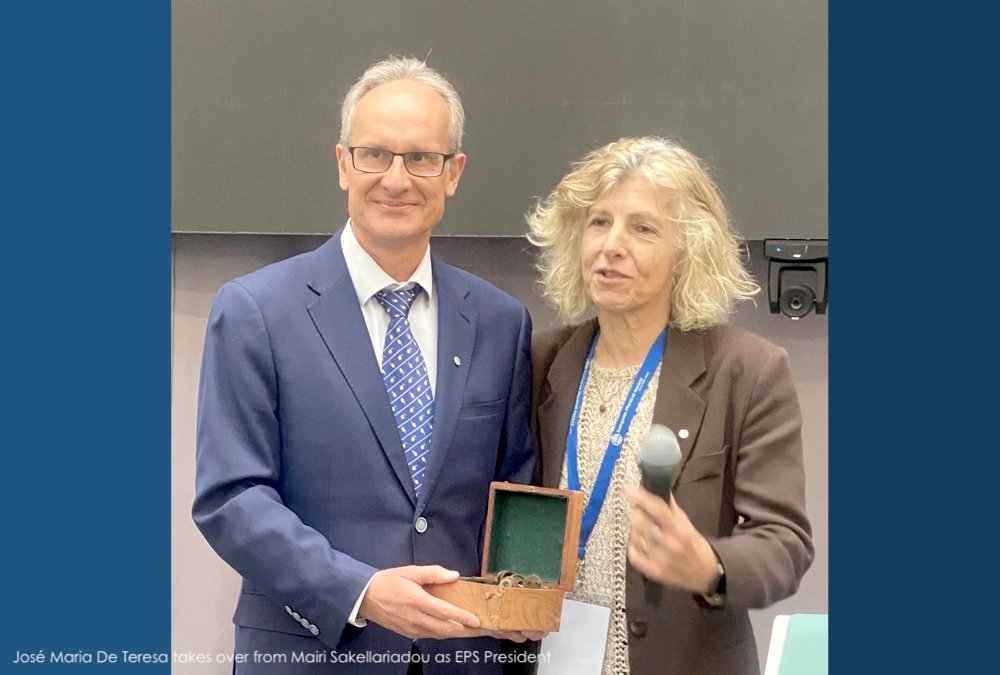
José María De Teresa took over from Mairi Sakellariadou as EPS President
During the EPS Council held in Vilnius on 15-16 May, José Maria De Teresa, EPS President-Elect since 2025, took over from Mairi Sakellariadou as EPS President. The EPS thanks Mairi Sakellariadou for her dedicated services to the Society. Congratulations to our new president José María De Teresa, we wish you a successful term! Read the new president’s views and expectations in an interview given in 2025 as EPS President-Elect.
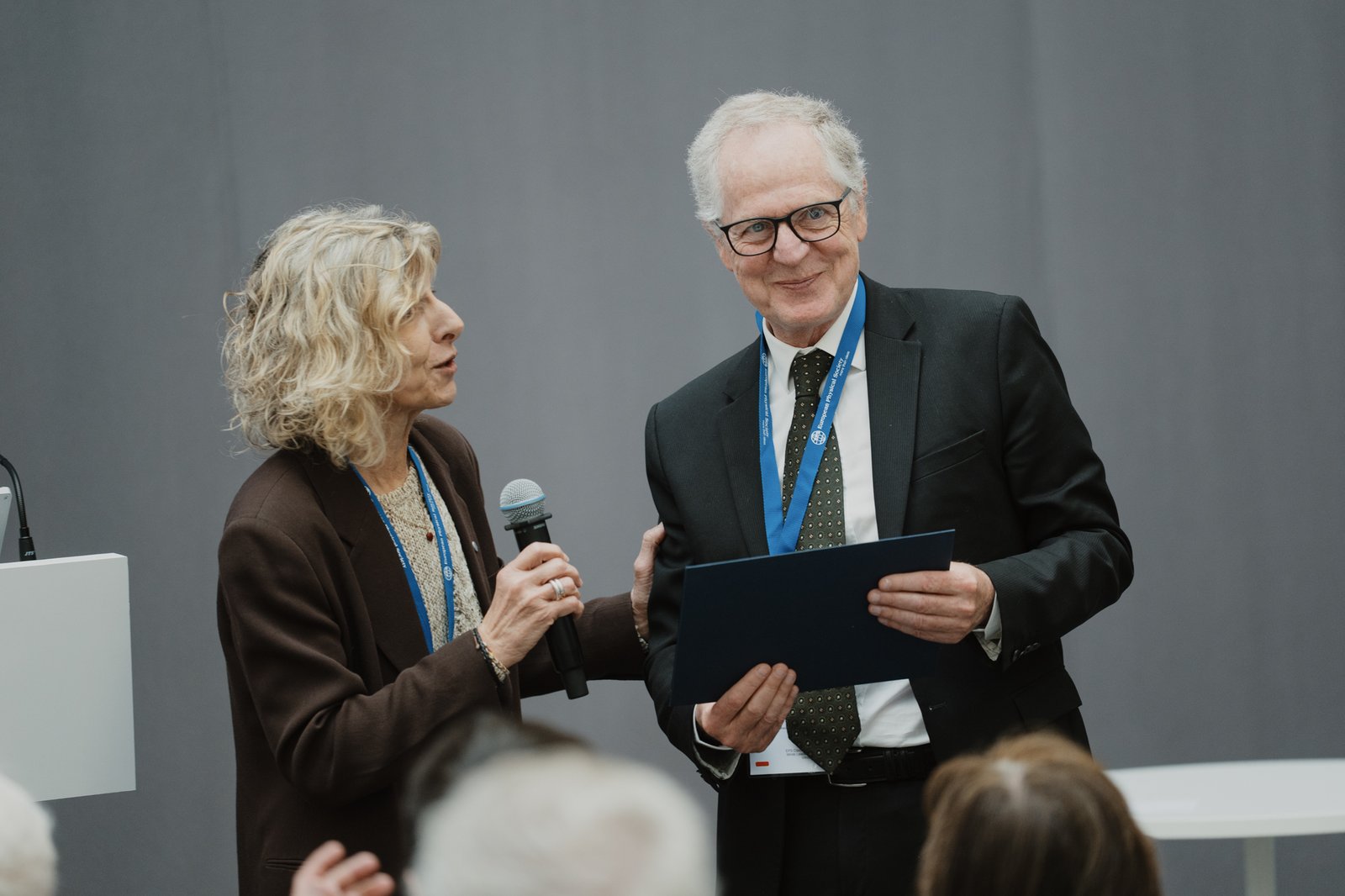
Volta Prize: Winner Announced at the EPS Council in Vilnius
COMO/VILNIUS, 16 May 2026 – French physicist Jean Dalibard is the winner of the 2025 Alessandro Volta Prize. The announcement was made today in Vilnius, Lithuania, during the annual meeting of the Council of the European Physical Society (EPS). The announcement was delivered by Mairi Sakellariadou, President of EPS, who invited Matteo Barbera, President of the Acinque Group and sponsor of the prize, to present the award ceremony that will take place in Como on 2 October 2026. Dalibard is a physicist specialising in the interaction between matter and radiation. Formerly a professor at the École Polytechnique, he is currently a researcher at the Collège de France, a prestigious research institution based in Paris. Having taught at leading universities around the world, he is a member of several scientific academies, including the Académie des Sciences (France) and the National Academy of Sciences (United States). In 2009, he received the Blaise Pascal Medal from the European Academy of Sciences; in 2012, the Max Born Award and the Davisson–Germer Prize; in 2018, he was elected an international member of the American Philosophical Society; and in 2021, he received the CNRS Gold Medal, the highest distinction in French scientific research. The jury of the Alessandro Volta Prize awarded the French physicist for: “his pioneering contributions to laser cooling and light–matter interactions, and for groundbreaking experimental and theoretical achievements in the quantum many-body physics of ultracold gases.” More information can be found on: https://indico.cern.ch/event/1676546/page/43070-overview The Award Ceremony The award ceremony will take place on 2 October in Como, Alessandro Volta’s hometown, which during the 2026–2027 biennium commemorates the bicentenary of the scientist’s death on 5 March 1827. The event will be enriched by an international scientific symposium focused on the winner’s research areas and will bring to the city of Como some of the most distinguished names in global science, including two Nobel Prize laureates. The Acinque Group, a multi-utility company based in Lombardy led by CEO Stefano Cetti, and EPS have firmly supported the call to action launched by the Alessandro Volta Foundation and its institutional partners. The Volta Prize is part of the Lake Como Light Festival and features in the calendar of 200VOLTeVOLTA, a multidisciplinary program of cultural, scientific, educational, and participatory events designed to engage the entire community and keep alive the legacy of the scientist from Como, inventor of the electric battery and discoverer of methane. The initiatives can be found on the website alessandrovolta.it. Statements “The Alessandro Volta Prize was established with the aim of celebrating scientific excellence and the fundamental role that physics continues to play in the development of contemporary society,’ stated Mairi Sakellariadou, President of the European Physical Society. ‘Awarding this recognition to Jean Dalibard means honouring a scientist who, through extraordinary contributions to quantum and atomic physics, has expanded our understanding of nature and opened new perspectives for the technologies of the future. We are also particularly proud to associate this prize with the figure of Alessandro Volta, one of the great pioneers of European science.” “Giving new life to the Volta Prize means reaffirming the deep connection between the Como area, innovation, and Acinque,’ emphasised Matteo Barbera, President of the Group. ‘We believe that supporting scientific culture means investing in the future of our communities. For Acinque, the Volta Prize therefore represents a concrete opportunity to promote the extraordinary legacy of the Como-born scientist and to foster research, making the region increasingly attractive thanks to its excellence.” “The Alessandro Volta Prize in Como, as part of the bicentenary celebrations, demonstrates the international strength of Volta’s scientific legacy and the territory’s ability to promote opportunities for dialogue at the highest levels,’ stated Paola Dubini, President of the Alessandro Volta Foundation. ‘We are especially pleased that EPS and Acinque are bringing such important scholars to Como during the Festival della Luce — figures who are helping shape our future.” About the organisations European Physical Society (EPS) The European Physical Society is a non-profit organisation dedicated to advancing physics in Europe. It unites national physical societies, research institutions, and individual physicists, supporting scientific excellence, collaboration, and education. EPS also plays an important role in science policy, dissemination of research, and the promotion of physics to society and future generations. Acinque Group Acinque is a Lombardy-based multiutility company active in energy, environment, water, and infrastructure services. The Group is committed to fostering sustainable development and supporting innovation in the territories where it operates. Through cultural and scientific initiatives such as the Volta Prize, Acinque contributes to strengthening the link between local communities, research, and technological progress. Fondazione Alessandro Volta works to promote scientific culture through educational projects, outreach and cultural initiatives, and collaborations with institutions, schools, and universities, developing networks of national and international significance. Through a wide-ranging annual program of activities dedicated to the promotion of university education, research, advanced training, and culture, the Foundation contributes to enhancing the scientific and human legacy of Alessandro Volta, fostering dialogue between science, culture, and contemporary society.
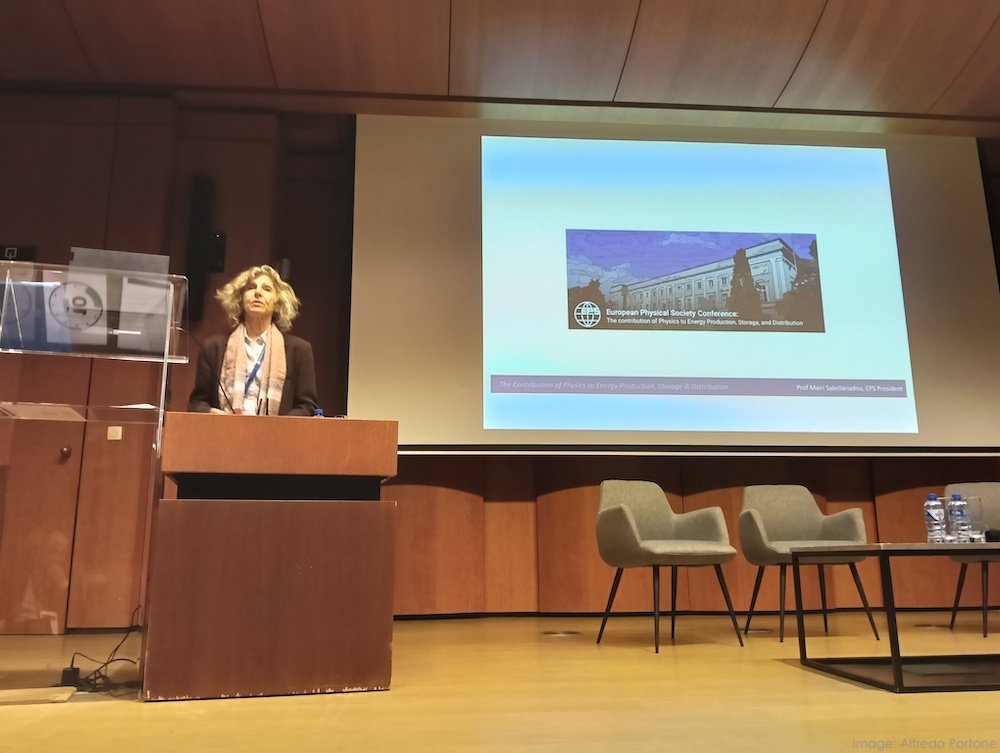
Summary of EPS Conference: The Contribution of Physics to Energy Production, Storage and Distribution
Authors: Ian Bearden, Alessandra Fantoni, Alfredo Portone, Mairi Sakellariadou This conference was organised by the European Physical Society (EPS) with the aim of exploring how advances in physics are shaping the future of energy systems. Experts from academia, industry, and public policy examined and discussed the scientific, technological, and societal dimensions of the energy transition. The event provided a unique opportunity to engage directly with leading experts in physics and energy research, fostering the exchange of ideas across disciplines and sectors. Participants gained valuable insight into the scientific advances underpinning the energy transition, while contributing to a high-level European forum dedicated to interdisciplinary collaboration. The conference took place on April 13 and 14 at the Palais des Académies in Brussels, with approximately 60 registered participants. The programme comprised three main sessions on Energy Generation, Storage, and Distribution, each followed by a dedicated panel discussion. Two additional invited speakers contributed with keynote presentations outside the main sessions. EPS President Prof Dr Mairi Sakellariadou opened the conference, welcoming participants and outlining its scope, while highlighting its connection to the recently published EPS position paper on energy. She emphasised that energy is a cornerstone of economic development and societal stability, and that effective energy policies must strike a balance between security of supply, affordability, and environmental sustainability. The first day featured two sessions on Generation and Storage, each including three invited speakers and followed by panel discussions moderated by Laban Coblentz, Head of Communication of ITER. The day concluded with a keynote presentation by Dr Pietro Barabaschi, Director-General of the ITER Project, who provided an overview of the project’s current status. On the second day, the session on Energy Distribution included three invited speakers and a panel discussion moderated by Dr Luca Romano. This was followed by a presentation from Dr Gianfranco Brunetti, Head of Unit at DG ENER, who illustrated the European Commission’s perspective on nuclear energy, waste management, and decommissioning. The conference concluded with closing remarks by Prof Dr Mairi Sakellariadou, who summarised the main insights and thanked all contributors for the high quality of the discussions. The key takeaways from the two-day conference can be summarised as follows: – Energy emerged as a fundamental driver of civilisational progress and a central factor in geopolitical dynamics. The distribution of energy resources plays a crucial role both in societal advancement and, from an ethical perspective, in promoting global equity. Throughout the discussions, the deep interconnection between equity, energy security, and sustainability was consistently highlighted. – Politicians are rarely elected based on long-term vision, a reality that potentially places political priorities in direct conflict with the requirements of a prudent energy transition. This challenge gave prominence, throughout various panel discussions, to the recurring theme of ethics as a fundamental value that should be integrated into decision-making processes. – Closely linked to ethics is the role of human behaviour. As noted by Prof Dr Carlos Lledo Fernandez, society already possesses vast amounts of materials within existing batteries and electronics, provided that effective recycling practices are adopted. This insight shifts the focus from purely technological solutions to behavioural change, raising the question of how clear guidance and well-designed incentives could encourage responsible recycling across all stages of battery lifecycles. While regulation remains essential, complementary incentive mechanisms may be equally important in fostering widespread participation. – In the field of nuclear energy, it was noted that fission produces substantial amounts of energy alongside high-level radioactive waste, much of which could potentially be recycled or reprocessed. Advanced techniques, such as neutron-induced transmutation, offer the possibility of converting hazardous isotopes into less harmful forms, thereby reducing long-term risks while contributing to additional energy generation. – Regarding solar technologies, a specific point has been raised on perovskite-silicon cells: while they represent an important technological advancement, they may not constitute the transformative breakthrough often anticipated, as their development is already approaching expected practical performance levels. – Electrical energy distribution was identified as a critical area requiring further research and innovation. Key challenges include the trade-offs between HVDC (High Voltage Direct Current, more expensive but suitable for underground transmission) and HVAC systems (High Voltage Alternate Current, less costly but associated with higher reactive power losses), the need to replace sulphur hexafluoride as an insulating medium, and the importance of voltage and frequency compensation technologies such as synchronous condensers and reactors. – The benefits of enhanced energy interconnections were illustrated through the case of Ireland, where strengthened links with the United Kingdom and France are enabling a higher share of renewable energy. At the same time, the importance of transparent communication regarding infrastructure costs was emphasised, as these are often underestimated in public discourse. – The Spanish blackout of 28 April 2025 was analysed as a case study in grid vulnerability. The event was triggered by a major overvoltage episode in a system already operating with limited stability margins, including low effective inertia due to high solar penetration and insufficient synchronous voltage control. The discussions emphasised that grid resilience must account not only for national-level inertia and stability, but also for the conditions of local network segments, where vulnerabilities can significantly amplify wider system disturbances – During the panel discussion, several key themes emerged. Participants stressed the need for clearer and more effective communication with the general public, who often have limited awareness of grid infrastructure, balancing requirements, compensation mechanisms, and the associated costs. The fundamental role of physics was strongly emphasised—not only in advancing frontier research, but also in modelling and understanding increasingly complex energy systems. In addition, the importance of sustained research into more efficient, higher-capacity, and energy-dense storage solutions was repeatedly highlighted as essential for the future stability and sustainability of energy systems. A final shared conclusion strongly emphasised that scientists, and physicists in particular, have an important voice of authority in society regarding energy, comparable in many respects to that of medical professionals in public health. As such, they can play a crucial role in improving the quality of public and political discourse on energy by reinforcing
Call for nominations for the EPS NPD Prize for Applied Nuclear Physics 2026
The board of the Nuclear Physics Division (NPD) of the European Physical Society (EPS) calls for nominations for the 2026 EPS Nuclear Physics Division Prize for Applied Nuclear Physics. This is a prize sponsored by the division, consisting of a diploma of the EPS and 3000 €, which will be awarded during the 2027 Applied Nuclear Physics conference in Bologna, 14-18 June 2027. Nominations should comprise: 1. A short citation (max. 50 words), describing succinctly the achievements of the nominee and the reasons for awarding the prize. The award citation will be based on the words provided. 2. A detailed statement of the nominee’s major scientific achievements (max. 2 pages) 3. The nominee’s CV (max. 1 page). 4. A maximum of two letters of support from renowned personalities of the field, underscoring the relevance of the scientific work of the nominee. Nominations should be sent to the Scientific Secretary Raquel Crespo and to the Chair Araceli Lopez-Martens of the NPD board by the deadline of 30th September 2026. Prize Rules 1. The Prize can be awarded to any physicist working within a European Institution. 2. The Prize will be awarded every three years and timed so that it can be presented at the division-supported Applied Nuclear Physics conference. 3. The Prize shall consist of a Diploma of the EPS and a total prize money of EUR 3000 (to be shared if more than one laureate). 4. The Prize shall be awarded to one or more researchers. 5. The Prize shall be awarded without restrictions of nationality, sex, race or religion. 6. The board of the EPS Nuclear Physics Division shall request nominations for the Prize from EPS members and members of the board will actively seek nominations from a broad cross-section of the scientific community. 7. Self-nominations for the award shall not be accepted. 8. Nominations shall be reviewed by the EPS nuclear physics division board. The criteria for the prize will be the quality and significance of the work as evidenced by refereed scientific publications and the impact thereof, and letters of support from renowned researchers in the field. 9. The final recommendation of the board and a report shall be submitted for ratification to the Executive Committee of the EPS
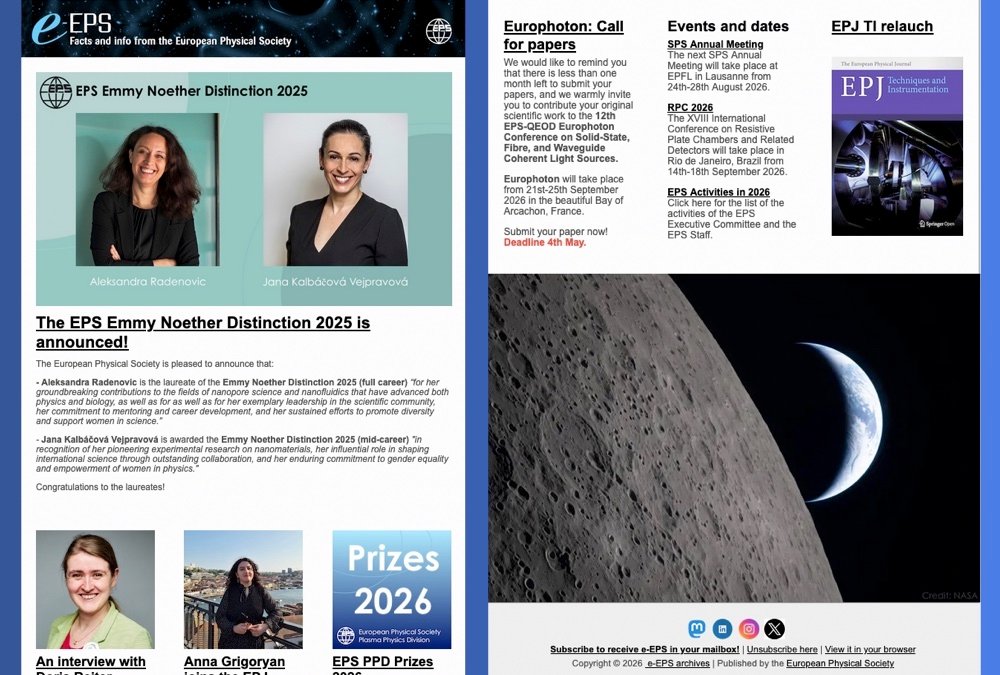
The April 2026 issue of e-EPS is out!
Read the latest issue of our online newsletter here!
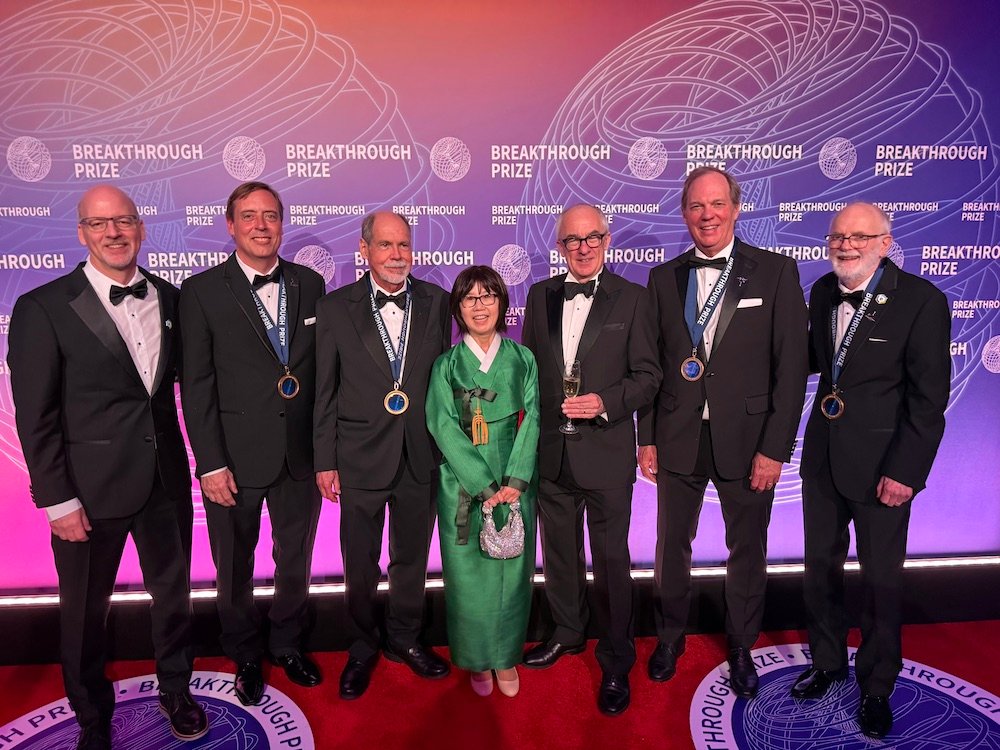
Muon g-2 Experiment Pioneers Win Breakthrough Prize in Fundamental Physics
Recognition honours experiments and scientific collaborations at three institutions that explored the subtle wobble of a subatomic particle GENEVA, UPTON, N.Y., and BATAVIA, Ill. – Joint press release. The Muon g-2 Collaborations at CERN — the European Organization for Nuclear Research — and two U.S. Department of Energy National Laboratories — Brookhaven National Laboratory and Fermi National Accelerator Laboratory (Fermilab) — are the recipients of this year’s Breakthrough Prize in Fundamental Physics. Over a period of more than 60 years, experiments at these three renowned research institutions pursued a quest to measure, as precisely as possible, the subtle wobble of the muon — a tiny subatomic particle that offered an opportunity to test physicists’ fundamental understanding of particles and forces. The Breakthrough Prize Foundation citation recognizes the awardees’ “multi-decade, groundbreaking contributions to the measurement of the muon’s anomalous magnetic moment, pushing the boundaries of experimental precision and igniting a new era in the quest for physics beyond the Standard Model.” The prizewinners are the living co-authors of the publications that reported the results from the measurement campaigns at CERN, Brookhaven, and Fermilab. The $3 million prize will be split among all living co-authors at all three institutions. Two pairs of scientists representing the experiments at Brookhaven and Fermilab will accept the prize on behalf of the group at a gala celebration at the Barker Hangar in Santa Monica, California, on Saturday, April 18, 2026. They are: William M. Morse of Brookhaven Lab and Bradley Lee Roberts of Boston University, who helped lead the “muon g-2” experiment at Brookhaven from construction in 1990 to the publication of final results in 2004; and Chris Polly of Fermilab and David Hertzog of the University of Washington, who helped lead a follow-up “Muon g-2” experiment at Fermilab from 2013 through publication of final results in 2025. The award also recognizes an earlier series of “g-2” experiments conducted at CERN from 1959 to 1979. Popularly known as the “Oscars® of Science,” the Breakthrough Prizes were created in 2012 by a group of Silicon Valley innovators to recognize the world’s top scientists working in the fundamental sciences — the disciplines that ask the biggest questions and find the deepest explanations. Additional prizes were awarded in a variety of categories, including the Life Sciences and Mathematics. Background: mystery of the muon The muon has been a bit of an enigma since its discovery in 1936. It shares certain characteristics with electrons, including its negative charge and a form of internal magnetism, dubbed “g,” but is 200 times heavier. Was it just a heavy cousin of the electron, or something else? Measuring its magnetism might point to clues. Early calculations suggested the value of g should be 2 for both electrons and muons. But experiments in the 1940s revealed that electrons have a tiny bit of extra magnetism. Physicists expressed this “anomalous magnetic moment” as “g-2,” to represent the amount that g differs from the calculated value of 2. Over time, physicists realized that the electron’s tiny deviation from 2 is caused by interactions with a sea of “virtual particles” popping in and out of existence. By measuring the g-factor of muons, physicists could see if these interactions were affecting muons, too. If they observed more deviation than expected, that discrepancy might point to a hole in their understanding of the virtual particles causing the magnetic disturbance — and possibly the existence of yet-to-be-discovered particles. Method: comparing measurements with predictions The experiments at all three institutions recognized by this prize were driven by this same basic principle: Measure the muon g-2 value with the highest precision possible and compare those measurements with the best predictions available at the time. They all used a similar experimental setup: sending a beam of muons into a magnetic ring and using sensitive detectors to measure the degree to which these tiny spinning particles began to wobble, or “precess,” away from perfect alignment as they sailed around the ring. Results: from CERN, Brookhaven Three separate experiments at CERN from 1959 to 1979, each with increasing precision, measured the muon’s g-factor as slightly higher than two, exactly as predicted by the theory-based calculations. This confirmed the predictions and firmly established the muon’s identity as a heavy cousin of the electron. Improved experimental techniques and expanded knowledge of particles and forces motivated new muon g-2 experiments. That’s when Bill Morse and Lee Roberts entered the scene. Together with Vernon Hughes of Yale University (deceased in 2003), they built and led the “E821 g-2” experiment at Brookhaven Lab. When the first Brookhaven muon g-2 results were published in 2001, it set off a worldwide spark of excitement. The findings revealed a tantalizingly larger-than-predicted anomaly, but not enough of a difference between experiment and theory to claim a discovery. Results published in 2002 improved the precision of Brookhaven’s measurement. The final result, published in 2004, deviated further from the prediction, but was still just a hint that muons might be affected by something unknown. The continuing mystery launched an effort among physicists to improve the precision of both the theoretical predictions and the experimental measurements. Fermilab: moving muons to Illinois In 2013, under the guidance of Morse, Roberts, David Hertzog, and Chris Polly — working with a large international team — Brookhaven Lab’s g-2 muon storage magnet embarked on an epic land-and-sea journey from Long Island, New York, to Fermilab outside of Chicago. There it was set up to repeat the experiment using Fermilab’s higher-intensity muon beam and new state-of-the-art technologies. In parallel, an international collaboration of theorists formed the Muon g-2 Theory Initiative to improve the theoretical calculation. In 2020, the Theory Initiative published an updated, more precise muon g-2 prediction based on a technique that uses input data from other experiments. The discrepancy between experiment and the prediction from that technique continued to grow in 2021 when Fermilab announced its first experimental result, confirming the Brookhaven result with a slightly improved precision. At the same time, a new theoretical prediction came out based on a new technique that heavily relies on computational power. This new predicted value
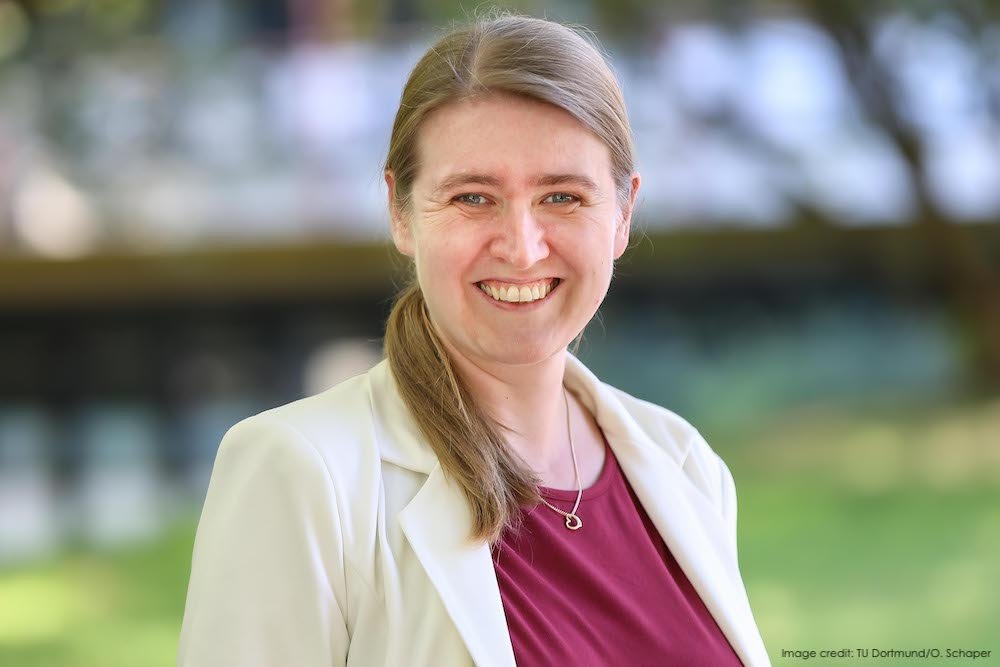
An interview with Doris Reiter
Professor Doris Reiter, researcher at the Faculty of Physics of the Technical University of Dortmund, Germany, was awarded the 2023 EPS Emmy Noether Distinction “for her groundbreaking contributions to theoretical photonics and quantum technology, transformative leadership, and innovative outreach, exemplified by the SUPER scheme and the QuanTour project.” Petra Rudolf, chair of the EPS Equal Opportunities Committee, interviewed Prof. Reiter. Why did you choose physics? After school, I had a clear idea of what I didn’t want to study, which helped narrow things down. From the remaining options, physics stood out. I think I was looking for a real challenge, and physics certainly offered that. I was fascinated by Star Trek, environmental questions, and nuclear physics. Ending up in solid-state and quantum physics wasn’t part of a grand plan, but looking back, I couldn’t be happier with where I landed. What is the most rewarding aspect of your career and what difficulties did you encounter? Receiving the Emmy Noether Distinction is deeply rewarding, because it reflects my scientific achievements. At the same time, it also acknowledges the effort I have put into building networks and contributing to the scientific community. In my everyday work, the most satisfying moments are when something suddenly makes sense. When it just clicks, and you know you’ve understood something. My career didn’t start out with a strong network or good mentoring. On top of that, I had close colleagues who actively worked against me. I still feel the effects today, as we are often judged by our previous achievements. I think, as a community, we greatly underestimate the impact of networking power. In addition, as a female physicist, I still feel that it takes more effort to win people over. And in a group of a dozen people, it only takes one to spread doubt. That alone can be enough to make things significantly harder. What are your recommendations to encourage diversity? This is a complex question, because it touches on so many different aspects. I support quotas, because I believe that without them, real change does not happen. Open conversations about diversity are also essential, not only to normalize the topic but to raise awareness that there is still a long way to go. In addition, we need structural changes that go beyond just discussions about starting a family or securing permanent positions. Evaluation criteria and hiring practices also need to evolve, because that is where many of the hidden barriers remain. What is your take on work-life-balance? I always say that health should be a priority, both physical and mental. It saddens me to see so many, especially older colleagues, who are overworked and dealing with serious health problems. I think life is a marathon. Maybe it feels good to be ahead for the first 30 or 40 years, but I wonder whether that really balances out if the later years are cut short. Maybe I will see this differently when I am older, but right now I try to look after myself so that I can keep going in a sustainable way. I also try to pass that mindset on to my students.
Call for nominations for the 2026 EPS Europhysics Prize
The EPS Europhysics Prize is given in recognition of a prominent and well-identifiable discovery, breakthrough, or contribution to condensed matter physics by one or more individuals in the area of condensed matter physics, which, in the opinion of the selection committee, represents scientific excellence. The award recognises research for which a significant portion of the work was carried out in Europe, and may be given for either pure or applied research at the discretion of the Society. Only complete nominations will be considered. Self-nominations are not possible. For a nomination to be complete, it must include: Nominations of female candidates are particularly welcomed; indeed, the selection committee reserves the right not to award the 2026 Europhysics Prize should no female candidates be proposed. Nominations may be made by email, by sending all materials in a single file, before May 15th, 2026, to the CMD Board Chair, eps.cmd.chair@gmail.com (Please cc erich.runge@tu-ilmenau.de). For more information about the prize, including previous recipients: https://eps.org/cmd/