Author: Erich Runge
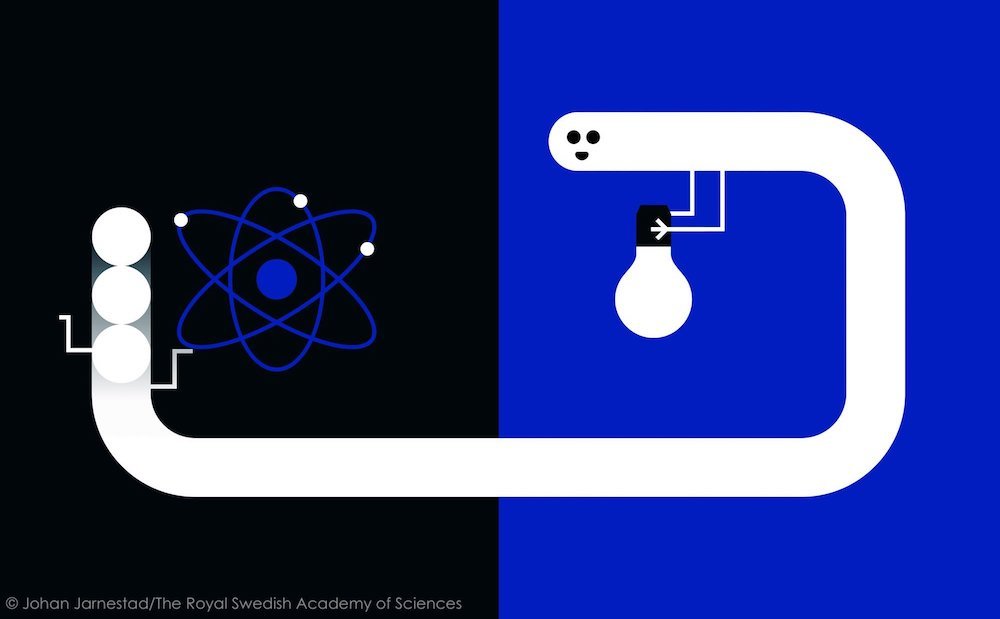
When the 2025 Nobel Prize in Physics was awarded to John Clarke, Michel H. Devoret, and John M. Martinis ‘for the discovery of macroscopic quantum mechanical tunnelling and energy quantisation in an electric circuit’ my first three thoughts were (i) ‘Oh, a Nobel Prize for quantum computing and the superconducting transmon’, (ii) ‘How fitting for the International Year of Quantum Science and Technology’, and (iii) ‘Another two Europeans doing wonderful work in the US.’
Addressing thought (ii) is easy: Yes, it fits perfectly. If the 2022 Nobel Prize celebrated the so called ‘Second Quantum Revolution,’ superconductivity-based circuit quantum electrodynamics is at least ‘Quantum Revolution 1.5’: Macroscopic quantum physics with tremendous economic impact.
Point (iii) leaves me with mixed feelings. I am delighted that an Englishman educated in Cambridge and a Frenchman who received an excellent education in Paris collaborated with a young American in Berkeley to produce this groundbreaking work. Both maintained their connections to their homeland, Clarke as Honorary Fellow at the University of Cambridge, Devoret through appointments at the Orme des Merisiers Laboratory of CEA Saclay and at the Collège de France. Nevertheless, this award also reminds us of our obligation to create similarly inspiring conditions at European universities.
I was wrong about (i): The Nobel Prize for Quantum Computing and/or quantum sensing is still to come. Macroscopic quantum tunnelling in Josephson junctions by itself is mind-blowing, and I remember very well when I first encountered circuit quantum electrodynamics (cQED). I thought I was being taken for a ride, that it should be possible to simply quantize a normal circuit with capacitors and so on. How incredible these ideas must have been when they were first conceived! I took this as an opportunity to ask Ulrich Eckern, an expert in mesoscopic physics, about his memories of that time. You can find the interview as a supplement to this short opinion piece here.
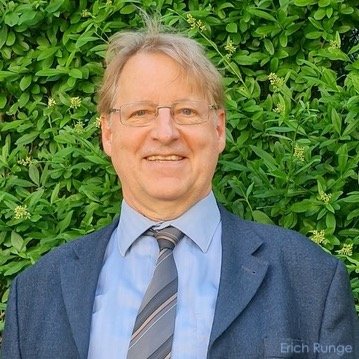
Erich Runge is Chair of the Condensed Matter Division of EPS, member of the Executive Board of the German Physical Society and professor of theoretical physics at the Technical University of Ilmenau, Germany.