

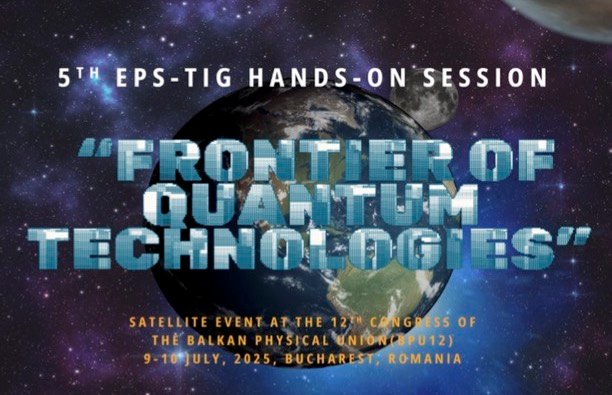
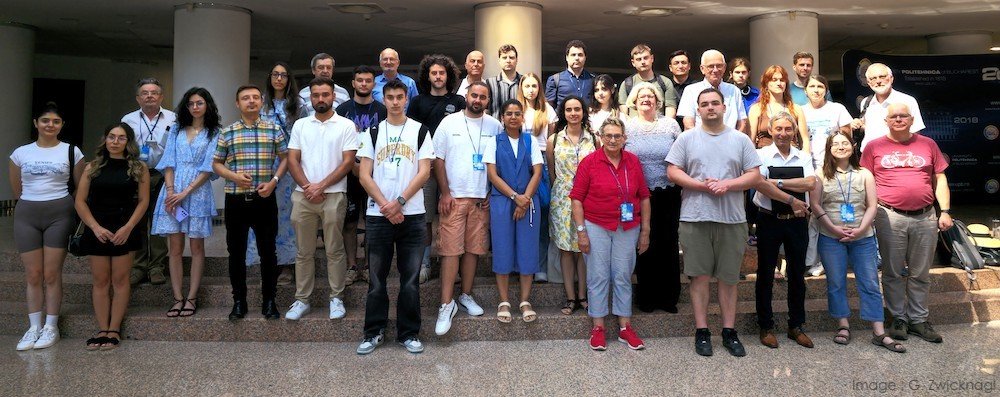
Author: Stefan Kubsky Report on the satellite-event organised by the EPS Technology and Innovation Group (EPS TIG) during the Balkan Physical Unions’ Congress BPU-12, held in Bucharest from 9th to 10th July 2025. At the BPU-12 congress, the EPS’ TIG group organised and performed its 5th hands-on event: “Frontiers of Quantum Technologies”. Two industrial partners could be won and were active: KwanTek from France and SaxonQ from Germany. Some 30 students -mostly from the Balkan region- gathered the event, which started by a vivid presentation on career options for students, both in academia and industry, given by Petra Rudolf from the Netherlands. The students asked questions and there was a bilateral discussion going on. After the lunchbreak, Jan Meijer from the Felix Bloch Institute of the University of Leipzig and co-founder of SaxonQ company gave a detailed, yet comprehensible, insight into the field of quantum computing using NV- centres in diamond as Qbits. The highlight of the talk was a short live demonstration of a simple quantum operation, on a remote table-top QC at Leipzig, running the NV- centres as Qubits at RT. Subsequently, Stefan Kubsky started the hands-on part with an in-depth presentation on how to use NV- centres as quantum magnetometers. After this, the students were divided into workgroups, each responsible for a defined subtask, but all with the final aim to get the experiment up, working, produce data, analyse them and finally present them. KwanTek company sent its quantum educational platform « KwanTeach » together with the physicist Zohaib Khan, in order to optimise the built-up of the experimental setup. This is the special format of EPS TIG hands-on events: New exciting and timely experiments with and for the students. After several hours, the students had managed all the above tasks and presented their work to all the audience. The second day was filled up by two detailed visits, the NIMP institute and ELI, both impressive institutes. The lab-tours were well organised and left enough space for all our questions. Students gave substantial positive feedback in the sense that they felt that this experiment was specially designed for them, on purpose and that they understood some new and modern physics to take home. The organisers do have a congruent impression, the interplay of the actors went smoothly and was balanced. The organisers therefore regard the event as a success. The images below illustrate this mood in a fine way.
WE Heraeus School on “Frontiers in Quantum Science and Technologies”
Author: Gertrud Zwicknagl The first BPU – WE Heraeus School on “Frontiers in Quantum Science and Technologies” https://bpu12.ucv.ro/frontiers-in-quantum-science-and-technology/ took place at the National University for Science and Technology “Politehnica” in Bucharest from 4th to 8th July 2025 under the sponsorship by the WE Heraeus Foundation, the University of Craiova, the European Integration Committee of the European Physical Society (EPS-EIC) and the Romanian Physical Society. It was organized as a satellite event of the Congress of the Balkan Physical Union (BPU) (https://bpu12.ucv.ro/). The participants were offered the possibility to combine the school with the hands-on session “Frontier of Quantum Technologies”, another satellite event of the BPU 12 Congress held at Politehnica in Bucharest, July 9-10, 2025. The aim of the school was to deepen the understanding of the quantum world and its applications in quantum technologies. It followed the United Nations General Assembly’s proclamation of the year 2025 as the International Year of Quantum Science and Technology. The school was addressed to early-carrier researchers worldwide, a special emphasis, however, was to establish scientific contacts and partnerships between participants from the Balkans and EU countries. There was a total of 63 on-site participants, including 47 early-carrier scientists as “students”. The students came from European laboratories, mainly from BPU member countries. To our deep regret, several registered students from non-EU countries, in particular from Turkey, were not granted the required visas in good time. The school programme featured 12 lectures by Luc Bergé (France), Radu Ioniciou (Romania), Aurelian Isar (Romania), Florian Marquardt (Germany), Tilman Pfau (Germany), Christophe Rossel (Switzerland), Marina Rotaru (Romania), Petra Rudolf (The Netherlands), Jörg Schmalian (Germany), Calin Alexandru Ur (Romania), Fabian Wolf (Germany), George Zoupanos (Greece). The lectures gave a comprehensive overview over fundamental quantum phenomena on all length and time scales, their role in the second quantum revolution in extending and enhancing established technologies as well as providing new applications. The students were asked to present their research interests which enabled intensive scientific exchange. A highlight was the visit to the Extreme Light Infrastructure (ELI) in Magurele, the world’s largest laser. The richness of the presentations and the discussions in a warm, collegial atmosphere among participants were key to the success of this memorable event. We thank the organizing team and helpers for their dedicated assistance and the WE Heraeus Foundation, the University of Craiova, the European Physical Society and the Romanian Physical Society for their generous financial support.

2025 EPS Emmy Noether Distinction: Call for nominations
Emmy Noether, with her fundamental and revolutionary work in the abstract algebra and on conservation laws in theoretical physics, is an exceptional historical figure for all generations – past, present and future – of physicists. The laureates of the Emmy Noether Distinction are chosen for their capacity to inspire the next generation of scientists, and especially encourage women to pursue a career in physics. Attribution criteria therefore focus on the candidate’s: • research achievements• endeavours to promote gender equality and the empowerment of women in physics• coordination of projects and management activity• service to the scientific community and research administration Nominators are encouraged to address these four points in their proposal. Commencing 2022, the EPS Emmy Noether Distinction for Women in Physics is to be awarded once a year, to two distinguished women in physics. Namely, the Emmy Noether Distinction will be awarded to an early- and mid–career laureate, as well as to a more advanced candidate, as a Distinction for her full career. The selection committee, appointed by the EPS Equal Opportunities Committee, will consider nominations of women in physics working in Europe for the 2025 Edition of the Emmy Noether Distinction as of the nomination deadline of 31st January 2026. To make a nomination, apply via this site or submit the following documents to the EPS Secretariat: Download the distinction charterRead more about the EPS Emmy Noether Distinction
Herwig Schopper 1924 – 2025
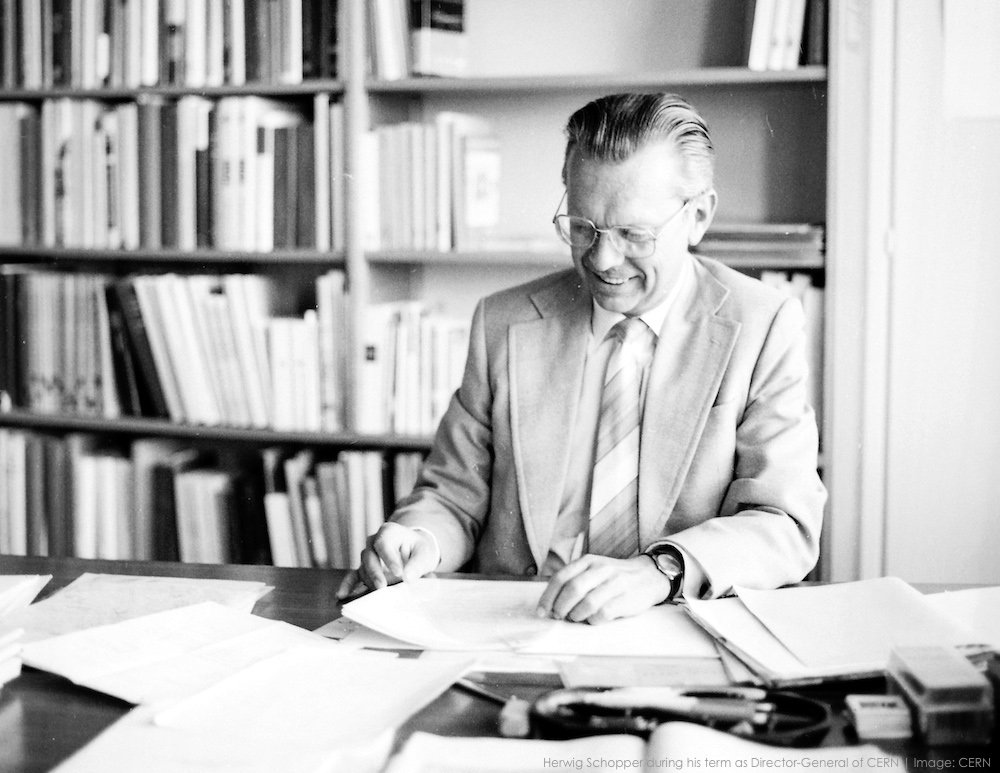
Herwig Schopper, EPS President from 1995 to 1997, passed away at the age of 101 Authors: James Gillies, Rolf Heuer, and Rüdiger Voss (CERN) Herwig Schopper passed away on 19 August at the age of 101. A brilliant scientist, manager and diplomat, he will be remembered by most for his leadership of DESY and CERN. However, in a career spanning almost 80 years, he made a lasting impact on global science that reaches far beyond particle physics in Europe. Born on February 28, 1924, in Landskron (today Lanškroun) in a German-speaking part of Czechoslovakia, Herwig enjoyed a protected childhood. He developed his interest in science, music, and sport, and learned fluent English. Drafted into the Luftwaffe signals corps during World War II, he served mainly on the Eastern front, ensuring communications with the military headquarters. At war’s end, he found himself a prisoner of the British military who, thanks to his language skills, engaged him as a translator. His friendship with an English captain facilitated his admission to Hamburg University, where he began his research career. Starting in 1951, several sabbaticals shaped his path: in Stockholm with Lise Meitner, in Cambridge with Otto Frisch, and at Cornell with Bob Wilson. In Cambridge, he published one of the first experimental confirmations of parity violation in weak interactions, for which Lee and Yang received the Nobel Prize in 1957. At Cornell, he learned the science of electron synchrotrons, a step up in energy which established him as an experimental particle physicist. Back in Germany, he held chairs at Erlangen, Mainz, and Karlsruhe, where he laid foundations for today’s Karlsruhe Institute of Technology. He built user groups for DESY and CERN, pioneered superconducting RF studies, and new calorimetry techniques which are still used in present-day experiments. By that time, Herwig had established a reputation not only as a brilliant physicist but also as an equally competent manager. In 1970 he joined CERN as head of the Nuclear Physics Division, only to return to Germany in 1973 to lead DESY. There, the electron-positron storage ring PETRA was constructed under his watch and the gluon discovered in 1979. In 1981 he became Director-General of CERN, tasked with securing approval for the Large Electron-Positron collider LEP. The construction of LEP provided ample opportunity to demonstrate his unique blend of managerial and diplomatic skills, and his ability to take unpopular decisions without dividing the community: to build the machine in a constant budget envelope, he had to shut down the Intersecting Storage Rings (ISR), world’s first hadron collider; his insistence on a 27 km long tunnel, despite some controversy, paved the way for the LHC and ultimately the 2012 discovery of the Higgs boson. His leadership set out the blueprint of CERN for decades to come. Herwig turned 65 two months after stepping down from his CERN position, but retirement was never on his mind. Instead, he started to deploy his unique skillset on an even grander scale. From 1992-94, he was President of the German Physical Society where he managed the integration of the Physical Society of the defunct German Democratic Republic, the first merger of two major scientific societies following the reunification of Germany. From 1995-97, Herwig served as President of the EPS, a term that was marked by another unpopular decision: he steered our society calmly through a tumultuous period when the seat relocated from Geneva to Mulhouse, saving our society from an existential political and financial crisis and building a solid basis for the universal representation of European physicists which the EPS is today. Subsequently, Herwig held important positions at UNESCO, chairing inter alia the advisory committee for the International Basic Science Programme. Most notably, he steered the creation of SESAME, the synchrotron light source in Jordan modeled on CERN. Mastering the political challenge of establishing this organisation with its most improbable constellation of Members was arguably Herwig’s greatest post-retirement achievement, which will remain in the textbooks as a shining example of visionary science diplomacy. He was delighted to see his tenacity rewarded when SESAME started delivering world-class results during his lifetime. Herwig Schopper was a rare blend of scientific and diplomatic genius, humanitarian, and gentleman. He married Ingeborg Stieler in 1949, and is survived by his children Doris and Andreas, three grandchildren, and his partner Ingrid. With his passing, science loses a unique leader whose legacy will endure. An extensive biography can be found in Open Access in:Herwig Schopper and James Gillies: Herwig Schopper – Scientist and Diplomat in a Changing World, Springer 2024 Herwig Schopper during his term as Director-General of CERN (Photo CERN)
CERN: Towards new physics with bent crystals
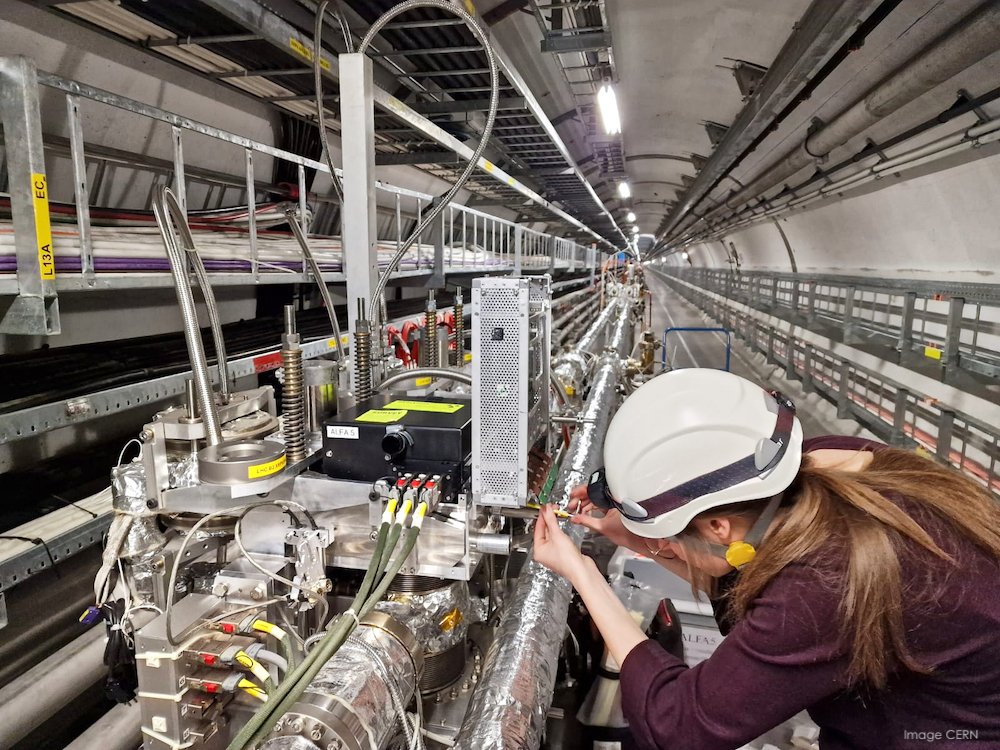
Double crystal channelling was observed for the first time at the LHC, a milestone for future short-lived particle research Geneva, 29th August, 2025, by Insa Meinke, CERN Might two bent crystals pave the way to finding new physics? The Standard Model of particle physics describes our world at its smallest scales exceptionally well. However, it leaves some important questions unanswered, such as the imbalance between matter and antimatter, the existence of dark matter and other mysteries. One method to find “new physics” beyond the Standard Model is to measure the properties of different particles as precisely as possible and then compare measurement with theory. If the two don’t agree, it might hint at new physics and let us slowly piece together a fuller picture of our Universe – like pieces of a jigsaw puzzle. An example of particles that physicists wish to study more closely are “charm baryons” such as the “Lambda-c-plus” (Λc+) which is a heavier “cousin” of the proton, consisting of three quarks: one up, one down and one charm. These particles decay after less than a trillionth of a second (10-13 s), which makes any measurement of their properties a race against time. Some of their properties have not yet been measured to high precision, leaving room for new physics to hide. The particles’ magnetic and electric dipole moments are of particular interest. In the past, precise measurements of dipole moments in other particles have provided key tests of established theories and, sometimes, uncovered surprises that pointed to new physics. A novel experimental concept aims to measure the properties of charm baryons using a fixed target and two bent crystals. Electric and magnetic dipole moments can be measured by forcing particles on a curved trajectory. Since charm baryons decay extremely quickly, however, conventional techniques using magnetic fields are not strong enough to obtain measurable results. An alternative approach could be to exploit the fact that the atoms inside a crystal are neatly organised as a three-dimensional lattice, forming tiny channels when viewed from certain directions. If a bent crystal is placed inside a stream of charged particles, the particles may follow these channels, experiencing deflections otherwise out of reach within such a short distance. Thus, this makes measurements on extremely short-lived particles possible. In the full set-up, one bent silicon crystal is inserted close to the proton beam inside a stream of particles called the “secondary halo” – protons that strayed too far from the beam centre and would normally be absorbed by the LHC collimation system. This first crystal steers the particles away from the main LHC beam towards a tungsten target where the collisions produce charm baryons. A second silicon crystal then bends the path of the produced particles strongly enough that their dipole moments can be precisely measured with a specialised detector. TWOCRYST was conceived as a proof-of-principle experiment, designed to test whether the concept really works in practice – from the performance of the crystals to the precision of their alignment. After only two years of preparation, TWOCRYST was installed in the LHC at the beginning of the year. “The experimental set-up is a simplified version of a full-fledged experiment, consisting of two bent silicon crystals, a target and two 2D detectors (a pixel tracker and a fibre tracker),” explains TWOCRYST study leader Pascal Hermes. “One goal is to verify if the particles can be deflected through both crystals in sequence – the so-called ‘double channelling’.” The first TWOCRYST measurements in June at an energy of 450 GeV showed promising results. All the newly installed hardware is functional and operational and, after both silicon crystals had been carefully aligned, “double-channelled” particles were observed for the first time at the LHC and at the highest energy ever achieved. The team will now complete a set of further tests at higher energies of several TeV. All the measurements will be analysed in detail to determine whether enough deflected charm baryons could be collected to justify a full-scale experiment. Whatever the outcome, TWOCRYST has already opened a new chapter of crystal applications at the LHC. The results from TWOCRYST may well shape the design of future fixed-target experiments and novel beam-control concepts at the LHC and beyond.
Physics back at the centre of public debate: 49th Congress of Polish Physicists comes to Katowice
Katowice, Poland — 2nd September 2025. The 49th Congress of Polish Physicists will convene in Katowice on 6th–11th September 2025, bringing together researchers, educators and innovators to discuss frontier science and the role of physics in Europe’s most pressing societal challenges—from energy transition and climate to healthcare, cybersecurity and trustworthy AI. Hosted by the Polish Physical Society (PTF) and the University of Silesia in Katowice, the Congress combines a rich scientific programme with public-facing events designed to rebuild trust in science and strengthen evidence-based policymaking. “Physics isn’t an island. It’s a tool to describe the world. As the world changes, physicists must be at its centre, not on the margins,” says Prof. Paweł Zajdel, Chair of the Organising Committee. Programme highlights Opening session – 6th September, Silesian Philharmonic (Katowice). A keynote by Prof. Anne L’Huillier (Nobel Prize in Physics 2023, attosecond light pulses) will headline the ceremony, followed by the presentation of the Marian Smoluchowski Medal, PTF’s highest distinction, and an evening concert dedicated to Maria Goeppert-Mayer and Wojciech Kilar. Scientific sessions – 8th–11th September, University of Silesia (Humanities Faculty, former Physics Building). Plenary lectures, parallel sessions and posters will span particle physics, astrophysics, quantum optics, condensed matter, physics education and applications. Dedicated tracks will showcase young researchers and university–industry collaboration, including updates from CERN, GSI/FAIR and ELI alongside Polish R&D centres. Student competition – InnoFusion. Two categories (talk and poster), with prizes of PLN 2,000 and PLN 1,000 respectively, rewarding scientific merit, presentation quality and innovation potential. Public debate – 11th September A flagship, public debate—“The role of physics and physicists in key areas of public life: medicine, cybersecurity, brain processes, artificial intelligence …”—will take place on 11th September (11:20) with audience Q&A. Speakers include Prof. Krzysztof Składowski (National Research Institute of Oncology, Gliwice), Prof. Col. Marek Życzkowski (Institute of Optoelectronics, Military University of Technology, Warsaw), Prof. Tadeusz Marek (Institute of Applied Psychology, Jagiellonian University), and physicists Prof. Paweł Olko (IFJ PAN, Kraków), Assoc. Prof. Piotr Kolenderski (Nicolaus Copernicus University, Toruń) and Prof. Stanisław Drożdż (IFJ PAN, Kraków). Assoc. Prof. Jerzy Grębosz (IFJ PAN) will moderate. The session will explore how physics tangibly advances early cancer diagnosis and treatment, critical-infrastructure resilience to cyberattacks, understanding of brain dynamics, and the responsible use of AI in schools, administration and business. Katowice & Chorzów: science in the city Events are hosted not only on campus but also across the city: the Silesian Philharmonic for the opening and a final session on 11th September at the Planetarium – Silesian Park of Science (Chorzów), featuring an 8K projection dome, GOTO Chiron III projector, physics simulators and Poland’s largest refracting telescope—an ideal setting to discuss learning by experience and the role of public spaces in a science-literate society. About the Polish Physical Society (PTF) Founded in 1920, PTF unites more than 1,500 members across regional branches and topical sections. It advances research, education and outreach; publishes Postępy Fizyki (Advances in Physics), runs competitions and conferences, and awards prestigious prizes for scientific and teaching excellence. PTF actively cooperates with international bodies, including the European Physical Society (EPS). Media & further information
Call For Nominations for the Kavli Prize
The call for nominations for the 2026 Kavli Prize is open. Every other year, The Kavli Prize invites the community to nominate scientists whose basic research has fundamentally transformed the fields of astrophysics, nanoscience and neuroscience – the big, the small, and the complex. The prize consists of $1 million awards in each of the three fields and is awarded directly to the Laureate(s). Read the details about the call on the website of the Kavli Prize.
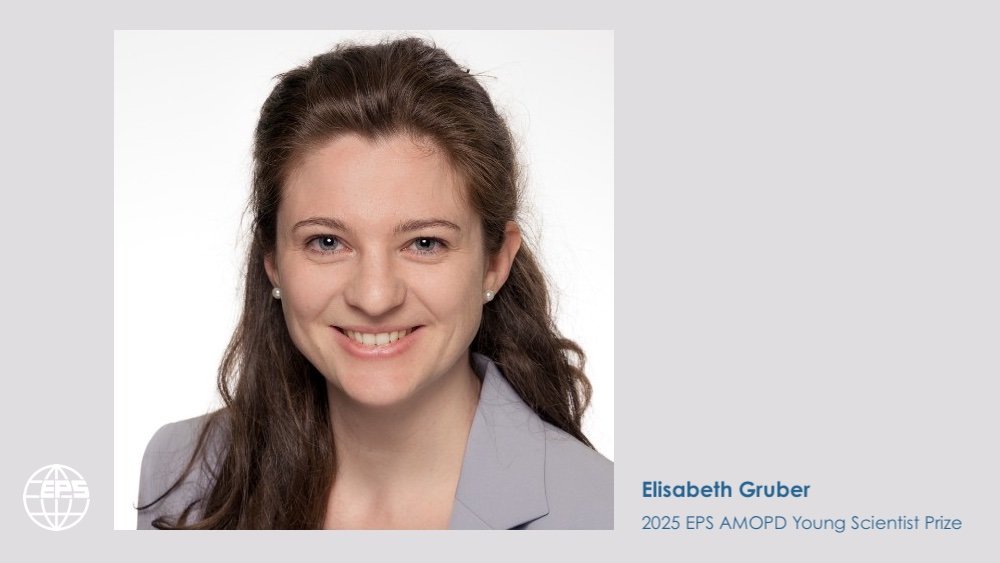
The winner of the 2025 EPS AMOPD Young Scientist Prize is announced!
The Atomic, Molecular, and Optical Physics Division (AMOPD) of the European Physical Society (EPS) is happy to announce that the 2025 EPS AMOD Young Scientist Prize goes to: Elisabeth Gruber, University of Innsbruck, Austria “for her invention of techniques to form ions of arbitrary complexity and different charge states at sub-Kelvin temperatures.” The prize, created in 2016 and updated in 2019, is awarded by nomination triennially during ECAMP, the European Conference on Atoms Molecules and Photons, which was held in Innsbruck, Austria, this year.

The latest issue of e-EPS is out!
Read the August 2025 issue of e-EPS here. e-EPS is the Society’s monthly newsletter.

Herwig Schopper (1924 – 2025)
CERN, 21st August 2025 Herwig Schopper, Director-General of CERN from 1981 to 1988, passed away on 19 August at the age of 101. An eminent physicist and a visionary diplomat, he played a key role in shaping fundamental physics in Europe and in making CERN the prestigious laboratory we know today. After obtaining a doctorate in optics at the University of Hamburg in 1951, Herwig Schopper turned first to nuclear physics and then to particle physics, working in several European laboratories, including on the weak interaction at the Royal Institute of Technology in Stockholm, Sweden, under Lise Meitner. After becoming a professor at the University of Erlangen, Germany, in 1954, he spent a year’s sabbatical in Cambridge, United Kingdom, and then went on to be appointed as a professor at the University of Mainz, Germany, in 1957. At that time, Germany was rebuilding its fundamental physics infrastructure: the DESY research centre was created in 1959, for example, and was developing its first accelerators. Herwig Schopper played a key role in these trailblazing activities. In 1960, he left for the University of Cornell in the United States, where he carried out physics research at its powerful electron synchrotron. The following year, he became Director of the Nuclear Physics Institute at the University of Karlsruhe. In 1973, he was appointed Director of DESY, a position he held until 1981. Under his leadership, several accelerators were developed and commissioned. Alongside his brilliant career in Germany, he was involved in research at CERN from the 1960s onwards and held several strategic posts as of the 1970s: Leader of the Nuclear Physics division from 1970 to 1971, Chair of the ISR Committee from 1973 to 1976 and member of the Scientific Policy Committee from 1978 to 1980. During his term as CERN Director-General, which began in 1981, his scientific vision and diplomatic skills played a key role in securing the approval of the Large Electron–Positron Collider (LEP) project, and then in completing the construction of this accelerator, the largest ever built. He contributed to CERN’s global expansion and was one of the architects of the international cooperation model for the LEP experiments, which paved the way for today’s large experimental collaborations. His mandate was also marked by the discovery of the W and Z bosons by the UA1 and UA2 experiments at the SPS proton-antiproton collider in 1983, which was recognised by the Nobel Prize in Physics awarded to Carlo Rubbia and Simon van der Meer the following year. In the years that followed his term as CERN Director-General, Herwig Schopper continued to work for science, serving on the scientific councils of several laboratories and presiding over the German Physical Society and later the European Physical Society. One of his greatest achievements was SESAME, the international centre for Synchrotron-Light for Experimental Science and Applications in the Middle East, of which he was a co-founder and the first President of the Council. A tireless ambassador for fundamental science, he maintained a keen interest in the future of his field and continued to lend support to his successors through his vision and vast experience. Until his very last moments, he never ceased to care deeply about CERN and its work. “We have lost a brilliant scientist and one of the greatest contributors to CERN and to our field, who really embodied the core values of our Laboratory. We have also lost a cherished friend, who was admired for his insight, his dedication and his warmth”, said Fabiola Gianotti, CERN Director-General. “He will forever remain in our memories.” Video filmed on the occasion of Herwig Schopper’s 100th birthday in February 2024. (Video: CERN) A full obituary will appear later in the CERN Courier.