

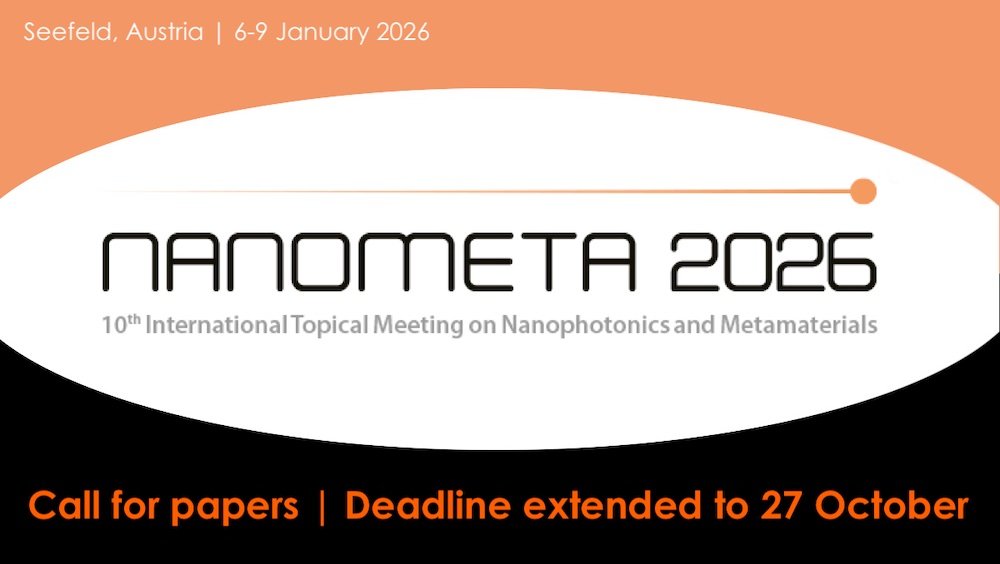
Nanometa 2026: You can still submit your paper! The deadline is extended to 27th October.Visit the website of the conference to submit: https://www.nanometa.org/
News from EPL
Author: Vijala Kiruvanayagam In August, PhysicsWorld published a podcast based on an article published in EPL ‘Unveiling complexity: Statistical physics approaches to ecological communities’, Ada Altieri and Silvia De Monte. Link to the podcast: https://physicsworld.com/a/from-rabbits-and-foxes-to-the-human-gut-microbiome-physics-is-helping-us-understand-the-natural-world This episode of the Physics World Weekly podcast is a conversation with two physicists, Ada Altieri and Silvia De Monte, who are using their expertise in statistical physics to understand the behaviour of ecological communities. This discussion is based on a Perspective article that Altieri (an associate professor at the Laboratory for Matter and Complex Systems at the Université Paris Cité, France) and De Monte (a senior research scientist at the Institute of Biology in the École Normale Supérieure in Paris and the Max Planck Institute for Evolutionary Biology in Ploen, Germany) wrote for the journal EPL, which sponsors this episode of the podcast. To-date the podcast has been downloaded over 4400 times indicating it is in-line with PhysicsWorld’s best performing podcasts. Additional info: A century ago, pioneering scientists such as Alfred Lotka and Vito Volterra showed that statistical physics techniques could explain – and even predict – patterns that ecologists observe in nature. At first, this work focused on simple ecosystems containing just one or two species (such as rabbits and foxes), which are relatively easy to model. Nowadays, though, researchers such as Altieri and De Monte are turning their attention to far more complex communities. One example is the collection of unicellular organisms known as protists that live among plankton in the ocean. Another, closer to home, is the “microbiome” in the human gut, which may contain hundreds or even thousands of species of bacteria. Modelling these highly interconnected communities is hugely challenging. But as Altieri and De Monte explain, the potential rewards – from identifying “tipping points” in fragile ecosystems to developing new treatments for gut disorders such as irritable bowel syndrome and Crohn’s disease – are great. Sponsorships This summer, EPL sponsored awards for early career researchers at a number of meetings all over the world. In June, EPL sponsored the ‘Best Activity Awards’ at the 13th Young Minds Leadership Meeting which was held in Santiago de Compostela. The winning entries came from the Young Minds sections of Milan and Yerevan. In July, EPL sponsored two ‘Best Oral Presentations’ at the Workshop ‘Complex Flows and Complex Fluids‘ (https://biferale.web.roma2.infn.it/ComplexFlowsComplexFluids/) which was held in Rome, 8-11 July 2025 as a satellite meeting of StatPhys29 (https://statphys29.org/) Also in July, EPL was delighted to sponsor three ‘Best Poster Awards’ at the first ever StatPhys satellite meeting held in Africa. This event was held in Kigali, and as part of the meeting, a two-day intense school of complex systems was held to encourage students’ participation at the meeting. The poster prizes were presented by EPL Deputy Editor, Dr Rosemary Harris. Finally, in September EPL sponsored three ‘Best Poster Awards’ at the Workshop on Frontiers in Quantum Materials” (https://www.ictp-saifr.org/wfqm2025/) held in São Paulo, Brazil at the International Centre for Theoretical Physics – South American Institute for Fundamental Research (ICTP-SAIFR) . More information and photos from each of these events can be found at: News – EPL (Europhysics Letters) Awards made in 2025 – Europhysics Letters – IOPscience
Macroscopic quantum mechanical tunnelling and energy quantisation in an electric circuit
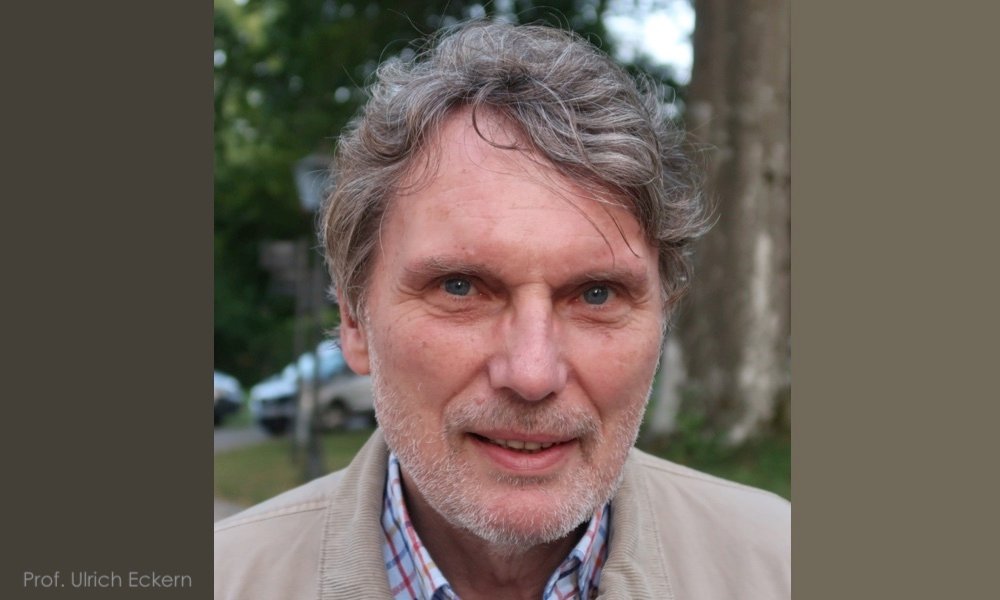
Interview with Ulrich Eckern on the 2025 Nobel Prize in Physics for Clarke, Devoret and Martinis Author: Erich Runge My accompanying opinion piece as Chair of the Condensed Matter Division emphasizes that this year’s Nobel Prize in Physics is not an early tribute to the quantum computer, but rather honours a spectacular manifestation of macroscopic quantum mechanics. I consulted an expert on this topic: Ulrich Eckern, Professor Emeritus at the University of Augsburg, Germany, has been working on various aspects of theoretical solid-state physics and mesoscopic physics for many years, including the theory of superconductivity and superfluid 3He, Josephson junctions and networks, and low-dimensional model systems. During his PhD at the University of Karlsruhe (now KIT), 1977-79, discussions with three scientists visiting his mentor, Albert Schmid, left a major mark on him, scientifically as well as personally: John Bardeen, Michael Tinkham – and John Clarke. How did you get involved into the field which is often called “dissipative quantum mechanics”? During my postdoc at Cornell University, 1980-82, a pioneering paper by Amir Caldeira and Tony Leggett was published that was devoted to quantum tunnelling in dissipative systems. Motivated by this work, Vinay Ambegaokar, Gerd Schön, and I set out to formulate the “quantum dynamics” of a Josephson junction on the basis of the accepted microscopic description, namely two tunnel-coupled superconductors (within the BCS model). We were able to confirm the Caldeira-Leggett results, but were also able to elucidate some important differences, as in ideal junctions the dissipation is related to quasiparticle excitations. Without going into details, what is or was the basic question at the time? The general question, discussed for years, was this: “Given a system that is described by the usual classical equation of motion of a particle with damping, i.e. energy dissipation – what is the correct quantum theory?” Since the classical theory can be derived from quantum theory but not vice versa, there is no general answer to this question. In the case of a Josephson junction specifically, the “particle” is the order parameter phase difference, and the classical equation of motion is called resistive-shunted junction model. The model’s parameters are the capacitance (proportional to the mass), the resistance (inversely proportional to the damping), and the Josephson coupling energy which determines the magnitude of a periodic force term. An external current slightly (as long as the current is well below the critical current) tilts the potential. Thus, classically, the “particle” sits in one of the potential minima, and it can “escape” via thermal fluctuations only. But how does the escape mechanism evolve with decreasing temperature, when the thermal energy becomes small compared to charging and Josephson energy? Will escape happen via quantum tunnelling through the barrier? And how is the latter modified by damping (dissipation)? Why did John Clarke impress you so much? When I met him in Karlsruhe during my PhD, John Clarke was still at an early stage of his career. He impressed me not only by his apparent extraordinary skills in designing and carrying through difficult experiments, but also by his strong desire to grasp the relevant theoretical concepts — in other words, to understand the heart of the matter. I believe these two characteristics led him directly to undertaking the two seminal studies* which are now honoured. What was the significance of the 1985 papers* by the 2025 Nobel Prize winners? While there was mostly agreement with respect to the theoretical description, namely that dissipation would decrease the tunnelling rate out of a metastable state, the experiments offered the ultimate confirmation: the theoretical concepts worked! The results included a detailed comparison of theory and experiment with respect to the temperature dependence of the tunnelling rate. So in fact, the very concept of “macroscopic quantum tunnelling” was confirmed – and later also the concept of “macroscopic quantum coherence”, which is relevant for some of today’s quantum computer concepts. The notion of “macroscopic”, by the way, refers to the fact that during a tunnel event close to a million electrons tunnel coherently through the barrier. What were the experimental challenges? The crossover between classical escape and quantum tunnelling in the experiments occurs around 30 mK, so I can imagine that an excellent temperature control is needed. You have to exclude as many external effects as possible which might lead to dissipation. For a large charging energy, a capacitance of just a few pF is needed, which implies rather small junctions, even though they are macroscopic compared to the atomic scale. What about macroscopic quantum coherence? When Josephson junctions are included in a ring geometry and a suitable magnetic field is applied, a double-well potential can be realised, implying a quantum mechanical two-level system at sufficiently low temperatures. As Sudip Chakravarty realised early on, dissipation will have a profound effect at a certain ‘critical’ value, abruptly and completely suppressing quantum coherence. A similar delocalisation-localisation transition has been predicted theoretically for a periodic potential — i.e. a Josephson junction in the zero-current case. This transition is now known as the Schmid–Bulgadaev dissipative phase transition, and is still the subject of ongoing research. The questions were asked by Erich Runge, Chair of the Condensed Matter Division of EPS, member of the Executive Board of the German Physical Society and professor of theoretical physics at the Technical University of Ilmenau, Germany. * References 1. Measurements of Macroscopic Quantum Tunneling out of the Zero-Voltage State of a Current-Biased Josephson JunctionMichel H. Devoret, John M. Martinis, and John Clarke, Phys. Rev. Lett. 55, 1908 – Published 28 October, 1985, DOI: https://doi.org/10.1103/PhysRevLett.55.1908 2. Energy-Level Quantization in the Zero-Voltage State of a Current-Biased Josephson JunctionJohn M. Martinis, Michel H. Devoret, and John Clarke, Phys. Rev. Lett. 55, 1543 – Published 7 October, 1985, DOI: https://doi.org/10.1103/PhysRevLett.55.1543
The 2025 Nobel Prize in Physics and the International Year of Quantum Science and Technology
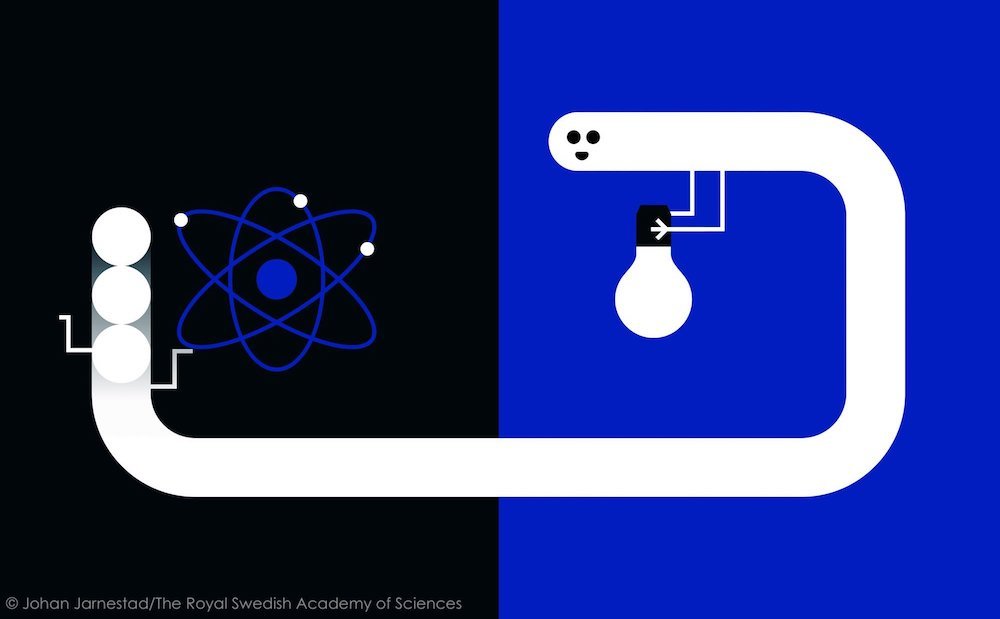
Author: Erich Runge When the 2025 Nobel Prize in Physics was awarded to John Clarke, Michel H. Devoret, and John M. Martinis ‘for the discovery of macroscopic quantum mechanical tunnelling and energy quantisation in an electric circuit’ my first three thoughts were (i) ‘Oh, a Nobel Prize for quantum computing and the superconducting transmon’, (ii) ‘How fitting for the International Year of Quantum Science and Technology’, and (iii) ‘Another two Europeans doing wonderful work in the US.’ Addressing thought (ii) is easy: Yes, it fits perfectly. If the 2022 Nobel Prize celebrated the so called ‘Second Quantum Revolution,’ superconductivity-based circuit quantum electrodynamics is at least ‘Quantum Revolution 1.5’: Macroscopic quantum physics with tremendous economic impact. Point (iii) leaves me with mixed feelings. I am delighted that an Englishman educated in Cambridge and a Frenchman who received an excellent education in Paris collaborated with a young American in Berkeley to produce this groundbreaking work. Both maintained their connections to their homeland, Clarke as Honorary Fellow at the University of Cambridge, Devoret through appointments at the Orme des Merisiers Laboratory of CEA Saclay and at the Collège de France. Nevertheless, this award also reminds us of our obligation to create similarly inspiring conditions at European universities. I was wrong about (i): The Nobel Prize for Quantum Computing and/or quantum sensing is still to come. Macroscopic quantum tunnelling in Josephson junctions by itself is mind-blowing, and I remember very well when I first encountered circuit quantum electrodynamics (cQED). I thought I was being taken for a ride, that it should be possible to simply quantize a normal circuit with capacitors and so on. How incredible these ideas must have been when they were first conceived! I took this as an opportunity to ask Ulrich Eckern, an expert in mesoscopic physics, about his memories of that time. You can find the interview as a supplement to this short opinion piece here. Erich Runge is Chair of the Condensed Matter Division of EPS, member of the Executive Board of the German Physical Society and professor of theoretical physics at the Technical University of Ilmenau, Germany.
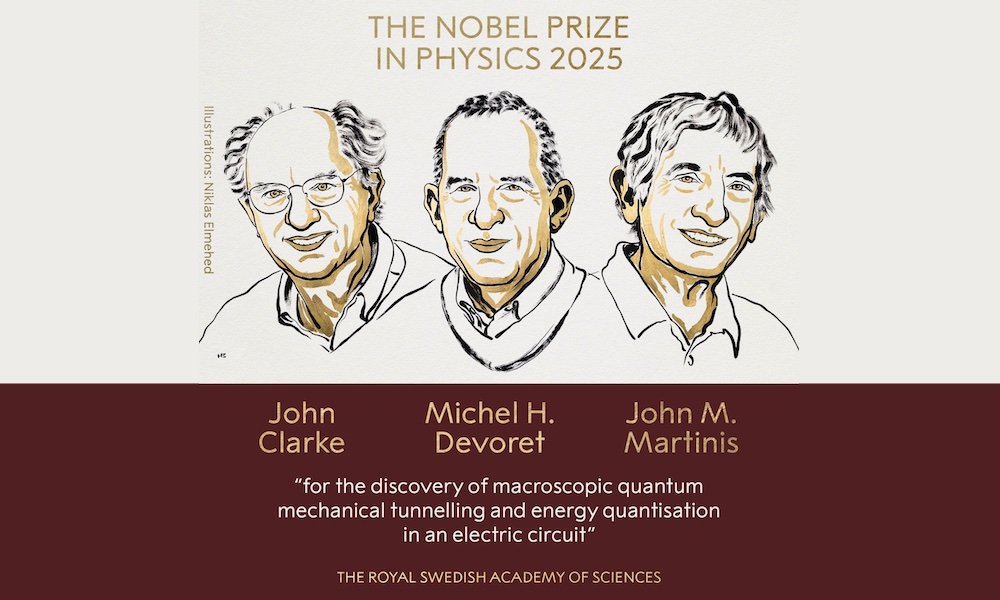
The Nobel Prize in Physics 2025
7 October 2025 – The Royal Swedish Academy of Sciences has decided to award the Nobel Prize in Physics 2025 to “for the discovery of macroscopic quantum mechanical tunnelling and energy quantisation in an electric circuit” Read the press release of The Royal Swedish Academy of Sciences here.
The latest issue of e-EPS is out!
Read the September 2025 issue of e-EPS here. e-EPS is the Society’s monthly newsletter.
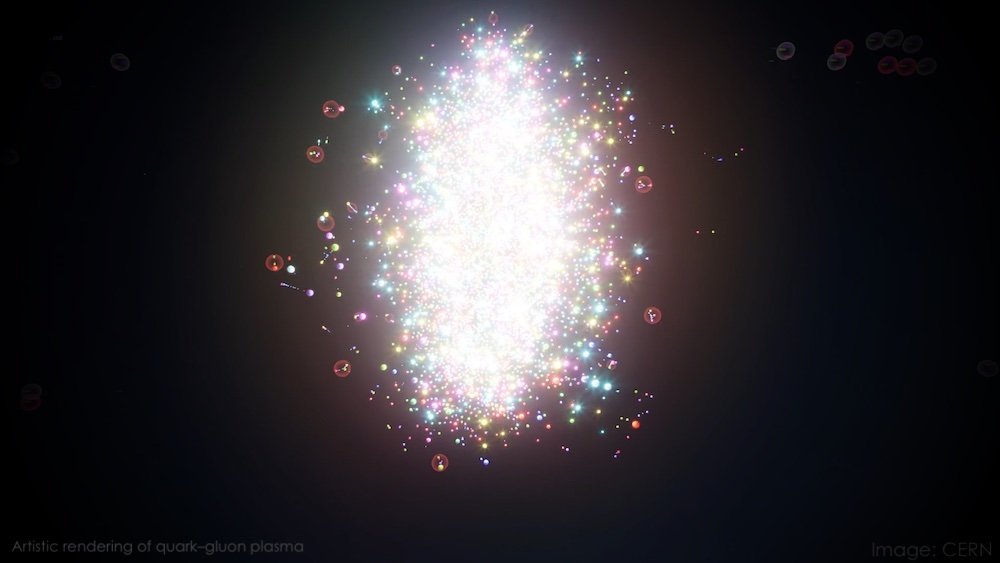
Shape-shifting collisions probe secrets of early Universe
The first high-energy collisions between light nuclei at the Large Hadron Collider confirm the unusual “bowling-pin” shape of neon nuclei and offer up a new tool to study the extreme state of matter produced in the aftermath of the Big Bang CERN, Geneva, 18th September 2025. This summer, the Large Hadron Collider (LHC) took a breath of fresh air. Normally filled with beams of protons, the 27-km ring was reconfigured to enable its first oxygen–oxygen and neon–neon collisions. First results from the new data, recorded over a period of six days by the ALICE, ATLAS, CMS and LHCb experiments, were presented during the Initial Stages conference held in Taipei, Taiwan, on 7–12 September. Smashing atomic nuclei into one another allows physicists to study the quark–gluon plasma (QGP), an extreme state of matter that mimics the conditions of the Universe during its first microseconds, before atoms formed. Until now, exploration of this hot and dense state of free particles at the LHC relied on collisions between heavy ions (like lead or xenon), which maximise the size of the plasma droplet created. Collisions between lighter ions, such as oxygen, open a new window on the QGP to better understand its characteristics and evolution. Not only are they smaller than lead or xenon, allowing a better investigation of the minimum size of nuclei needed to create the QGP, but they are less regular in shape. A neon nucleus, for example, is predicted to be elongated like a bowling pin – a picture that has now been brought into sharper focus thanks to the new LHC results. The experiments focused on measurements of subtle patterns in the angles and directions of the particles flying outward as the QGP droplet expands and cools, which are caused by small distortions in the original collision zone. Remarkably, these “flow” patterns can be described using the same fluid-dynamics calculations that are used to model everyday fluids, allowing researchers to probe both the properties of the QGP and the geometry of the colliding nuclei. Accurate model predictions enable a more precise exploration of flow in oxygen–oxygen and neon–neon collisions than in proton–proton and proton–lead collisions. ALICE, which specialises in the study of the QGP, as well as the general-purpose experiments ATLAS and CMS, have measured sizeable elliptic and triangular flow in oxygen–oxygen and neon–neon collisions, and found that these depend strongly on whether the collisions are glancing or head-on. The level of agreement between theory and data is comparable to that obtained for collisions of heavier xenon and lead ions, despite the much smaller system size. This provides strong evidence that flow in oxygen–oxygen and neon–neon collisions is driven by nuclear geometry, supporting the bowling-pin structure of the neon nucleus and demonstrating that hydrodynamic flow emerges robustly across collision systems at the LHC. Complementary results presented last week by the LHCb collaboration confirm the bowling-pin shape of the neon nucleus. The results are based on lead–argon and lead–neon collisions in a fixed-target configuration, using data recorded in 2024 with its SMOG apparatus. The LHCb collaboration has also started to analyse the oxygen–oxygen and neon–neon collision data. “Taken together, these results bring fresh perspectives on nuclear structure and how matter emerged after the Big Bang,” says CERN Director for Research and Computing Joachim Mnich.

EPS Lisbon Young Minds at the Técnico Open Day 2025
Author: Duarte Esteves, EPS Young Minds Lisbon On 5th April 2025, Instituto Superior Técnico (University of Lisbon) fulfilled its usual tradition and opened its doors to the general public. With the goal of promoting science and engineering, over 100 free activities were offered to about 3000 visitors of all ages, including lab visits and a science fair. The EPS Lisbon Young Minds section has been regularly participating in this event since 2022 in a partnership with the host research centre INESC MN and with the Department of Nuclear Sciences and Engineering. In 2025, the EPS Lisbon Young Minds prepared an interactive activity regarding the electromagnetic spectrum. This incursion on the world of radiation started on the long-wavelength range with infrared radiation, going on to visible and ultraviolet radiation. Kids and adults alike were delighted to find out more about these non-ionising radiations. Namely, the production of electricity using solar cells and the detection of ultraviolet radiation were highlighted, as well the implications for our health. Higher energy ionising radiations were also presented, namely alpha, beta and gamma rays. In particular, the basics of nuclear decays were explained in simple terms, as well as how they can be detected using Geiger-Müller tubes or gamma spectrometers. The impact of radioactivity, its ubiquity and applications were also discussed, conveying both the positive (for instance, radiotherapy or the sterilisation of food and surgical material) and the negative aspects (such as the health effects). Finally, the activity also introduced the audience the exciting world of micro- and nanotechnology, building on the previous hands-on, large-scale experiments. Specifically, the participants learnt about how radiation sensors work and how can be they fabricated in cleanroom contexts. Examples from state-of-the art detectors developed at INESC MN were showcased using a microscope, highlighting the opportunities in miniaturisation and the possible applications in different settings. The EPS Lisbon Young Minds section was happy to join this event of its host institution once more, aiming to promote the interest in Physics in the local community. The simple yet effective interactive demonstrations, paired with informal but informative conversations were very well-received by the participants. The outcome was very positive, as the activity allowed many audience members to become true radiation experts. Moreover, it contributed to raise awareness about the necessity of fundamental and applied research in different domains of Physics, ranging from solid state to nuclear, as well as the benefits for society.

Interview with José María de Teresa: Physics is a key discipline for improving our understanding of nature
Since May 2025, José María de Teresa is the new President-Elect of the European Physical Society. Gina Gunaratnam, EPS communications coordinator, interviewed Prof. de Teresa. How did you get to know the European Physical Society? During my PhD, I learned that one of my supervisors was a member of the Board of the Condensed Matter Division (CMD) of the European Physical Society (EPS), but I was relatively unfamiliar with EPS. However, in 2000, during my postdoc, I had the opportunity to give an invited talk at the CMD conference held in Montreux, Switzerland. I thoroughly enjoyed the conference and was able to discuss with many colleagues. In short, this conference was a great experience and a milestone in my scientific career. Between 2021 and 2024, you were chair of the EPS Condensed Matter Division. Now you are the next EPS President- Elect. Why is it important for you to be involved in the Society’s activities? What will your priorities be as President in 2026? In 2014, I organised one of the mini-colloquia at the CMD conference held in Paris and I was invited to join the CMD Board. Little by little, I began to understand how the EPS works and the relevance of its divisions. In the 21st century, Physics is a very broad discipline, and each division develops its own activities to achieve specific goals. I found the Condensed Matter Division to be a very useful organisation to meet every two years, keep up with the latest developments in the field, and maintain a sense of integrated community. At the same time, the EPS represents a space for all physicists in Europe and provides a meeting point for sharing the latest advances in Physics, as well as enabling collaboration across different research fields. In my opinion, the EPS is the only organisation that offers a forum for all physicists in Europe. We cannot forget that Europe is a key player but relatively small internationally, and it makes sense for national physics societies to join forces to achieve common goals. I must admit that I enjoy participating and playing an active role in networks and scientific societies. Although it takes time, it is worth meeting new colleagues in person, sharing scientific discoveries, and making progress. During my term as President, I have an ambitious program to implement the mission, vision, and core values of the EPS. Together with the EPS office staff, the members of the Executive Committee, and EPS stakeholders, I plan to implement actions along several axes, all with the overall goal of making the EPS an even more dynamic society with a greater direct impact on more than 100,000 European physicists. Regarding the commitment of the EPS to society, we will focus on using our knowledge of physics and the tools and networks available within the EPS to reinforce European values. Could you describe your current field of research? I have a strong background in magnetic materials and spintronics, which I investigated in the first part of my career. Due to a large investment in nanotechnology of the Spanish Ministry of Science and the Aragón Government around 2010, we had the opportunity to set up a new lab in Zaragoza with the most advanced electron and ion microscopes at that time. Since then, I have led the activities in the lab regarding nanofabrication based on focused electron and ion beams, which my group has exploited to investigate fundamental aspects of magnetic, superconducting and quantum materials, whilst developing new techniques for efficient and high-resolution device fabrication. If I had to summarise my current research activities in one single sentence, I would say that «I develop key enabling technologies based on focused electron and ion beams to investigate how matter behaves at the nanoscale and to build efficient nanodevices». What are the challenges of this field? The existing technology for creating focused electron and ion beams in scanning microscopes is astonishing, allowing these beams to be focused to less than 1 nm. While exploring and patterning materials with this spatial resolution is fascinating and leads to numerous applications, this technology suffers from low throughput, for example, compared to optical lithography, which is well established in the semiconductor industry. My group has developed new nanofabrication strategies, based on the use of cryogenic temperatures or metal-organic solutions, to increase throughput, but further developments are needed to expand the range of applications. From a fundamental point of view, achieving artificial topological superconductivity is an important goal in condensed matter physics. My group and many others are working with topological insulators and superconductors to fabricate hybrid devices, with the aim of exploring this technology for quantum computing and sensing. Why did you study physics? As a child, I suffered through the long (three-month) summer holidays in hot Spain, which I often used to explore books on scientific topics and biographies of important scientists. Physics seemed to me to be the most fundamental and challenging science, and the one I was most passionate about. Whether this was a siren call, only time would tell. Thirty years after graduating as a physicist, I feel happy that I made the decision to study physics. In fact, representing the European physicists through the EPS for two years is a true honour I never imagined, while sweating in my humble home in Zaragoza a few decades ago. Would you encourage youngsters to study physics and why? Physics is a key discipline for improving our understanding of nature, as well as for the future of the European economy. It is essential to promote physics among youngsters so that the number of physicists in Europe does not decrease in the future. In a constantly evolving digital society, where children are accustomed to achieving their goals with a simple click, it is not easy to convince them that studying a discipline as complex as physics is worthwhile. However, our mission is to show them that physics is fascinating, that it allows us to understand the world around us, and that

The 12th BPU Congress in Bucharest, July 2025
Author: Radu Constantinescu The Balkan Physical Union (BPU) is the Union of the National Physical Societies from the following 10 countries, all of which are also EPS members: Albania, Bulgaria, Cyprus, Greece, Moldova, Montenegro, North Macedonia, Romania, Serbia and Turkey, https://balkanphysicalunion.info/. Founded in 1985, the Union celebrated its 40th anniversary organizing this year in Bucharest, from July 8 to July 12, its 12th General Congress. The activities were hosted by the National University for Science and Technology “Politehnica” Bucharest and by the Faculty of Physics from the University of Bucharest. The participants had also the opportunity to visit “Extreme Light Infrastructure” (ELI), the most powerful laser in the world that operates within the National Institute of Physics and Nuclear Energy “Horia Hulubei” (NIPNE-HH) in Magurele, near Bucharest. The Congress was attended by almost 400 researchers, students, teachers from 25 countries and consisted of 229 plenary, oral and poster communications. The organizers acknowledge the support offered by the Romanian Ministry of Education and Research, the Romanian Physical Society, the University of Craiova, and the Q-Fort Company, all from Romania. The participants have the opportunity to publish their contributions in three volumes that will be published by EDP Sciences, Springer and Societa Italiana di Fisica, MDPI. In parallel with the 12th BPU Congress, other satellite events took place, the whole program being presented at https://bpu12.ucv.ro/. The European Physical Society was the main co-organizers of the round table, of the two schools and the “hands on” activity. The last three activities were related to the International Year of Quantum Science and Technology and attended by almost 100 students. One of the Schools, the “Frontiers in Quantum Science and Technology” was generously supported the WE Heraeus Foundation from Germany, while ICTP Trieste sponsored the SEENET Workshop.