

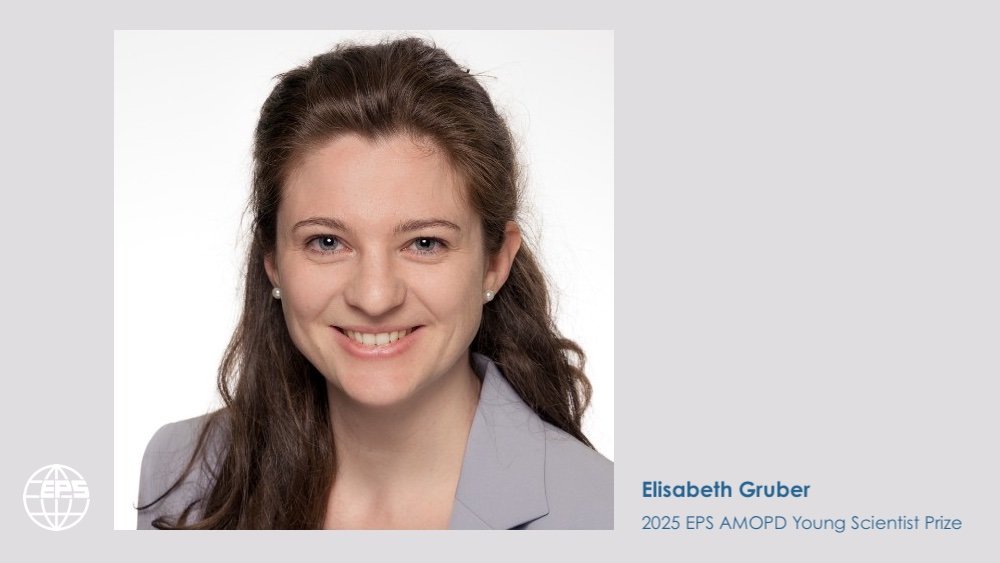
The Atomic, Molecular, and Optical Physics Division (AMOPD) of the European Physical Society (EPS) is happy to announce that the 2025 EPS AMOD Young Scientist Prize goes to: Elisabeth Gruber, University of Innsbruck, Austria “for her invention of techniques to form ions of arbitrary complexity and different charge states at sub-Kelvin temperatures.” The prize, created in 2016 and updated in 2019, is awarded by nomination triennially during ECAMP, the European Conference on Atoms Molecules and Photons, which was held in Innsbruck, Austria, this year.

The latest issue of e-EPS is out!
Read the August 2025 issue of e-EPS here. e-EPS is the Society’s monthly newsletter.

Herwig Schopper (1924 – 2025)
CERN, 21st August 2025 Herwig Schopper, Director-General of CERN from 1981 to 1988, passed away on 19 August at the age of 101. An eminent physicist and a visionary diplomat, he played a key role in shaping fundamental physics in Europe and in making CERN the prestigious laboratory we know today. After obtaining a doctorate in optics at the University of Hamburg in 1951, Herwig Schopper turned first to nuclear physics and then to particle physics, working in several European laboratories, including on the weak interaction at the Royal Institute of Technology in Stockholm, Sweden, under Lise Meitner. After becoming a professor at the University of Erlangen, Germany, in 1954, he spent a year’s sabbatical in Cambridge, United Kingdom, and then went on to be appointed as a professor at the University of Mainz, Germany, in 1957. At that time, Germany was rebuilding its fundamental physics infrastructure: the DESY research centre was created in 1959, for example, and was developing its first accelerators. Herwig Schopper played a key role in these trailblazing activities. In 1960, he left for the University of Cornell in the United States, where he carried out physics research at its powerful electron synchrotron. The following year, he became Director of the Nuclear Physics Institute at the University of Karlsruhe. In 1973, he was appointed Director of DESY, a position he held until 1981. Under his leadership, several accelerators were developed and commissioned. Alongside his brilliant career in Germany, he was involved in research at CERN from the 1960s onwards and held several strategic posts as of the 1970s: Leader of the Nuclear Physics division from 1970 to 1971, Chair of the ISR Committee from 1973 to 1976 and member of the Scientific Policy Committee from 1978 to 1980. During his term as CERN Director-General, which began in 1981, his scientific vision and diplomatic skills played a key role in securing the approval of the Large Electron–Positron Collider (LEP) project, and then in completing the construction of this accelerator, the largest ever built. He contributed to CERN’s global expansion and was one of the architects of the international cooperation model for the LEP experiments, which paved the way for today’s large experimental collaborations. His mandate was also marked by the discovery of the W and Z bosons by the UA1 and UA2 experiments at the SPS proton-antiproton collider in 1983, which was recognised by the Nobel Prize in Physics awarded to Carlo Rubbia and Simon van der Meer the following year. In the years that followed his term as CERN Director-General, Herwig Schopper continued to work for science, serving on the scientific councils of several laboratories and presiding over the German Physical Society and later the European Physical Society. One of his greatest achievements was SESAME, the international centre for Synchrotron-Light for Experimental Science and Applications in the Middle East, of which he was a co-founder and the first President of the Council. A tireless ambassador for fundamental science, he maintained a keen interest in the future of his field and continued to lend support to his successors through his vision and vast experience. Until his very last moments, he never ceased to care deeply about CERN and its work. “We have lost a brilliant scientist and one of the greatest contributors to CERN and to our field, who really embodied the core values of our Laboratory. We have also lost a cherished friend, who was admired for his insight, his dedication and his warmth”, said Fabiola Gianotti, CERN Director-General. “He will forever remain in our memories.” Video filmed on the occasion of Herwig Schopper’s 100th birthday in February 2024. (Video: CERN) A full obituary will appear later in the CERN Courier.

Alessandro Volta Prize: Call for nominations
Nominations are now open for the Alessandro Volta Prize, a European Physical Society [EPS] prize. The award, intended to promote excellence in research, will be given in recognition of outstanding research and achievements in physics. The Alessandro Volta Prize is given to individuals or groups of up to three people. The award includes a diploma, a medal, and €10,000 in prize money. The prize was established in 2025 by Acinque S.p.A. and the EPS. An award ceremony will be organised in Como (IT). The event will be complemented by an international symposium highlighting the laureates’ research, supported by Acinque. The Prize Selection Committee is composed of:– The EPS President– An EPS Division or Group Chair– An EPS Honorary Member– A representative of an EPS Associate Member institution– One member, who is a scientist, representing Acinque Nominations for the Alessandro Volta Prize 2025 should include:– personal details about the nominee(s), including biographical statements– citations highlighting the work of the nominee(s)– up to three statements of support from individuals who are familiar with the work– online link to the nomination form The deadline for nominations is 31st October 2025. More information Alessandro Volta PrizePrize Charter
EPS Policy Officer
The EPS is Looking for Freelance Support for Policy Initiatives The European Physical Society wishes to engage a Policy Officer to support the EPS in its interactions with Policy Makers in the EU. The EPS requires expert support to aid the development and dissemination of EPS policy, facilitate the interaction between the EPS executive and EU institutions and play a leading role in organising events with the support of EPS colleagues. The EPS would like to engage an experienced consultant on a freelance basis with up to 10 working days per month dependant on the parliamentary calendar. Context of the Role The EPS is a federation of national physical societies and individual physicists which advocates physics research and its contribution to the economic, technological, social and cultural advancement in Europe. The EPS represents the European physics community, supports the role of physicists to actively engage in the design and implementation of European science policies; provides a forum for EPS Members to discuss common issues and share best practice; engages in activities to reduce European fragmentation in physics research, funding and education and cooperates with international physical societies to promote physics, to support physicists worldwide and to foster international collaboration. You will be: Dimensions Application We would be interested in receiving proposals including the following: Applications and enquiries should be sent to: secretariat@eps.org
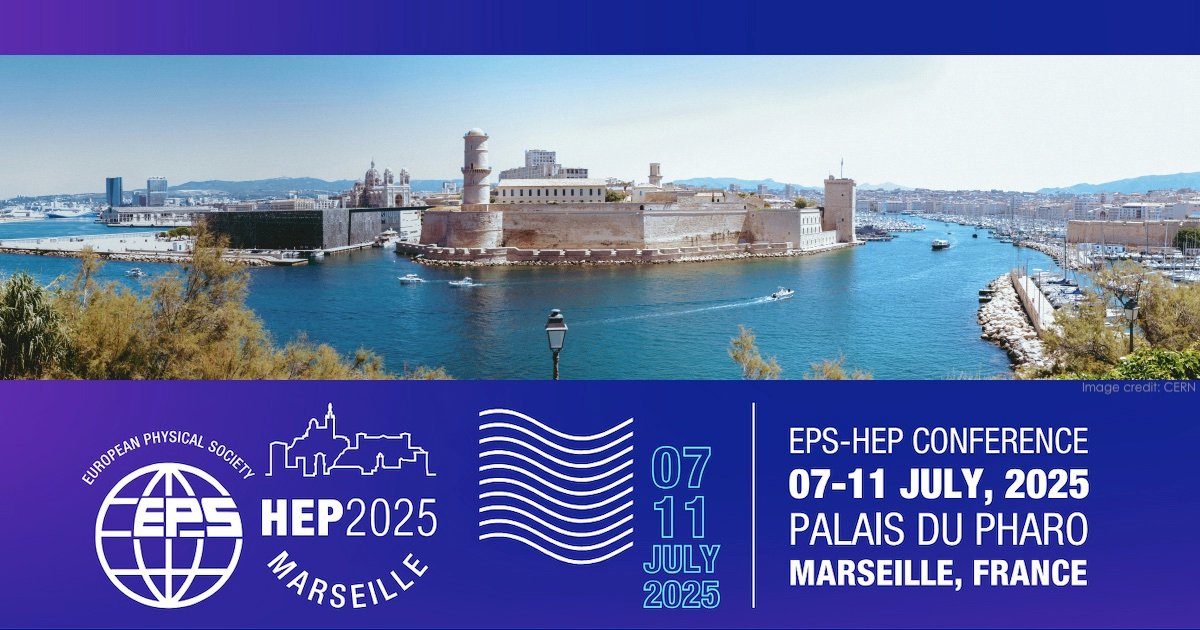
An exceptional edition of the EPS-HEP conference brings the particle physics community together in Marseille
Author: Thomas Strebler From 7 to 11 July 2025, the European Physical Society Conference on High Energy Physics (EPS-HEP 2025) gathered 800 physicists from around the world at the Palais du Pharo in Marseille, France. Organised by six French CNRS laboratories, this flagship conference of the EPS High Energy and Particle Physics Division once again confirmed its role as a central event for the international particle physics community. Over the course of five days, participants presented and discussed the most recent theoretical developments and experimental results across all areas of particle physics, from LHC physics and neutrinos to astroparticles and quantum field theory. Reflecting the fast-evolving nature of the field, the 2025 edition featured two new dedicated tracks on Artificial Intelligence for HEP and Quantum Technologies, highlighting the growing impact of these areas on research methodologies and future experiments. EPS-HEP 2025 featured more than 650 talks and poster contributions, showcasing results from major international collaborations and new ideas from across the field. The conference took place at a pivotal moment, with the community preparing for the 2026 update of the European Strategy for Particle Physics. Several sessions were dedicated to future facilities and long-term visions for the field, including the post-LHC era. The discussions in Marseille reflected the breadth and depth of input submitted earlier this year to the Strategy process. The week concluded with a summary talk by Andreas Hoecker (CERN), highlighting key results and trends presented during the conference. His closing words — “The future will be sharp” — captured both the excitement and ambition of the field as it looks ahead to the next major steps in our understanding of the Universe. Further information:
The 2025 ESPD Prizes are announced!
The European Solar Physics Division is happy to announce the winners of the 2025 ESPD Prizes. The ESPD Patricia Edwin Thesis Prize is awarded to Dr. Ayu Ramada Sukarmadji for her outstanding PhD research on solar nanojets. Through an innovative combination of multi-wavelength observations, MHD simulations, and machine learning, she demonstrated that nanoflares are a common phenomenon in the solar corona, driven by small-angle magnetic reconnection, offering valuable insights into coronal heating processes. This award includes a financial prize of €200. The ESPD Giancarlo Noci Early Career Prize is awarded to Dr. Valeriia Liakh for her outstanding early-career contributions to the modelling of solar prominence dynamics. Her work combines state-of-the-art MHD simulations with physical insight to resolve long-standing questions about prominence behavior, particularly their large-amplitude oscillations and rotational dynamics. This award includes a financial prize of €300. The ESPD Kees Zwaan Inspirational Prize is awarded to the SunSpaceArt team led by Prof. Helen Mason for the extraordinary impact by bringing science and creativity to over 10,000 children across the UK. Through innovative workshops combining space science and art, they have inspired curiosity, confidence, and imagination in children aged 7–12, particularly in underserved communities. Their inclusive approach empowers both pupils and teachers, fostering deep engagement with science through creativity. The team’s sustained dedication, reach, and effectiveness make them an outstanding example of inspirational outreach. This award includes a financial prize of €400. Congratulations to the winners!!! The ESPD would like to thank the nominators for the significant efforts placed into the recommendations.
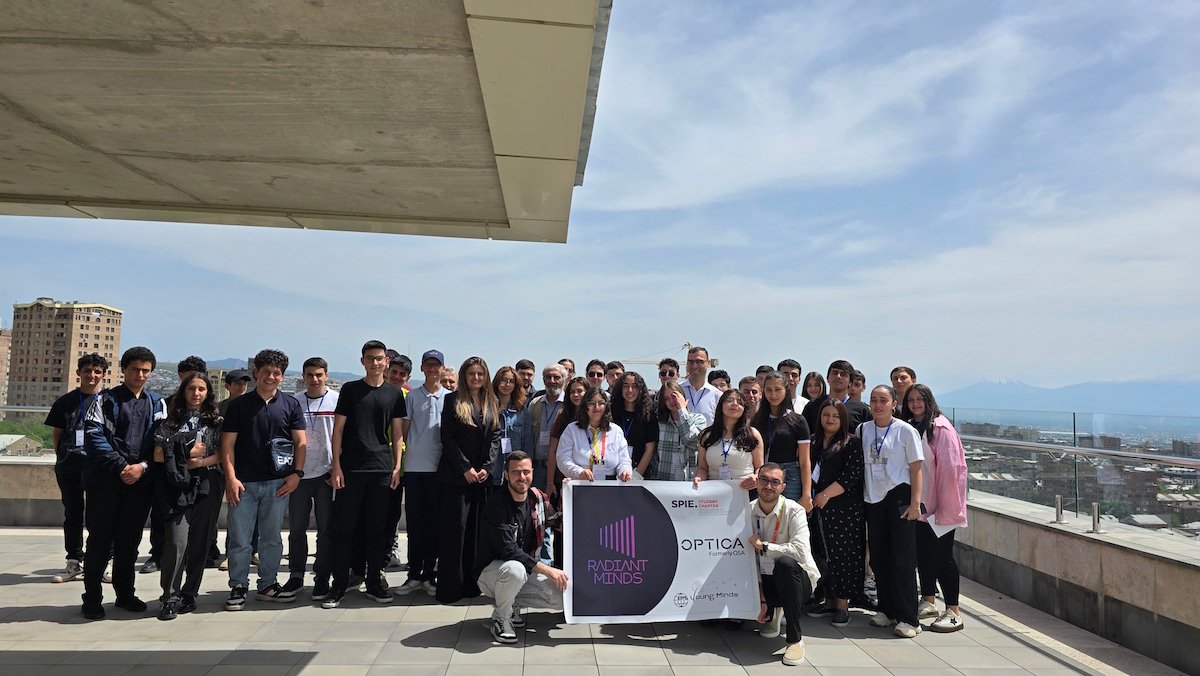
IDL with QWAVE: From Photons to the Stars
Author: Tsovinar Karapetyan On May 17, 2025, the Radiant Minds Student Chapter at the Russian-Armenian University successfully hosted “IDL with QWAVE: From Photons to the Stars,” a full-day event organized as part of QWAVE to celebrate the International Day of Light and the Quantum Year 2025. The event aimed to raise awareness about the significance of light and quantum technologies in science by engaging diverse audiences through accessible science talks, hands-on experiments, and expert lectures. Beyond its educational scope, it also spotlighted the mission and efforts of the EPS Young Minds Program and the Radiant Minds Student Chapter, introduced during the opening talk by Arman Avetisyan. His presentation highlighted their dedication to science outreach, student empowerment, and fostering an active scientific community across Europe. The event began with introductory remarks by Arman Avetisyan, who presented “From Radiant Minds to Laser Beams,” Gyulnara Khachatryan with “Light Detectives: How We Know What Stars Are Made Of,” and Dr. Vahram Mekhitarian from the IPR, whose talk “Recursion – Acquaintance and Love at First Sight” particularly captivated young attendees. Participants then engaged enthusiastically in interactive optical experiments during the midday session. This hands-on segment offered valuable experience and promoted active learning, encouraging students to ask insightful questions and engage in demonstrations. Following the experiments and a lunch break, the afternoon featured advanced lectures aimed at university students. Dr. David Hayrapetyan discussed cutting-edge quantum materials in “Taming Light with Tiny Crystals: The Magic of Quantum Materials.” The highlight was the keynote lecture by Assoc. Prof. Ebrahim Karimi (uOttawa), a leading figure in modern optics and quantum science. Known for groundbreaking work in structured light and quantum information, Prof. Karimi delivered “Beyond Vision: The Hidden Powers of the Human Eye,” a captivating exploration of quantum optics and human perception. Additionally, a photography competition enriched the event by inviting submissions of optical phenomena with scientific commentary. Among the entries, Dr. Mohamed Aboushelib of Egypt stood out for originality and received the “Most Unique Photo” award. His participation added an international dimension. Winners received monetary prizes, and third place was awarded a book by Stephen Hawking. The event concluded with an awards ceremony, where winners shared stories behind their photos. Thanks to the support of EPS Young Minds, logistical arrangements — including transportation for regional students — were made possible. During lunch and coffee breaks, participants enjoyed pizzas and pastries with the EPS logo — a memorable and visible touch.
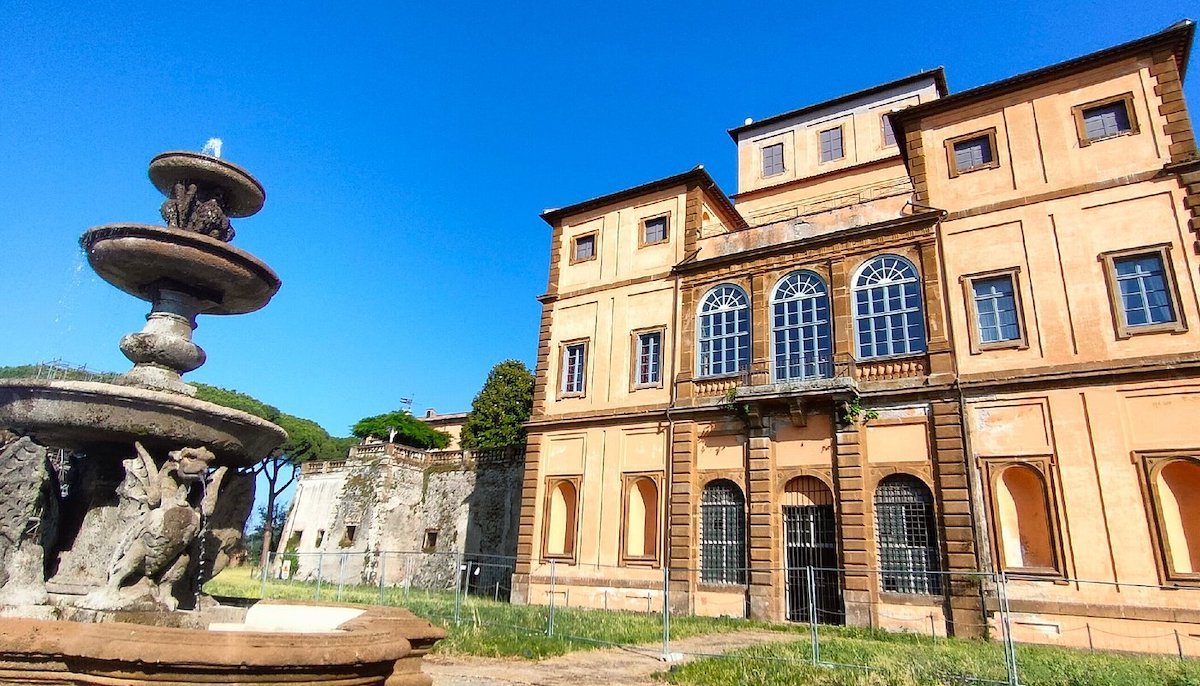
Villa Mondragone Enters the History of European Physics
Author: Anna Di Ciaccio On 9th June 2025, the European Physical Society (EPS) designated Villa Mondragone an “EPS Historic Site” in recognition of its significant role in scientific history. During the official ceremony, a commemorative plaque was unveiled by the Rector of the University of Rome Tor Vergata, Prof. Nathan Levialdi Ghiron, and the EPS President, Prof. Mairi Sakellariadou. Located in the Alban Hills and built in 1574 as a papal summer residence, the villa has been a site of major scientific milestones: Pope Gregory XIII signed the bull introducing the Gregorian calendar there in 1582; in 1611, Galileo used his telescope to make public demonstrations of his astronomical discoveries; and in 1932, Guglielmo Marconi conducted pioneering microwave experiments that led to the world’s first microwave telephone link between the Vatican and Castel Gandolfo. Now owned by the University of Rome Tor Vergata since 1981 and used as a conference centre, the villa hosted a symposium after the ceremony, chaired by Prof. Anna Di Ciaccio (EPS Executive Committee member and key promoter of the initiative). Talks highlighted the site’s scientific legacy, with contributions from several scholars, including a historical account of Marconi’s experiments and reflections on the villa’s continuing role in fostering innovation and interdisciplinary dialogue.
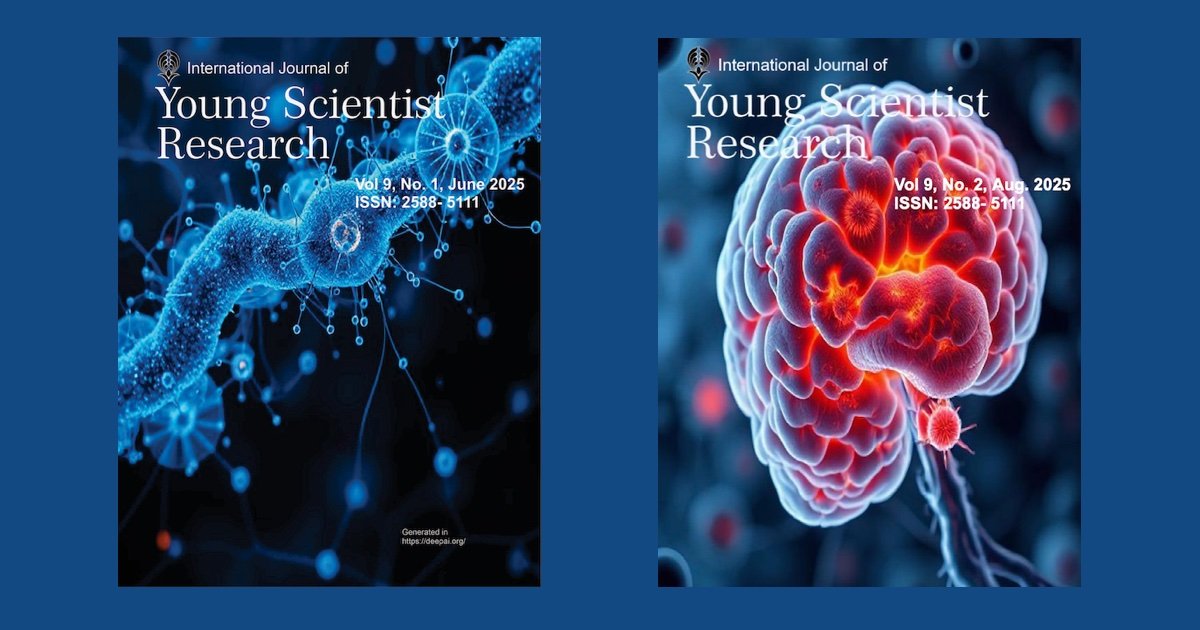
Young Scientist Research Journal
The Young Scientist Journal publishes research papers on various events involving both high schools and undergraduate students from Iran and other countries. This publication aims at encouraging students to read about science. The complete list of volumes can be found on the website of AYIMI, the Ariaian Young Innovative Minds Institute. Volume 9, Journal No 1 2025 Edible films and coatings are used to prevent food spoilage, extend shelf life and provide environmentally friendly packaging. Olive leaf (Olea europaea) is a byproduct rich in bioactive policy and high economic value, but it generally remains as agricultural waste in Turkey. Supercritical systems extraction method is a modern technique for efficiently obtaining olive leaf components. Pectin is a food storage emulsifier, gelling agent and stabilizer polysaccharide obtained from waste such as orange peel and used in biofilm production. Volume 9, Journal No 2 2025 The magnetic pendulum is a striking example of unpredictability in classical physics; a magnetic bob suspended above fixed magnets on a non-magnetic surface exhibits chaotic motion when released. In this study, we investigate the parameters affecting the motion of the moving magnet.