

As the International Year of Quantum Science and Technology draws to a close, the European Physical Society (EPS) executive committee would like to reaffirm the opinions published in the declaration “Europe and the Future of Quantum Science” issued by the EPS and its member societies at the beginning of 2025. As an umbrella organisation of European physical societies, the EPS represents the physics community across Europe, covering the EU-27 and beyond. We would like to emphasise in the present declaration the importance of cross-border collaboration and scientific openness in the development of quantum science and technologies. The disruptive nature of quantum innovation makes it a field where many actors, from research organisations to small and large companies, play a decisive role. These actors collaborate across countries and across sectors. Developments in quantum science and technologies consequently require frequent exchanges between academic researchers and industrial actors. This bidirectional exchange is essential not only to industrial progress but also to the development of fundamental science, creating a virtuous circle which supports scientific progress. We welcome the recognition of the strategic importance of quantum technologies for the scientific and industrial competitiveness of Europe. However, we worry that an emphasis on sovereign capabilities which excludes partnerships will have an undesirable effect on the position of Europe in quantum science and technologies.
The European Strategy for Particle Physics reaches an important milestone
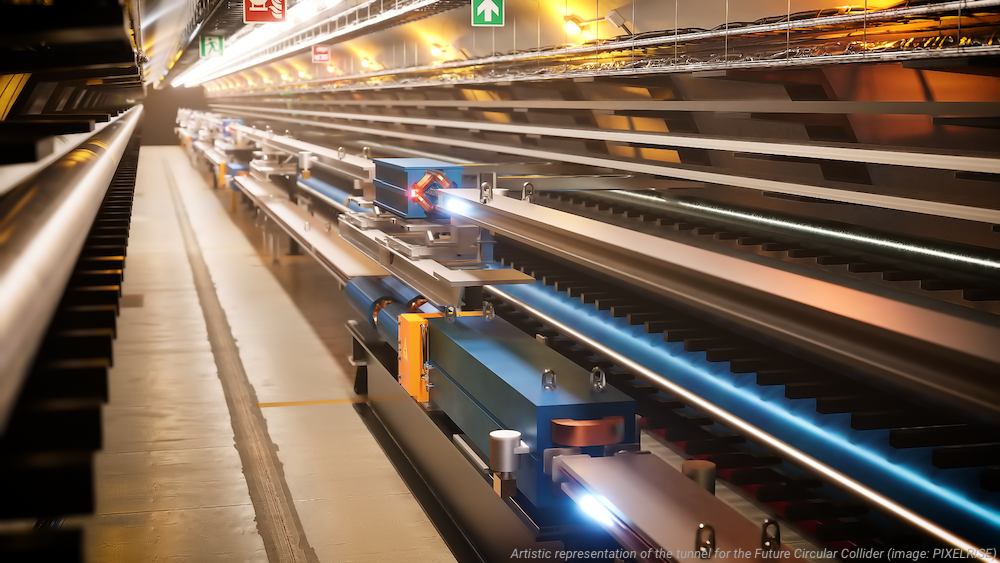
Geneva, 12 December 2025. At its 225th session, the CERN Council received the recommendations for the update of the European Strategy for Particle Physics, the aim of which is to develop a common vision for the future of the field. The recommendations will be reviewed by the Council in the coming months. A final decision is expected at a dedicated Council Session in Budapest in May 2026. Launched in March 2024, the update of the European Strategy for Particle Physics (ESPP) process is designed to develop a visionary and concrete plan that greatly advances human knowledge in fundamental physics through the realisation of the next flagship project at CERN. This plan is geared towards attracting and promoting international collaboration and allowing Europe to continue to play a leading role in the field. The ESPP is a bottom-up process that involves the European particle physics community and includes national input from CERN’s Member and Associate Member States and from international partners. This input is assessed and consolidated by the European Strategy Group (ESG), a body appointed by the CERN Council. For the 2026 update of the ESPP, the CERN Council requested that the Strategy update should include the preferred option for the next collider at CERN and prioritised alternative options to be pursued if the chosen preferred plan turns out not to be feasible or competitive. The ESG drafted its recommendations during a dedicated meeting held in Ascona, Switzerland, from 1 to 5 December 2025. At its 225th session on 12 December, the Council thanked the ESG for its outstanding work and took note of its recommendations. It will assess them in the coming months, with a view to taking a decision in May 2026, at a dedicated Session to be held in Budapest. The recommendations address a broad range of topics and goals related to research in high-energy physics in Europe and beyond. The electron–positron Future Circular Collider (FCC-ee) is recommended as the preferred option for the next flagship collider at CERN. It would provide a platform for a visionary physics programme addressing many of the open questions in particle physics, notably about the Higgs boson, that are critical to understanding the foundations of the Standard Model and to opening up opportunities for discovering new physics beyond the Standard Model, while at the same time driving the development of new technologies that will have a significant positive impact on society. The ESG presents a descoped FCC-ee as the preferred alternative option for the next flagship collider at CERN. The full set of recommendations is available at this link. “During the strategy process we have seen a very strong engagement of the European particle physics community and beyond, expressing their views on the next flagship collider, on other physics and technology areas and topics of importance for our field. Based on this input, we had constructive discussions that, in the end, brought out a very clear picture and strong support for CERN to host the electron-positron Future Circular Collider, FCC-ee, as the next flagship project. In addition, many other important recommendations have been made for the future of our field,” said Karl Jakobs, Chair of the Strategy Secretariat. “The high-energy physics community passed an important milestone in the process, converging on important recommendations for the future of the field,” said Council President Professor Costas Fountas. “I’m looking forward to working with the Member and Associate Member States to establish a vision for the future of high-energy physics in Europe that will maintain a leading role for CERN and open up further long-term collaboration with international partners.” “The ESG recommendations represent a pivotal milestone in the Strategy process and for the future of the field,” said CERN Director-General Fabiola Gianotti. “The proposed strategic directions, in particular concerning the next flagship collider at CERN, will inspire the next generation of scientists and ensure that CERN and its international partners remain at the forefront of discovery and technology in our discipline.” The recently completed FCC Feasibility Study provides the basis for continued work on multiple aspects of the project. A decision by the CERN Council on the possible construction of the FCC is expected around 2028.
Europhoton 2026 : Save the Date!
The 12th EPS-QEOD Europhoton Conference on Solid-State, Fibre, and Waveguide Coherent Light Sources will take place from 21st to 25th September 2026 in the beautiful Bay of Arcachon, in south-western France. More info here.

The December issue of e-EPS is out!
Read the latest issue of our online newsletter here!
ALICE solves mystery of light-nuclei survival
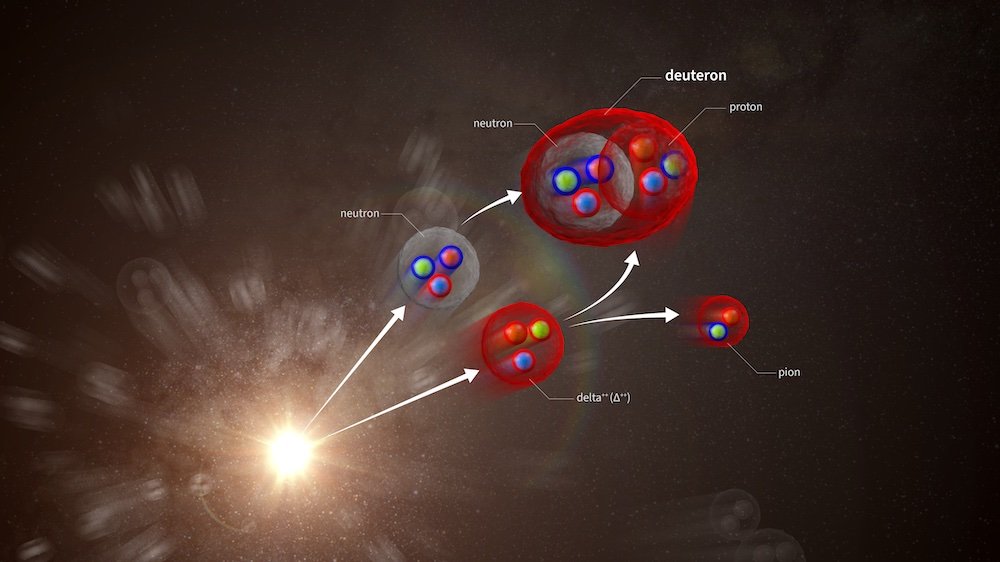
Observations of the formation of light-nuclei from high-energy collisions may help in the hunt for dark matter Particle collisions at the Large Hadron Collider (LHC) can reach temperatures over one hundred thousand times hotter than at the centre of the Sun. Yet, somehow, light atomic nuclei and their antimatter counterparts emerge from this scorching environment unscathed, even though the bonds holding the nuclei together would normally be expected to break at a much lower temperature. Physicists have puzzled for decades over how this is possible, but now the ALICE collaboration has provided experimental evidence of how it happens, with its results published today in Nature. Researchers at ALICE studied deuterons (a proton and a neutron bound together) and antideuterons (an antiproton and an antineutron) that were produced in high-energy collisions of protons at the LHC. They found evidence that, rather than emerging directly from the collisions, nearly 90% of the deuterons and antideuterons were created by the nuclear fusion of particles emerging from the collision, with one of their constituent particles coming from the decay of a short-lived particle. “These results represent a milestone for the field,” said Marco van Leeuwen, spokesperson for the ALICE experiment. “They fill a major gap in our understanding of how nuclei are formed from quarks and gluons and provide essential input for the next generation of theoretical models.” These findings not only explain a long-standing puzzle in nuclear physics but could have far-reaching implications for astrophysics and cosmology. Light nuclei and antinuclei are also produced in interactions between cosmic rays and the interstellar medium, and theymay be created in processes involving the dark matter that pervades the Universe.By building reliable models for the production of light nuclei and antinuclei, physicists can better interpret cosmic-ray data and look for possible dark-matter signals. The ALICE observation provides a solid experimental foundation for modelling light-nuclei formation in space. It shows that most of the light nuclei observed are not created in a single thermal burst, but rather through a sequence of decays and fusions that occur as the system cools. The ALICE collaboration came to these conclusions by analysing the deuterons produced from high-energy proton collisions recorded during the second run of the LHC. The researchers measured the momenta of deuterons and pions, which are another type of particle formed of a quark–antiquark pair. They found a correlation between the pion and deuteron momenta, indicating that the pion and either the proton or the neutron of the deuteron actually came from the decay of a short-lived particle. This short-lived particle, known as the delta resonance, decays in about one trillionth of a trillionth of a second into a pion and a nucleon, i.e. either a proton or a neutron. The nucleon can then fuse with other nearby nucleons to produce light nuclei such as a deuteron. This nuclear fusion happens at a small distance from the main collision point, in a cooler environment, which gives the freshly created nuclei a much better chance of survival. These results were observed for both particles and antiparticles, revealing that the same mechanism governs the formation of deuterons and antideuterons. “The discovery illustrates the unique capabilities of the ALICE experiment to study the strong nuclear force under extreme conditions,” said Alexander Philipp Kalweit, ALICE physics coordinator.

Season’s Greetings
The European Physical Society wishes you a wonderful holiday season! Our offices will be closed between Christmas and New Year.The EPS headquarters in Mulhouse, France, will be closed between 24th December 2025 and 4th January 2025. Click here to contact us.
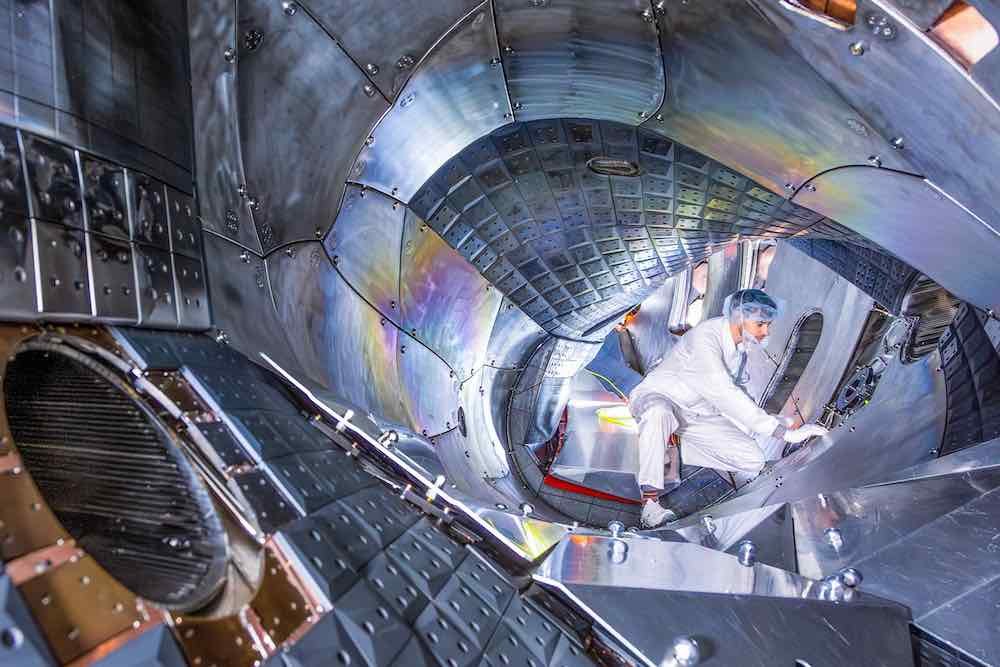
Ten years of Wendelstein 7-X – ten years of world-leading fusion research
On 10 December 2015, the nuclear fusion facility at the Max Planck Institute for Plasma Physics (IPP) in Greifswald generated its first plasma. Since then, the world’s most powerful stellarator-type experiment has broken several records – and now forms the basis for power plant plans by several start-up companies. Numerous international media representatives gathered in the control room at noon on 10 December 2015 to witness the launch of Wendelstein 7-X. In addition, several international fusion laboratories were connected live via video stream when the Wendelstein 7-X operating team fed one milligram of helium gas into the pumped-out plasma vessel for the first time and switched on the microwave heating. The first plasma appeared on built-in cameras. The measuring instruments recorded an input power of 1.3 megawatts, a temperature of one million degrees Celsius and a pulse duration of just one tenth of a second. The frenetic applause that erupted shortly afterwards lasted considerably longer. Hundreds of employees at the IPP had worked towards this moment for years. The assembly of Wendelstein 7-X began in April 2005. A ring of 50 superconducting magnetic coils, each about 3.5 metres high, forms the core of the facility. They are cooled to temperatures of around minus 270 degrees Celsius. Calculating their complex shapes was only made possible by the use of supercomputers. Wendelstein 7-X aims to prove that stellarators are suitable for power plants The magnetic field encloses the hot plasma so that it floats largely contact-free in the doughnut-shaped plasma vessel. This is the principle behind magnetic fusion facilities, which until 2015 were mainly built according to the simpler tokamak principle. Wendelstein 7-X, on the other hand, belongs to the stellarators, which are more difficult to implement but have superior properties in theory. But is the stellarator principle also suitable in reality for building a fusion power plant that, like the sun, generates energy from the fusion of hydrogen nuclei? Wendelstein 7-X aims to prove precisely this. To date, it is the most powerful stellarator experiment, used by researchers from all over the world. ‘We are starting with a plasma made from the noble gas helium,’ said IPP Director Thomas Klinger ten years ago. ‘This is because the plasma state is easier to achieve with helium. In addition, we can use helium plasmas to clean the surface of the plasma vessel.’ The first hydrogen plasma was ignited three months later by a prominent guest: Chancellor Dr Angela Merkel came to Greifswald on 3 February 2016 specifically to launch the scientific operation. Temperatures of 40 million degrees Celsius are now being reached Since then, Wendelstein 7-X has been upgraded in several phases of reconstruction. The vessel wall is now completely water-cooled and the plasma heating system is considerably more powerful. Wendelstein 7-X now achieves ion temperatures of 40 million degrees Celsius in the plasma. In February 2023, plasma can be maintained for more than eight minutes for the first time – with an energy conversion of 1.3 gigajoules (coupled and decoupled energy). To date, this is the world record for stellarators. In the upcoming measurement campaigns, the Wendelstein 7-X team plans to increase these values significantly. The goal is a 30-minute pulse with high energy coupling. This would prove that stellarators are suitable for continuous operation. In May 2025, Wendelstein 7-X achieved a new world record for the so-called triple product in long plasma discharges: on the last day of the measurement campaign, a new peak value for this key parameter in fusion physics was achieved over a plasma duration of 43 seconds. This puts the triple product on a par with the values achieved in the best tokamak experiments. Start-ups orient themselves towards W7-X The successes of Wendelstein 7-X have also inspired several newly founded companies around the world in recent years to develop stellarator power plants based on Wendelstein 7-X. In Germany, these are the companies Proxima Fusion and Gauss Fusion. The IPP is working with both of them within the framework of cooperation agreements. Wendelstein 7-X is currently undergoing a one-year maintenance phase. In September 2026, the world’s most powerful stellarator will resume experimental operation and set out to break records. ________________________________________________________________________________
ISE and EPSO: Shared vision, unified voice: universities and research institutes in Europe propose joint Framework Programme 10 (FP10) amendments
1 December 2025 – ISE-EPSO press release Today, organisations representing Europe’s research and innovation community present a coordinated set of amendments to the European Commission’s proposals for the 10th EU Framework Programme for Research and Innovation (FP10). We are united by a simple, urgent call: enable Europe to move at the speed and scale that the moment demands. The decisions taken in the coming period must show that Europe is markedly stepping up its capacity to lead in cutting-edge research and innovation, in order to accelerate advanced technological and societal development underpinned by the latest scientific breakthroughs. To this end, CESAER, the Coimbra Group, the European University Association (EUA), EU-LIFE, the Guild of European Research-Intensive Universities, the League of European Research Universities (LERU) and the Young European Research Universities Network (YERUN) are pleased to share the following: Together, representing more than 900 universities and research institutes, we call for an FP10 that strengthens Europe’s capacity to generate excellent research, attract world-leading talent, and translate knowledge into real-world impact. Indeed, these proposed amendments are intended to help ensure that the final legal texts enable the programme to meet the needs of the R&I community and to maximise its contribution to Europe’s resilience, competitiveness, and prosperity. We stand ready to support the co-legislators by explaining our proposals in detail and by providing further input as negotiations progress. Horizon Europe’s next chapter is a unique opportunity to reinforce Europe’s scientific leadership and innovation potential, underpinned by the talent that makes it possible. “In addition to the specific amendments, ISE calls for the entire FP10 including the four policy windows to remain outside the ECF, while maintaining links to it: The entire FP10 should be linked to, but neither determined nor managed by the European Competitiveness Fund (ECF). This requires a fundamental change to the EC proposal: The four policy windows found in Pillar 2 “competitiveness” should be moved back into the FP and determined solely by the FP.” – Karin Metzlaff, Vice-President ISE “To this end, include ‘Fundamental research’ and ‘Bottom-up approaches’ in the ‘competitiveness part’ of pillar 2.” – Moniek Tromp, President ISE Read the Contacts: Karin Metzlaff – EPSO Executive Director & ISE Vice-President & chair Working Group FP10Moniek Tromp – ISE President
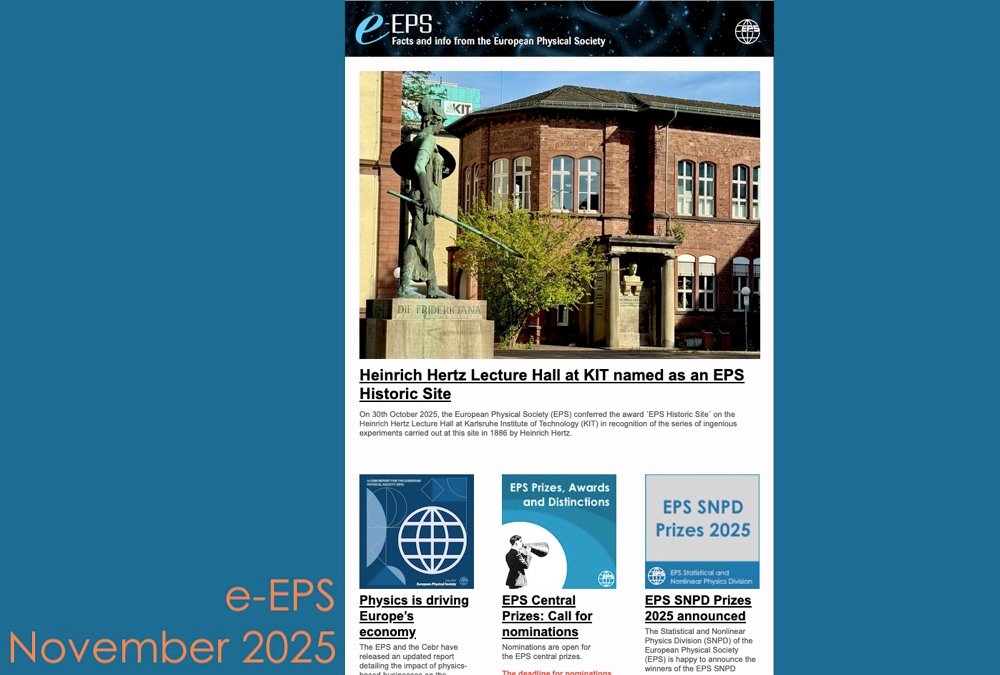
The November issue of e-EPS is out!
Read the November 2025 issue of e-EPS here. e-EPS is the Society’s monthly newsletter.
Energy: A Foundation for Prosperity and Stability
Energy plays a crucial role in economic development and stability. The establishment of the European Coal & Steel Community in 1951 and Euratom in 1957 reflected the recognition of energy’s importance in shaping Europe’s future. European Union (EU) energy policy decisions are driven by a combination of technical, economic, environmental, political, legal and societal factors. Currently, fossil fuels supply approximately 80% of the world’s primary energy, a figure that has remained stable over the past 30 years [1]. Given the finite nature of these resources and the impact of fossil fuels on the global environment, transitioning to alternative solutions is an important consideration, particularly for the EU, which imports around 80% of its gas and over 90% of its oil [2]. Following the Paris Agreement (2015), the EU is committed to decarbonisation and is leading the path in this respect. From 1990 to 2022 the EU-27 reduced greenhouse gas (GHG) emissions [3, 4] by 33%. Over the same period, its share of global emissions dropped from 16% to 7%, due to the implementation of EU energy policies, industrial carbon leakage [5], and development of other nations. Meanwhile, global emissions increased by 65% between 1990 and 2022 [6]. The partial decarbonisation of the electricity sector contributed to this significant GHG emission reduction in the EU, notably through wind, solar and nuclear technologies, with fossil fuel backup systems, necessary to bridge the gap, in order to address the variability of the renewable components. To continue reducing its emissions and reach net zero by 2050, the EU plans to increase its share of Variable Renewable Energy Sources (VRES), requiring, according to the most recent estimate by the European Commission, of the order of €10 trillion of investment by 2040 [7]. While VRES technologies contribute to decarbonisation, increasing their share of the electric energy market poses significant challenges. Ensuring a continuous, affordable, and reliable energy supply requires the following points to be addressed: The Draghi report [12] has recently highlighted the negative economic and industrial impacts of the current energy transition policies, including considerations related to increase of energy costs, technological innovation, and supply chain dependencies. Effective energy policies must indeed balance three key factors, namely (a) security and reliability of energy supply, (b) low energy cost for households and industry, (c) minimal impact of energy systems on both local and global ecosystems. Given the decarbonisation level that the EU has already reached, and points (i)-(iv) above, we recommend shifting priorities to enhance security of supply, affordability and sustainability of the energy system, considering the following points: By considering a balanced approach that integrates diverse energy solutions, technological advancements, and economic sustainability, the EU can develop an energy strategy, a critical element of a global strategy, currently missing, that supports long-term prosperity while affirming its commitment to environmental responsibility. The EPS acknowledges the contribution of the EPS Energy Group to the preparation of this paper. References