

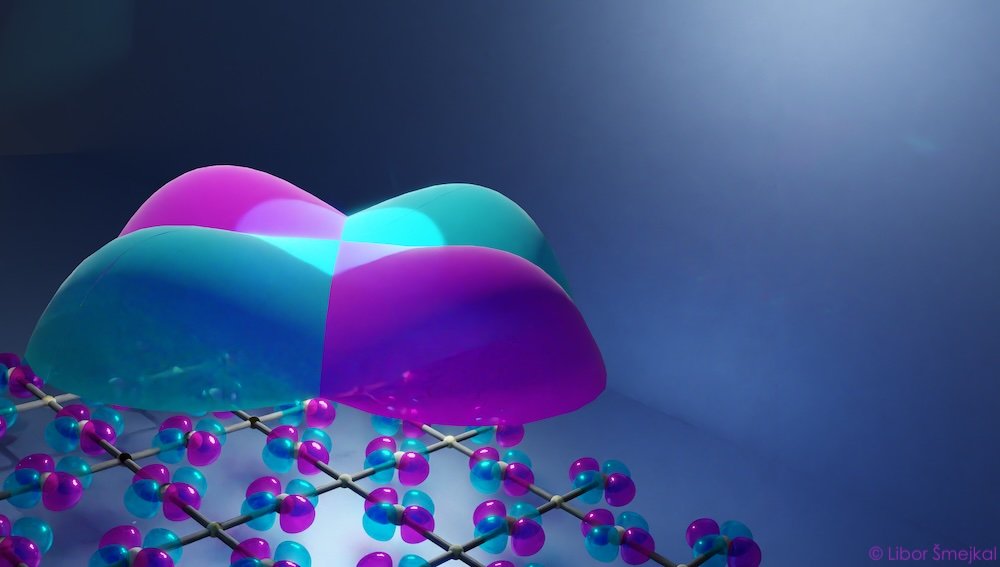
24th July 2026 – Press release Mainz University – JGU researcher Jairo Sinova and former Mainz-based scientist Libor Šmejkal receive the 2026 EPS Europhysics Prize together with Tomas Jungwirth One of Europe’s highest distinctions in condensed matter physics has been awarded for a discovery that is reshaping our understanding of magnetism: The 2026 Europhysics Prize of the European Physical Society (EPS) Condensed Matter Division goes to Professor Jairo Sinova of Johannes Gutenberg University Mainz (JGU), Dr. Libor Šmejkal, and Professor Tomas Jungwirth for their discovery of altermagnetism – a previously unknown fundamental class of magnetism. The prize recognizes their groundbreaking work establishing that nature hosts a third elementary form of collinear magnetism in addition to ferromagnetism and antiferromagnetism. The discovery overturns a century-old understanding of magnetic order and has opened an entirely new research field with major implications for quantum materials, condensed matter physics, and future information technologies. “This award recognizes a fundamental discovery that challenged one of the most established paradigms in condensed matter physics,” said Professor Jairo Sinova, Director of the Spin Phenomena Interdisciplinary Center (SPICE) at Mainz University. “Discovering that an entirely new magnetic phase had remained hidden for more than one hundred years demonstrates that even the most mature scientific fields can still hold fundamental surprises.” The long-established partnership between Sinova’s team at Johannes Gutenberg University Mainz and Professor Tomas Jungwirth’s group at the Institute of Physics of the Czech Academy of Sciences in Prague played a central role in the development of altermagnetism. While jointly affiliated with Prague, Dr. Libor Šmejkal worked in Mainz from 2016 until 2024, first as a doctoral researcher and later as a postdoctoral scientist in Professor Jairo Sinova’s research group. During these eight years at JGU, he led the development of many of the theoretical concepts that ultimately culminated in the discovery of altermagnetism. The team combined modern symmetry theory with spintronics to reveal a fundamentally new type of magnetic order. Their theoretical predictions rapidly inspired experimental confirmations around the world, including spectroscopic and transport observations in several materials. Today, altermagnetism has become one of the fastest-growing research areas in condensed matter physics, with research programs now spanning Europe, North America, and Asia. Rewriting physics textbooks For over a century, physicists assumed that all collinear magnets belonged to one of two categories. Ferromagnets possess a net magnetization and are the foundation of modern magnetic memory technologies. Conventional antiferromagnets, while magnetically compensated, exhibit fundamentally different electronic properties. The discovery of altermagnetism revealed a third possibility: materials that possess no net magnetization like antiferromagnets while simultaneously exhibiting electronic properties previously thought exclusive to ferromagnets. This unique combination enables highly spin-polarized electrical currents together with ultrafast magnetic dynamics, making altermagnets attractive candidates for next-generation spintronic devices. Beyond technological applications, the discovery has profound implications for fundamental physics. Altermagnetism establishes a new symmetry class of matter and provides unexpected connections to topological physics, unconventional superconductivity, and strongly correlated quantum materials. From theoretical prediction to a worldwide field of research The first steps toward the discovery of altermagnetism emerged from earlier theoretical work on unconventional magnetic transport phenomena, including the prediction of the crystal anomalous Hall effect. The researchers subsequently recognized that these unusual properties reflected not isolated material-specific behavior, but an entirely new magnetic phase governed by previously overlooked spin symmetries. In 2022, they introduced the complete symmetry classification of altermagnetism and identified hundreds of candidate materials. Since then, experimental groups worldwide have confirmed the existence of altermagnetism using multiple complementary techniques, including angle-resolved photoemission spectroscopy (ARPES) and electrical transport measurements. The field has expanded extraordinarily rapidly, with hundreds of publications appearing in only a few years – and altermagnetism becoming a major topic at international conferences. The EPS Europhysics Prize – a prestigious European distinction The EPS Europhysics Prize is among Europe’s most prestigious awards in condensed matter physics. Presented since 1975, it recognizes outstanding discoveries that have significantly advanced the field, with a substantial portion of the research carried out in Europe. The prize will be presented during the 32nd General Conference of the European Physical Society Condensed Matter Division (CMD32) in Graz, Austria, in September 2026. About the laureates Professor Jairo Sinova is Professor of Physics at Johannes Gutenberg University Mainz in Germany and Director of the Spin Phenomena Interdisciplinary Center (SPICE) at JGU. His research focuses on spintronics, quantum materials, and magnetism. Dr. Libor Šmejkal carried out the decisive theoretical work leading to the discovery of altermagnetism while working at Johannes Gutenberg University Mainz from 2016 to 2024. He is currently affiliated with the Max Planck Institute for the Physics of Complex Systems, the Max Planck Institute for Chemical Physics of Solids, and the Institute of Physics of the Czech Academy of Sciences. Professor Thomas Jungwirth is based at the Institute of Physics of the Czech Academy of Sciences and the University of Nottingham and has been a long-standing collaborator with the Mainz research team. More information in the EPS press release at https://eps.org/2026-eps-europhysics-prize-for-outstanding-achievement-in-condensed-matter-physics-announced/ Further information:
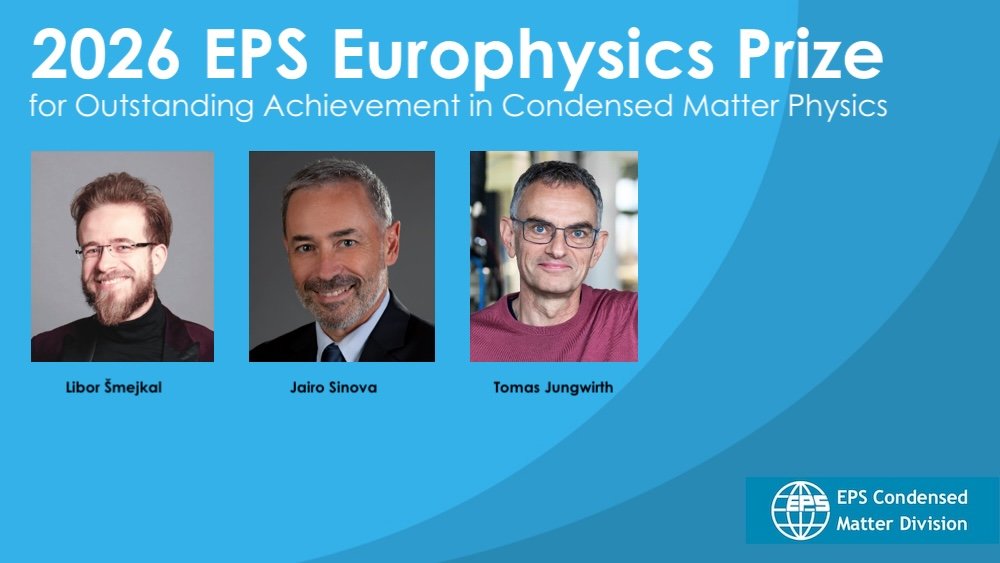
2026 EPS Europhysics Prize for Outstanding Achievement in Condensed Matter Physics announced
The 2026 Europhysics Prize of the EPS Condensed Matter Division is awarded to Dr. Libor Šmejkal, Prof. Jairo Sinova, and Prof. Tomas Jungwirth for the discovery of altermagnetism, a third elementary magnetic class that combines ferromagnetic-like and antiferromagnetic-like characteristics considered for a century as mutually exclusive, and characteristics unprecedented in either of the two conventional magnetic classes. The Prize will be presented on Tuesday September 22nd 2026, during the Awards Session of the 32nd General Conference of the EPS Condensed Matter Division (CMD32), in Graz organised jointly with the Austrian Physical Society. The Europhysics Prize has been awarded since 1975 (this is the 42nd edition) and is one of Europe’s most prestigious prizes in the field of condensed matter physics. It is awarded in recognition of a prominent and well-identifiable discovery, breakthrough, or contribution to condensed matter physics, by one or more individuals, a contribution that, in the opinion of the selection committee, represents scientific excellence. The award recognizes research for which a significant portion of the work was carried out in Europe. A summary of all the prize editions can be found here. For more than a century, scientists believed that all magnetic materials belonged to one of two basic classes: ferromagnets, familiar from everyday magnets and used in hard drives and electric motors, and antiferromagnets, in which opposing magnetic moments cancel each other. The discovery of altermagnetism revealed that nature contains a third distinct elementary magnetic phase, one that combines seemingly incompatible properties of both ferromagnets and antiferromagnets whilst exhibiting entirely different quantum phenomena. This discovery has fundamentally changed the way we classify magnetic materials – requiring a rewriting of the introductory chapters of magnetism textbooks – and has launched an entirely new research field of unconventional magnetism with many implications in other areas of condensed matter physics. Although the discovery represents a landmark in basic physics, it has transformative technological potential. Modern electronics increasingly seeks to exploit not only the electric charge of electrons but also their spin, enabling devices that are faster, consume less energy, and process information in entirely new ways. Until now, researchers faced a difficult compromise. Ferromagnets generate the spin-polarized currents required for spintronic devices but produce stray magnetic fields that hinder miniaturization. Antiferromagnets eliminate these stray fields and operate naturally at ultrafast terahertz frequencies, but they generally lack the strong spin-polarized currents and electrical control required for many spintronic applications. Altermagnets combine the best of both worlds. They possess no net magnetization, eliminating magnetic cross-talk between neighboring devices, while naturally generating strong spin-polarized currents capable of operating at ultrafast terahertz frequencies. These properties provide a path towards ultrafast and ultra-energy-efficient computer memories, with significant potential for future high-performance computing and AI hardware. Perhaps even more remarkably, altermagnetism is proving to be much more than an unconventional type of magnet. Its underlying alternating spin-polarized order represents the magnetic counterpart of unconventional superconducting order. More generally, by revealing a previously overlooked symmetry class of magnetic matter, the discovery is providing theorists and experimentalists with a powerful new lens through which to explore the quantum world. This emerging spin-symmetry framework is rapidly becoming useful for describing a wide range of quantum materials. Researchers have already uncovered implications for superconducting, strongly correlated, multiferroic, and topological materials, establishing fundamental conceptual links between some of the most active research areas in modern condensed matter physics. The breakthrough emerged from a long-standing collaboration between the three laureates, who had been searching for magnetic materials capable of producing highly spin-polarized electrical currents without the drawbacks of conventional magnets. Their theoretical work first predicted several unusual electronic transport phenomena, including low dissipation transverse electrical currents, before revealing that these materials belonged not to an exotic subclass of antiferromagnets, but to an entirely distinct elementary magnetic phase. Their symmetry-based classification immediately identified more than 200 candidate materials, providing researchers worldwide with a roadmap for experimental exploration. Within only a few years, multiple international teams confirmed the predictions, culminating in direct observations of the characteristic electronic structure in materials including MnTe and CrSb. Today, altermagnetism has become one of the most rapidly expanding areas of condensed matter physics. The original papers have inspired more than a thousand subsequent studies and have drawn researchers from disciplines ranging from magnetism and superconductivity to quantum materials and materials science. The discovery and conceptual development of altermagnetism have been led by European researchers, establishing Europe as the birthplace of this emerging field. The breakthrough has since stimulated rapidly growing research efforts worldwide, including major initiatives in the United States, Japan, and across Asia. FLTR: Dr. Libor Šmejkal (Max Planck Institute for the Physics of Complex Systems, Max Planck Institute for Chemical Physics of Solids, and Institute of Physics of the Czech Academy of Sciences) – © Šmejkal Prof. Jairo Sinova (Johannes Gutenberg-Universität Mainz, Germany and Texas A&M University, USA) – © Sinova Prof. Tomas Jungwirth (Institute of Physics of the Czech Academy of Sciences, University of Nottingham UK, and Tohoku University, Japan) – © Jungwirth
The winners of the European Solar Physics Divsion Prizes are announced!
The Patricia Edwin PhD prize is awarded to Dr. Robert Kamlah for his high-resolution spectroscopic observations, which have significantly advanced our understanding of sunspot formation and dynamics. By combining innovative imaging techniques, he discovered that chromospheric penumbral filamentary structures act as precursors in sunspot evolution. Additionally, his exceptional technical expertise led to the design of a unique observational setup for the Vacuum Tower Telescope, successfully increasing its field of view while resolving surrounding fine-scale structures The Giancarlo Noci early career prize is awarded to Dr. Quentin Noraz for his major advances in the understanding of solar-type stars’ dynamos with numerical simulations and for his pioneering work that quantifies the energy budget for chromospheric heating in the quiet Sun. His rare ability to bridge solar interior and atmospheric physics is key to drive a more unified understanding of solar magnetic activity. The Giancarlo Noci early career prize is generously sponsored by Frontiers, whose support helps recognize outstanding achievements by early-career researchers in solar physics.
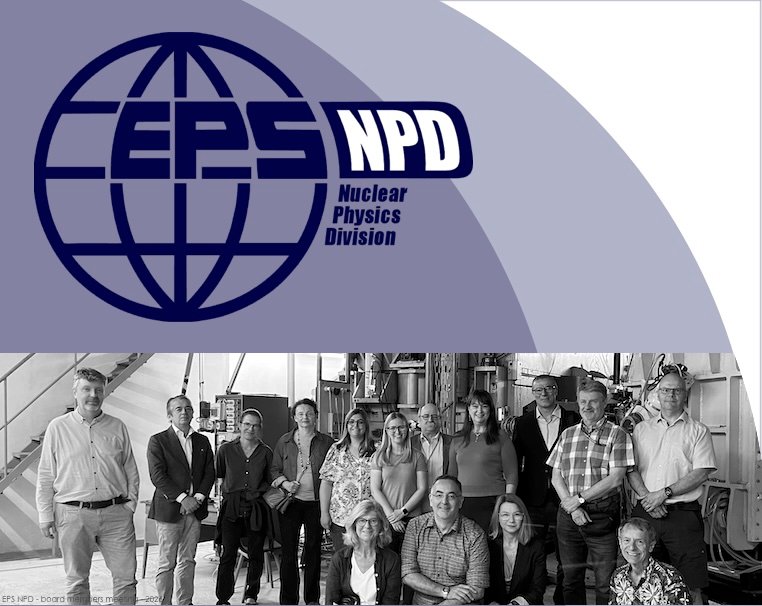
EPS Nuclear Physics Division: Call for Board Members
Nominations are open for 3 (three) new ordinary board members of the EPS Nuclear Physics Division (EPS-NPD). DEADLINE FIXED TO 16th October 2026 The members of the Board are expected to attend Board meetings, which take place twice a year. Please note that the newly elected board members will be invited at the board meeting planned mid May at the University of Jyväskylä (details will be mailed in due course). Some of the activities of the NPD are the following: – Organisation of the European Nuclear Physics Conference series,– Organisation of the Nuclear Physics in Astrophysics Conference series,– Organizazion of the Applied Nuclear Physics Conference series,– Awarding three prestigious prizes: Lise Meitner Prize, Applied Nuclear Physics Prize and PhD Thesis Prize. The board produces publications on various nuclear physics related topics, for example so called EPS Position Papers and provides input to the EPS on issues related to nuclear physics and relations to other European and international bodies interested in nuclear physics and policy. Please send your nomination here and submit on line all documents necessary for the nomination, as: PLEASE NAME THE FOLDER (which contains the documents) WITH THE NAME OF THE NOMINEE For a nomination to be valid, it should tbe supported by two other EPS Individual Members. The elected candidate must be or become an EPS Individual Member (https://eps.org/become-an-eps-member/)
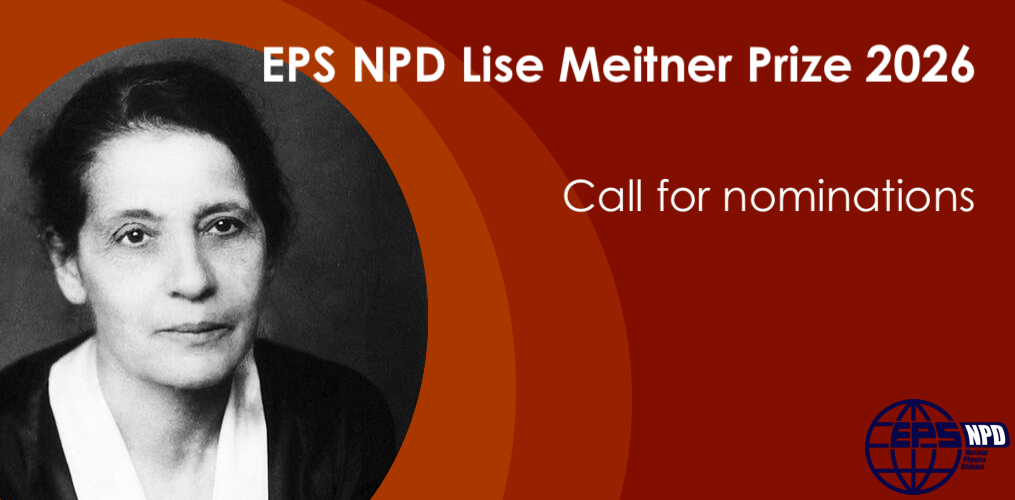
Call for the EPS NPD Lise Meitner Prize 2026
General Description The European Physical Society (EPS), through its Nuclear Physics Division (NPD) Board, awards the Lise Meitner Prize to one or more researchers who have made outstanding contributions to nuclear science. Such contributions may comprise experimental nuclear physics, theoretical nuclear physics and all areas of application of nuclear science. The board welcomes proposals which represent the breadth and the strength of European nuclear science. The Prize is named after Lise Meitner to honor her fundamental contributions to nuclear science and her courageous and exemplary life. Call for Nominations The call for nominations for the 2026 Lise Meitner Prize is open. Nominations should be submitted through this website: Lise Meitner Prize 2026 Nominations Nominations should be accompanied by a complete nomination form, a short description of the achievements of the nominee(s), a brief curriculum vitae of the nominee(s), a list of major publications and eventually letters of support from authorities in the field. Nominations will be treated in strict confidence. While all nominations will be acknowledged, there will be no further communication from the selection committee, till the announcement of the prize winner. 2026 Lise Meitner Prize Committee contact person: araceli.lopez-martens@ijclab.in2p3.fr Deadline for submission of nomination: The deadline for submission of nomination is November 6th 2026. Award ceremony: The Lise Meitner prize will be awarded at the next edition of the European Nuclear Physics Conference, which will take place in Catania from the 12th to the 17th of September 2027. Prize Rules · The Prize should consist of a Diploma, a Medal with the image of Lise Meitner and 5000 €. · The money for the Prize will be provided by sponsors. · The Prize shall be awarded every two years. · The Prize shall be awarded to one or more researchers (in the latter case the prize will be shared between the laureates). · The Prize shall be awarded without restrictions of nationality, sex, race or religion. · Only work that has been published in peer-reviewed journals can be considered in the evaluation of nominations. · Call for nominations will be published on EPS website. · Self-nominations shall not be accepted. · Nominations shall be reviewed by a Prize Committee appointed by the NPD board. The Committee shall consider each of the eligible nominations and shall make recommendations to the NPD board, taking into account possible reports of referees who are not members of the Board. · The final recommendation of the NPD board and a report should be submitted for ratification to the Executive Committee of EPS. The EPS NPD wishes to recognise excellence in nuclear physics and would like to receive nominations which reflect the diversity of the EPS community. The winner(s) will present the work and be awarded the Lise Meitner Prize 2026 at the European Nuclear Physics Conference (EuNPC 2027), which will be held in Catania (Italy) from September 12th to 17th, 2027. Sponsors The 2026 Lise Meitner Prize is sponsored by: . Forschungszentrum Jülich . IFIN-HH · IJCLab Laboratoire de Physique des 2 Infinis Irène Joliot-Curie, Orsay . INFN Laboratori Nazionali di Frascati . INFN Laboratori Nazionali di Legnaro . INFN Laboratori Nazionali del Sud . JYFL Department of Physics of the University of Jyväskylä Lise Meitner Prize Winners 2024: Muhsin N. Harakeh (University of Groningen – Netherlands) and Achim Richter (Technical University of Darmstadt – Germany) for their seminal contributions to the discovery and investigation of collective modes in atomic nuclei, including the Isoscalar Giant Monopole and Dipole Resonances and the «Scissors Mode», and the role of the isospin degree of freedom in nuclear excitations. Their work has also driven significant methodological advancements, such as zero-degree measurement techniques and the development of multi-turn superconducting linear accelerators. 2022: Philip Walker (University of Surrey, United Kingdom) for his outstanding developments in the study and understanding of isomeric states including critical insights into possible isomer applications, such as energy storage and coherent gamma-ray emission. He has also led in the development and exploitation of a range of experimental techniques, from low-energy isotope separators to high-energy storage rings, which will also extend the isomer research opportunities with the new generation of radioactive-beam facilities. 2020: Björn Jonson (Chalmers University of Technology, Gothenburg, Sweden), Piet Van Duppen (KU Leuven, Belgium) and Klaus Blaum (Max-Planck-Institute for Nuclear Physics, Heidelberg, Germany) for their development and application of on-line instrumentation and techniques, for their precise and systematic investigation of properties of nuclei far from stability, and for shaping the scientific program at the online isotope separator facility ISOLDE, CERN. 2018: Peter Ring (Technische Universität München, Germany) for his microscopic description of high-spin phenomena and collective vibrations in nuclei, and developed the theory of relativistic nuclear energy density functionals and Peter Schuck (Institut de Physique Nucléaire d’Orsay and Laboratoire de Physique et Modélisation des Milieux Condensés of Grenoble, France) for his new approaches for nuclear matter in connection with nuclear superfluidity. His studies on alpha-particle condensation motivated a wealth of experimental studies on the structure of alpha clusters. 2016: Ulf-G. Meißner (Rheinische Friedrich-Wilhelms-Universität Bonn and Forschungszentrum Jülich, Germany) for his developments and applications of effective field theories in hadron and nuclear physics, that allowed for systematic and precise investigations of the structure and dynamics of nucleons and nuclei based on Quantum Chromodynamics. 2014: Johanna Stachel (Physikalisches Institut der Universität Heidelberg, Germany), Peter Braun-Munzinger (GSI, Germany), Paolo Giubellino (INFN Torino, Italy and CERN, Switzerland) and Jürgen Schukraft (CERN, Switzerland) for their outstanding contributions to the experimental exploration of the quark-gluon plasma using ultra-relativistic nucleus-nucleus collisions, in particular to the design and construction of ALICE and shaping its physics program and scientific results bringing to light unique and unexpected features of a deconfined state of strongly-interacting matter at the highest temperatures ever produced in the laboratory. 2012: Karlheinz Langanke (GSI and Technical University of Darmstadt, Germany) and Friedrich-Karl Thielemann (University of Basel, Switzerland) for their seminal contributions to the description of nuclear processes in astrophysical environments that have changed our modern understanding of stellar
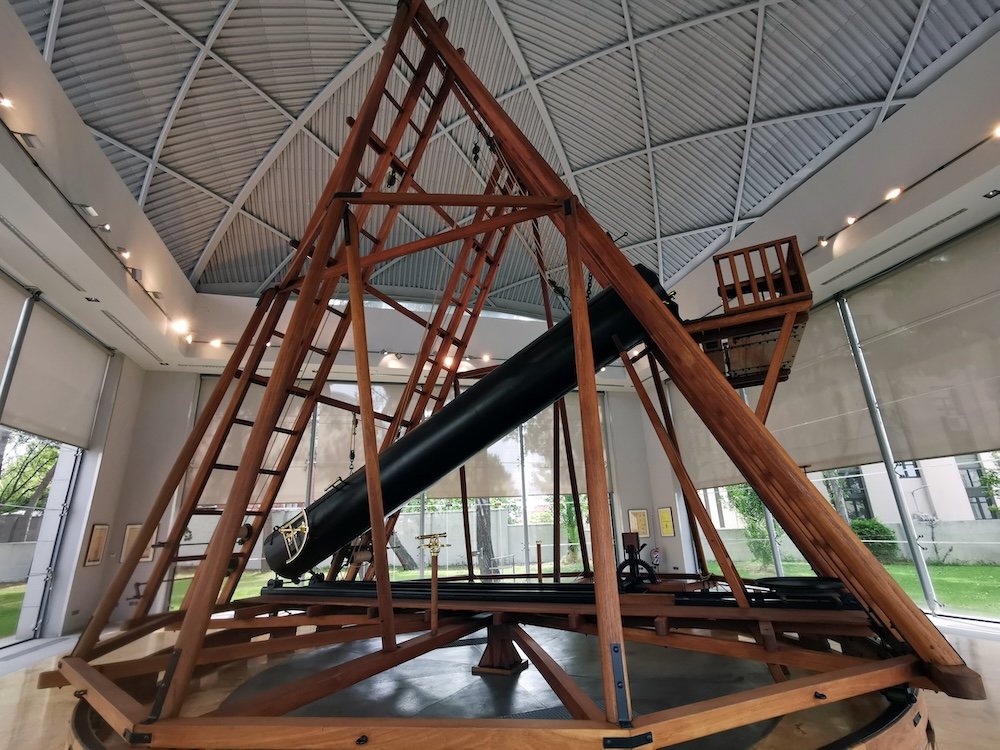
Real Observatorio Astronómico de Madrid Recognised as an EPS Historic Site of Physics
On 26th June, the Real Observatorio Astronómico de Madrid was officially recognised as an EPS Historic Site of Physics, joining the European Physical Society’s programme honouring locations that have made outstanding contributions to the development of physics in Europe. The recognition celebrates more than two centuries of scientific achievement in astronomy, geodesy, physics and related disciplines, while highlighting the Observatory’s enduring role in the advancement of scientific knowledge. The designation acknowledges not only the historical importance of the institution but also its continued contribution to modern research. Since its foundation in 1790, the Observatory has been home to generations of scientists, engineers and technical specialists whose work has helped shape both Spanish and European science. Throughout its history, the institution has successfully adapted to changing scientific priorities and technological developments while maintaining its commitment to excellence in research and public service. Speaking during the ceremony, Rafael Bachiller, Director of the Observatory, emphasised that the distinction should be understood as a tribute to the many generations of professionals who have worked there over more than two centuries. He noted that their collective efforts have established the Observatory as an integral part of Spain’s and Europe’s scientific heritage. Left: Standing behind the commemorative plaque (from left to right): Luis Viña, President of the Spanish Royal Society of Physics (RSEF); Laura Barbas, Director General of the Spanish National Geographic Institute (IGN); José María de Teresa, President of the European Physical Society (EPS); and Rafael Bachiller, Director of the Real Observatorio Astronómico de Madrid.Middle: Faithful reconstruction of Herschel’s 25-foot (7.6 m) reflecting telescope, which can be seen by visitors at the Real Observatorio Astronómico de Madrid.Right: Observatory staff and other participants gathered in front of the Villanueva Building, the oldest and most prominent building on the campus of the Real Observatorio Astronómico de Madrid. One of the Observatory’s greatest historical treasures is its 25-foot Herschel reflecting telescope. Conceived at the height of the Enlightenment and inspired by the revolutionary designs of William Herschel, it was among the largest and most advanced telescopes in the world at the beginning of the nineteenth century—widely regarded as the second-largest modern reflecting telescope of its time. It symbolised Spain’s determination to participate in the forefront of European astronomical research. Although the original instrument no longer survives, a faithful reconstruction based on the original plans now enables visitors to appreciate the scale and technological sophistication of this remarkable achievement. The Observatory’s history has not been without challenges. It has endured periods of war, political upheaval and profound technological transformation, yet it has consistently preserved its scientific mission. In recent decades, increasing light pollution over Madrid has made traditional optical astronomy increasingly difficult, prompting a strategic transition towards radio astronomy. Today, the Observatory forms, together with the Yebes Observatory, a unified scientific facility within the Spanish National Geographic Institute (Instituto Geográfico Nacional, IGN). Researchers operate major radio telescopes located at Yebes and remotely control additional facilities, including the IRAM 30-m telescope at Pico Veleta. The institution also participates in leading European research infrastructures such as the NOEMA interferometer in the French Alps and the ALMA observatory in Chile’s Atacama Desert. Alongside astronomy, the Observatory maintains internationally recognised activities in volcanology and seismology. The ceremony was presided over by Laura Barbas, Director General of the Spanish National Geographic Institute, who reaffirmed the Institute’s long-standing commitment to the Observatory. Since 1904, the IGN has been responsible for its preservation, scientific development and continued projection as a centre of research and innovation. During the event, Luis Viña, President of the Spanish Royal Society of Physics, reviewed the Observatory’s remarkable scientific history and placed the new designation within the broader context of Spain’s recognised scientific heritage. Before this recognition, only three Spanish sites had received the EPS Historic Site distinction: Observatori Fabra in Barcelona, recognised for its historic contributions to astronomy, meteorology and geophysics; the Residencia de Estudiantes in Madrid, acknowledged for its unique role as an intellectual centre visited by distinguished scientists including Albert Einstein and Marie Curie; and the Bergara Laboratory, where tungsten was first isolated in 1783. Addressing the audience, José María de Teresa, President of the European Physical Society, noted that the Society has now designated 80 EPS Historic Sites across 26 countries, recognising locations of outstanding importance in the history of physics. Nominations for the distinction are evaluated by the EPS Historic Sites Committee, chaired by Professor Karl Grandin, Director of the Centre for the History of Science at the Royal Swedish Academy of Sciences, who is also responsible for the presentation of the Nobel Prize medals and diplomas during the Nobel Prize Award Ceremony. By marking these places with commemorative plaques, the programme aims to increase public awareness of the historical foundations of contemporary science and to safeguard this shared European legacy for future generations. Left: Group photograph of Observatory staff, dignitaries and invited guests beside the commemorative plaque in front of the historic Villanueva Building. Right: The commemorative plaque, unveiled during the designation ceremony, marking the designation of the Real Observatorio Astronómico de Madrid as an EPS Historic Site. Following the speeches, the commemorative plaque was officially unveiled to be installed in a prominent location within the Observatory. Participants were then invited to tour the historic facilities, guided by Director Rafael Bachiller. The visit illustrated the remarkable continuity of scientific endeavour at the site, where visitors can appreciate both the historic astronomical instruments that served earlier generations of researchers and the sophisticated technologies employed by scientists today. The recognition further strengthens the international standing of the Real Observatorio Astronómico de Madrid. It complements other important distinctions already held by the institution. Its iconic Villanueva Building was designated a Bien de Interés Cultural (Cultural Heritage Site) in the category of Monument by Royal Decree 764/1995 of 5 May 1995. Since 25 July 2021, the Real Observatory has also formed part of the UNESCO World Heritage property “Paseo del Prado and Buen Retiro, a Landscape of Arts and Sciences”, widely known as the Landscape of Light. Together, these
Flat enrolments in university-level physics and persistent gender gaps, a report by the Australian Institute of Physics
Press release of the Australian Institute of Physics, an EPS Collaboraing Society – 30th June 2026 An Australian Undergraduate Physics Participation Report, released today by the Australian Institute of Physics (AIP), reveals steady enrolment levels in university-level physics-major programs and persistent gender gaps. Physics training is critical to supporting Australia’s scientific research, high-tech industries, and innovation capacity. A healthy pipeline of students enrolling in university-level physics is therefore a matter of national importance. Key findings of the report: 1. The number of students studying a physics subject at first-year level remained broadly stable from 2019–2023. 2. Approximately 14,000 students per year study at least one physics subject at first-year university level. 3. Most first-year enrolments are from students not intending to major in physics, reflecting the important role of physics as a service subject for engineering and other science degrees. 4. Approximately 750 students per year complete a physics major at third-year university level. 5. Female representation in the physics major stream is consistently around 21–23% across all year levels, with no meaningful trend toward parity. The female participation is in line with trends observed in Year 12 level physics, where women consistently make up around one quarter of students. Physics training underpins occupations as diverse as engineering, defence, finance, healthcare and advanced computing, and develops critical thinking and quantitative reasoning skills. It also positions students to contribute to pressing challenges ahead, including the transition to clean energy, the responsible development of artificial intelligence, and the development of next- generation materials. Read the full report here. — Professor Nicole Bell, on behalf of the Australian Institute of Physics Executive.
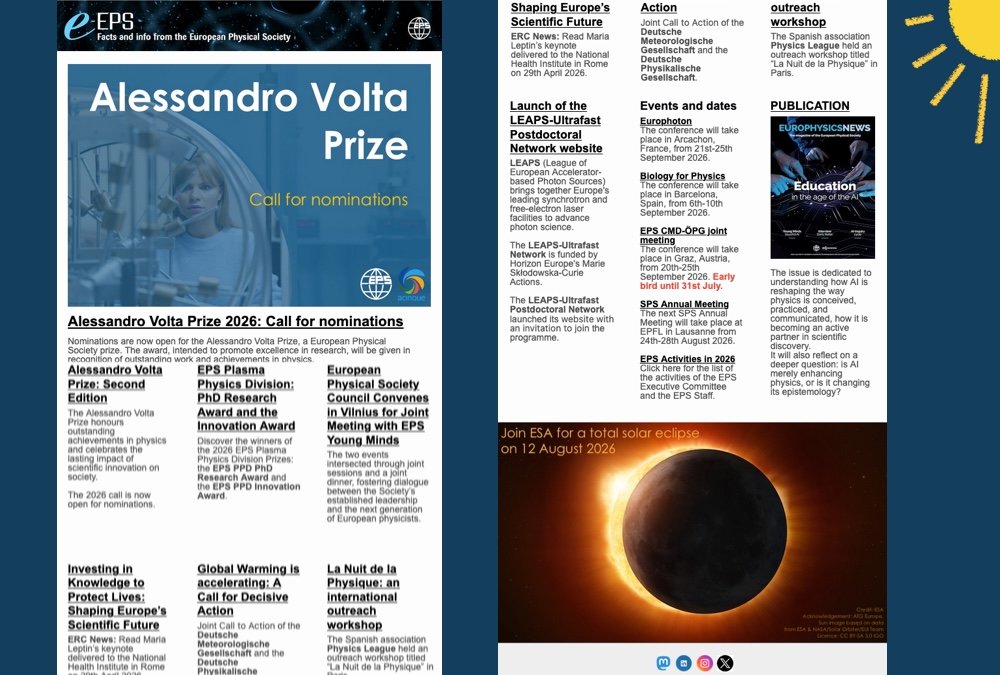
The June 2026 issue of e-EPS is out!
Read the latest issue of our online newsletter here!
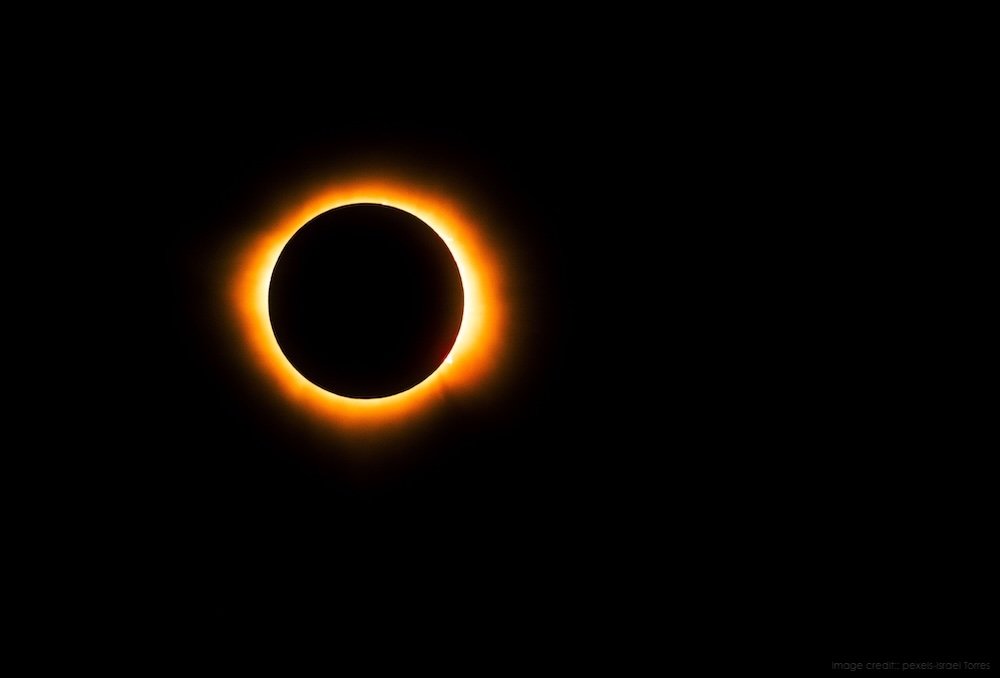
Europe’s Eclipses Trilogy from 2026 to 2028: A three‑year sequence of spectacular solar events
Europe is entering a period of noteworthy astronomical events: three major solar eclipses in three consecutive years (2026, 2027, and 2028.) Each event offers unique viewing opportunities across the continent, from totality over Spain to an annular “ring of fire” visible from Portugal and beyond. Total Solar Eclipse on 12th August 2026 This is the first of the trio. The totality will be visible from Greenland, Iceland, northern Spain, and parts of Russia. Much of Europe will see a partial eclipse. The European Space Agency (ESA) highlights Spain as one of the prime viewing locations, with the path of totality crossing the country in the evening. You can follow the total solar eclipse with the European Space Agency (ESA), in person or online here. Total Solar Eclipse on 2nd August 2027 Just one year later, Europe experiences another total eclipse, an extremely rare occurrence. The total solar eclipse will be visible from Spain, northern Africa, and the Middle East, with partial visibility across most of Europe. This eclipse, named “the eclipse of the century”, will be one of the longest of the 21st century, with over 6 minutes of totality in parts of Egypt. Annular Solar Eclipse on 26th January 2028 The trilogy concludes with an annular eclipse, where the Moon is too distant to fully cover the Sun, producing the iconic “ring of fire.”ESA confirms that annularity will be visible from Portugal, Spain, and parts of South America, while the rest of Europe will see a partial eclipse. References for Further Reading
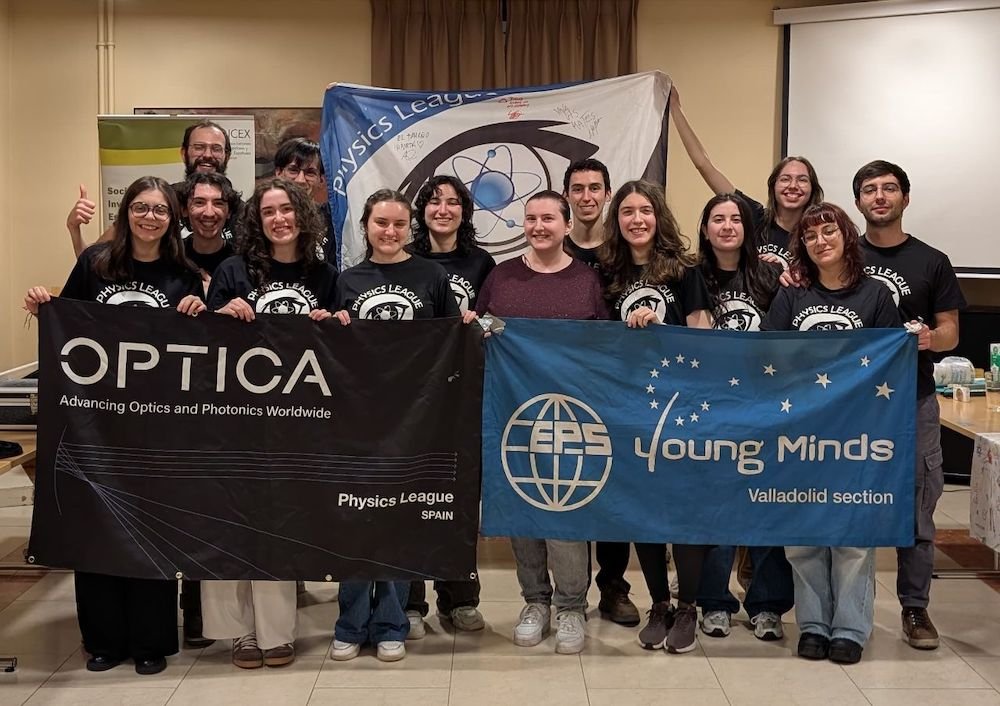
La Nuit de la Physique: an international outreach workshop
Activities of the EPS Young Minds – Author: Mia Martín Rodríguez The Spanish association Physics League held an outreach workshop to Paris, titled “La Nuit de la Physique”, in an effort to teach in an interactive and enjoyable way different physical phenomena to Spanish-speaking students in the French capital. Physics League is a non-profit association for physics outreach based in Valladolid, Spain, with over 11 years of experience carrying out activities ranging from conferences and workshops to theatrical plays to bring physics closer to all kinds of audiences. Thanks to collaborating with educational institutions, towns, museums, and other entities, they have been able to help people from all ages and backgrounds enjoy learning physics. On February 13th, 2026, they travelled to Paris to create a space to bring together Spanish-speaking researchers and students through a fun yet educational activity, “La Nuit de la Physique”. Funded by EPS Young Minds, OPTICA, and the SIEF (Sociedad de Investigadores Españoles en Francia), and hosted at the Colegio de España, the event targeted students from both STEM and non-STEM backgrounds across various career stages. Through simple yet educational demonstrations covering Optics, Electromagnetism, Mechanics, and Thermodynamics, the workshop illustrated common physical phenomena in our daily lives. Ultimately, “La Nuit de la Physique” serves as a prime example of how physics outreach can simultaneously engage the general public while offering an opportunity for networking and professional growth. By transforming complex concepts into accessible, interactive experiences, the event fulfilled Physics League’s mission of making physics enjoyable for audiences of all backgrounds. Moreover, the event’s significance extended further, providing a unique space for Spanish-speaking researchers and students in Paris, Physics League members, and residents of the Colegio de España to connect. In essence, “La Nuit de la Physique” proved that outreach can effectively merge education with professional networking, creating a lasting impact for both the local community and Physics League’s members.