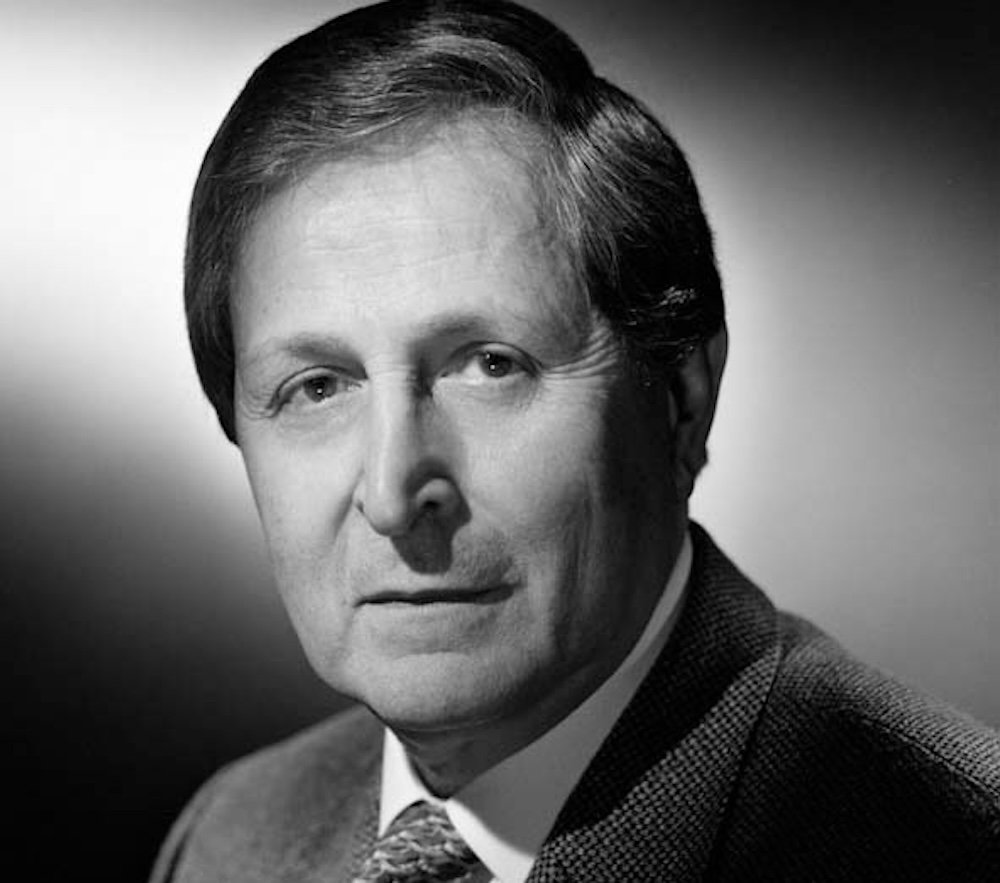
We would like to share the sad news with the entire physics community that Claude Cohen-Tannoudji passed away on October 22, 2026. He profoundly shaped atomic, optical, and quantum physics for at least half a century.
Born in 1933 in Constantine, Algeria, Claude Cohen-Tannoudji completed his schooling in Algiers before entering the École Normale Supérieure in Paris in 1953. Inspired by Alfred Kastler’s lectures, he chose to study physics and joined his research group in 1955, a group jointly led by Kastler and Jean Brossel. After obtaining the agrégation in 1957, he embarked in 1959 on doctoral research devoted to the quantum theory of optical pumping, which he completed in 1962. His early work revealed several new effects arising from the interaction between light and atoms, including light-induced shifts in atomic energy levels caused by non-resonant radiation.
Following a period of teaching at the Faculty of Sciences in Paris, he was appointed Professor at the Collège de France in 1973, where he held the Chair of Atomic and Molecular Physics and taught for the next thirty years.
His research made fundamental contributions to the development of atomic physics and quantum optics. In his doctoral thesis, he established a comprehensive quantum description of optical pumping, using the density matrix formalism to account for coherences between atomic levels. Together with his collaborators, he subsequently developed the concept of the “dressed atom”, providing a powerful framework for understanding the properties of an atom interacting with an electromagnetic field, including its resonances and the characteristics of the light it emits.
In the early 1980s, he turned a major part of his research towards laser cooling and trapping of atoms. Working with Alain Aspect, Jean Dalibard and Christophe Salomon, and later with Michèle Leduc and their collaborators, he made seminal contributions to this rapidly emerging field. His team provided a physical explanation of sub-Doppler cooling through the Sisyphus effect, which relies on light polarization gradients and optical pumping between Zeeman sublevels. They also developed coherent cooling schemes capable of reaching temperatures in the nanokelvin range, based on the concepts of dark states and quantum interference.
These groundbreaking contributions earned him the 1997 Nobel Prize in Physics, which he shared with Steven Chu and William D. Phillips. They helped lay the foundations for subsequent advances in ultracold atomic physics, including Bose-Einstein condensation, quantum simulation of many-body systems, the control of interactions between atoms and the development of increasingly precise atomic clocks.
Beyond his scientific achievements, Claude Cohen-Tannoudji made an outstanding contribution to education and the dissemination of scientific knowledge. His lectures on quantum mechanics, developed with Bernard Diu and Franck Laloë, gave rise to a three-volume textbook that has become a classic reference for generations of physicists. Together with Jacques Dupont-Roc and Gilbert Grynberg, he also authored Photons et Atomes, a landmark work on the quantum interaction between electromagnetic fields and matter. Through his lectures at the Collège de France, his many contributions to summer schools and his exchanges with researchers across different disciplines, he helped shape and strengthen the international community in atomic physics and quantum optics.
His remarkable career was recognised through numerous distinctions, including the CNRS Gold Medal in 1996 and the Nobel Prize in Physics in 1997, as well as several other prestigious international scientific awards. He received honorary doctorates from eighteen universities and was elected to numerous scientific academies.
Beyond his scientific achievements, Claude was particularly admired for his kindness, generosity and genuine care for young researchers. He had a rare ability to recognise their potential, appreciate their contributions and encourage them to pursue their ideas. Above all, he knew how to inspire confidence, helping them believe in their abilities, develop their own scientific thinking and find their own path as researchers. His generosity and trust in others were an essential part of the way he shared his knowledge and passed on his passion for science.
In the context of the EPS, Claude Cohen-Tannoudji was the guest of honour at the opening of the European Physical Society building in Mulhouse in 2005. He gave the keynote talk at a scientific conference held at the Université de Haut-Alsace and travelled to speak to students at a local high school, the Lycée de Guebwiller, thus sharing his passion for science with both the local scientific community and young people in the region.
Claude Cohen-Tannoudji leaves a remarkable scientific legacy. His work profoundly advanced our understanding of light-matter interactions and helped shape the field of ultracold atomic physics. Equally important was his commitment to teaching, mentoring and transmitting knowledge to future generations. His career exemplifies the strength of an approach to science that brings together theoretical insight, experimental exploration and the development of young researchers.
Saïda Guellati-Khelifa
Laboratoire Kastler Brossel and CNRS (Centre National de la recherche scientifique)
on behalf of the AMOPD Board of the EPS