

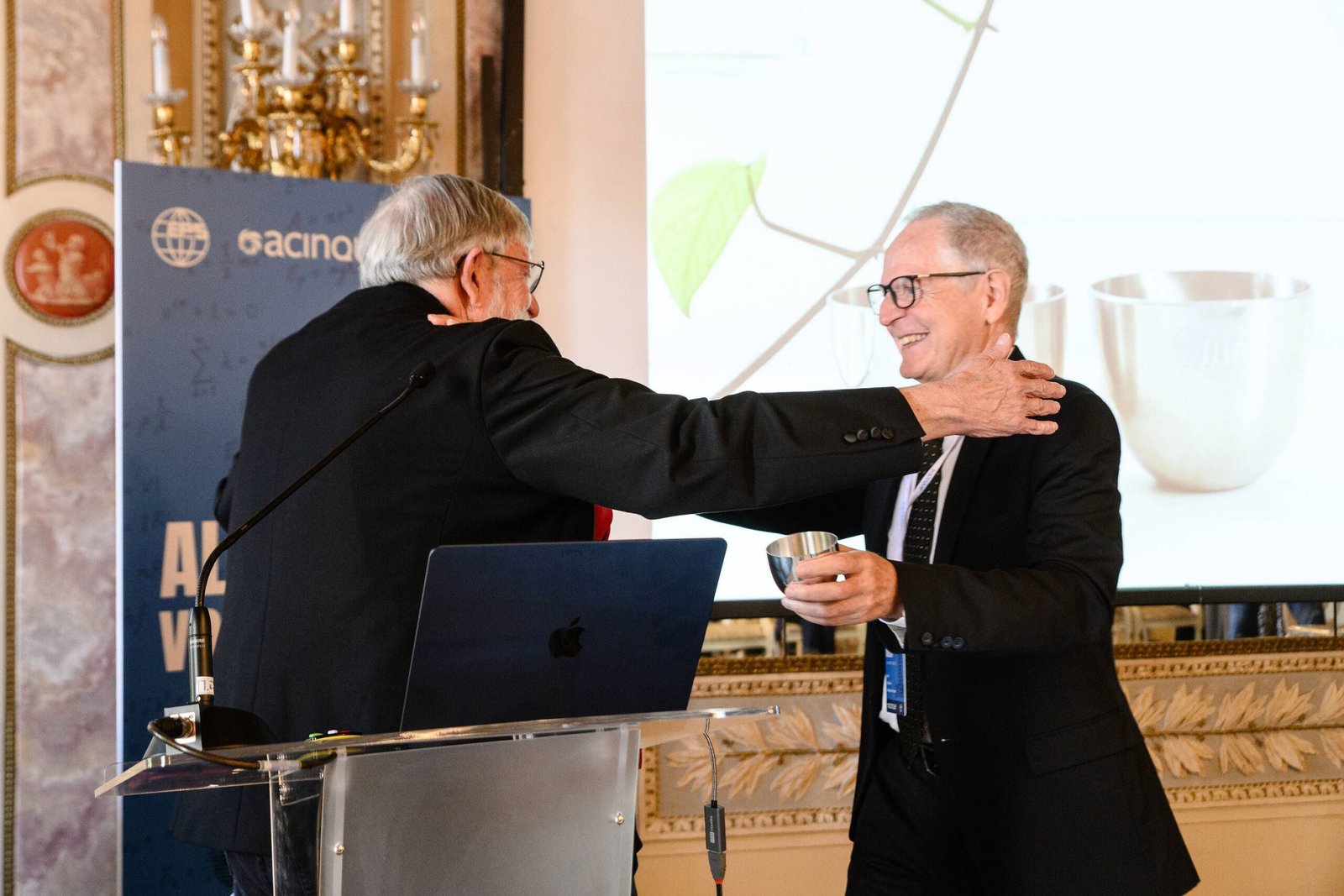
The Inaugural Alessandro Volta Prize Ceremony and Symposium COMO 2 October 2026 Collaboration, friendship, kindness and humanity were at the heart of the inaugural Alessandro Volta Prize ceremony, organised by Acinque and the European Physical Society. The event celebrated both scientific achievement and the human relationships that make discovery possible. Prof. Jean Dalibard received the prize with the citation: Nobel laureates Prof. Alain Aspect and Prof. William (Bill) Phillips paid tribute to Dalibard’s scientific achievements in their laudations. They recalled his many experimental and theoretical contributions, from skilfully cutting cardboard baffles as a master’s student in Aspect’s laboratory to his role in developing the magneto-optical trap. Beyond Dalibard’s remarkable intellect, these recollections revealed a strong sense of community, friendship and collaboration. Time and again, scientific advances emerged from conversations, shared ideas and friendly debate amongst colleagues. Phillips recalled how Jean and Barbara Dalibard had encouraged these exchanges by welcoming scientists into their home. In gratitude for their hospitality, he presented them with a pair of Jefferson cups. In his address, Dalibard emphasised that connections in science extend beyond relationships between individual researchers. He highlighted the role of learned societies, including the European, French and Italian Physical Societies, in supporting physics and physicists nationally and internationally. Their work, he noted, is especially important at a time of growing anti-science sentiment. Como itself provided a fitting setting for these reflections. The prize honours Alessandro Volta, one of the city’s most celebrated figures, whose work earned international recognition during his lifetime. His inventions quickly found applications across Europe, and Napoleon rewarded his achievements. The ceremony also offered an opportunity to look ahead. Prof. Umberto Piarulli, Pro-Rector of the University of Insubria, and Stefano Cetti, CEO of Acinque, both emphasised the enduring value of scientific research and the contribution that exploring the unknown can make to society. Their remarks echoed a central message of the day: supporting discovery also means nurturing the people and relationships that make it possible.

Call for nominations for the Nuclear Physics Thesis Prize 2027
The board of the Nuclear Physics Division (NPD) of the European Physical Society (EPS) calls for nominations for the 2024-2026 European Nuclear Physics Thesis Prize. The prize recognises the excellence of a recent PhD in Nuclear Physics. The prize is given to typically 3 (and up to a max. of 5) candidates every year the European Nuclear Physics Conference (EUNPC) is held. This year’s winners will receive a diploma and support to a max. value of 1000 € to attend EuNPC2027 in Catania and present their work. Nominations are open to those having obtained a PhD degree in experimental, theoretical or applied nuclear physics, in a member country of the EPS. The PhD must have been defended within the three-year period between January 1st 2024 and December 31st 2026. Nominations should include, in one PDF file: Nominations should be sent to the Scientific Secretary of the NPD board Dr. Raquel Crespo, (Raquel.Crespo@tecnico.ulisboa.pt) and to the chair Dr. Araceli Lopez-Martens (Araceli.Lopez-Martens@ijclab.in2p3.fr) by the deadline of January 31st 2027.
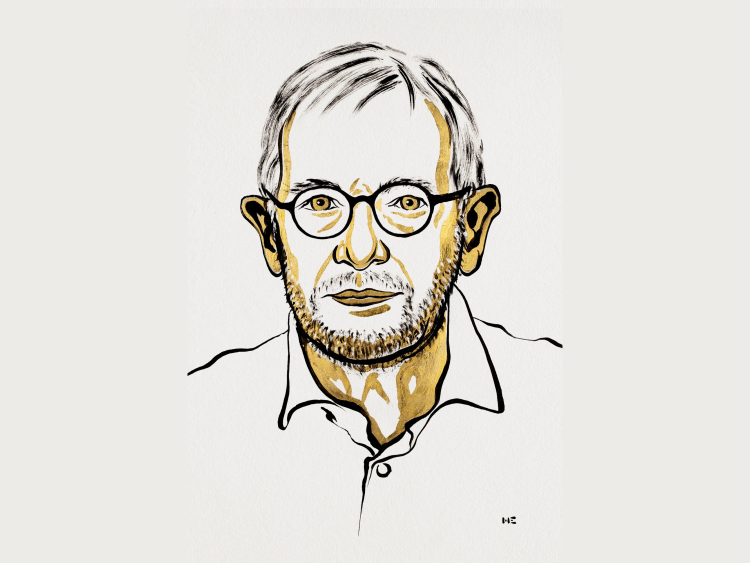
The Nobel Prize in Physics 2026
6 October 2026 – The Royal Swedish Academy of Sciences has decided to award the Nobel Prize in Physics 2026 to: Francis Halzen, University of Wisconsin–Madison, USA “for decisive contributions to the IceCube Neutrino Observatory and the discovery of high-energy neutrinos of astrophysical origin” Read the press release of The Royal Swedish Academy of Sciences here.
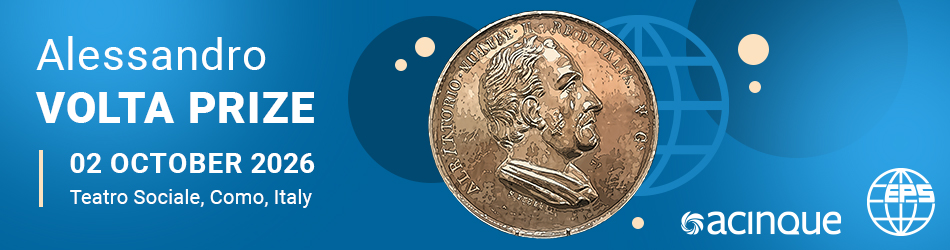
EPS and Acinque Award Inaugural Alessandro Volta Prize to Jean Dalibard
Como becomes the world capital of physics for a day, with the participation of Nobel Laureates Alain Aspect and William D. Phillips COMO 2 October 2026 The European Physical Society (EPS), in partnership with Acinque, is proud to announce the award ceremony of the inaugural Alessandro Volta Prize, a new international recognition celebrating outstanding contributions to physics. The ceremony takes place on Friday, 2 October 2026, at the Teatro Sociale in Como — the birthplace of Alessandro Volta, inventor of the electric battery and discoverer of methane The Prize is awarded to Prof. Jean Dalibard (Collège de France & École Polytechnique, Paris), one of the most influential voices in contemporary quantum physics. “for his pioneering contributions to laser cooling and light-matter interactions, and for groundbreaking experimental and theoretical results in the quantum many-body physics of ultracold gases”. The morning ceremony will be followed by an International Symposium on quantum physics and ultracold matter at the Chiostro di Sant’Abbondio, University of Insubria — organised with the support of the Università degli Studi dell’Insubria and the Italian Physical Society (SIF). The symposium brings together some of the world’s most eminent scientists, including Nobel Laureates in Physics Prof. Alain Aspect (Nobel Prize 2022) and Prof. William D. Phillips (Nobel Prize 1997). About the Alessandro Volta Prize Conceived by the European Physical Society and realised in partnership with Acinque, the Alessandro Volta Prize was established to honour exceptional scientific achievement in physics at the European level. The Prize is part of 200VOLTeVOLTA, the multidisciplinary programme marking the bicentenary of Alessandro Volta’s death (1827–2027), designed to engage the broader public and keep alive the legacy of one of history’s greatest scientists. About Jean Dalibard Jean Dalibard is an internationally acclaimed physicist specialising in the interaction between matter and radiation. A former professor at the École Polytechnique, he is currently a researcher at the Collège de France in Paris, one of the world’s most prestigious research institutions, and a member of several leading scientific academies, including the Académie des Sciences (France) and the National Academy of Sciences (United States). Among his many distinctions: the Blaise Pascal Medal of the European Academy of Sciences (2009), the Max Born Award and the Davisson–Germer Prize (2012), and the Gold Medal of the CNRS (2021) — the highest honour in French scientific research. Quote “Excellence in research grows from genuine scientific curiosity and, over time, creates new opportunities for technology and society. Supporting fundamental research is an investment in the future. In celebrating Dalibard’s work and honouring Volta’s memory, we wish to underscore the importance of nurturing the conditions in which the next generation of scientists can continue to innovate and build the knowledge from which tomorrow’s technologies will emerge.”— José María De Teresa, President, European Physical Society Programme 2nd October Full Programme at the following link: https://indico.cern.ch/event/1676546/page/43070-overview About the organisations European Physical Society (EPS) The European Physical Society is a non-profit organisation dedicated to advancing physics in Europe. It unites national physical societies, research institutions, and individual physicists, supporting scientific excellence, collaboration, and education. EPS also plays an important role in science policy, dissemination of research, and the promotion of physics to society and future generations. Acinque Group Acinque is a Lombardy-based multiutility company active in energy, environment, water, and infrastructure services. The Group is committed to fostering sustainable development and supporting innovation in the territories where it operates. Through cultural and scientific initiatives such as the Volta Prize, Acinque contributes to strengthening the link between local communities, research, and technological progress. Fondazione Alessandro Volta works to promote scientific culture through educational projects, outreach and cultural initiatives, and collaborations with institutions, schools, and universities, developing networks of national and international significance. Through a wide-ranging annual program of activities dedicated to the promotion of university education, research, advanced training, and culture, the Foundation contributes to enhancing the scientific and human legacy of Alessandro Volta, fostering dialogue between science, culture, and contemporary society.
The September 2026 issue of e-EPS is out!
Read the latest issue of our online newsletter here! You will discover interviews with EPS Prize Laureates, the call for the Lise Meitner Prize, a position paper on Physics Bachelor’s Studies, and much more.
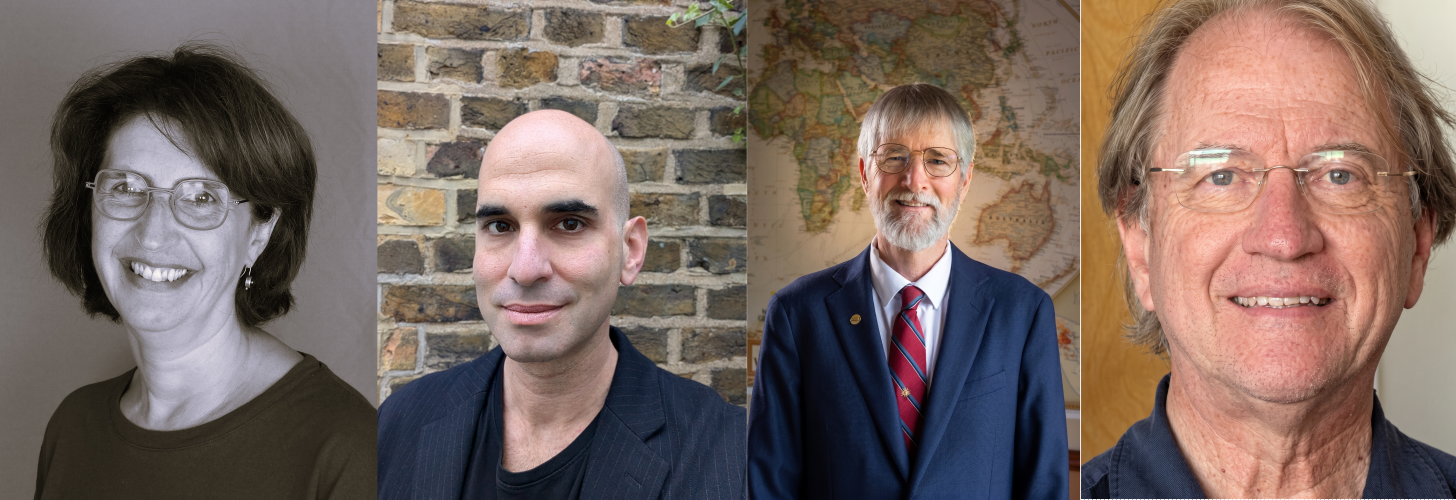
The 2026 Landau-Spitzer Award on the Physics of Plasmas
The 2026 Landau-Spitzer Award has been awarded to: “For advances in developing models that provide accurate and fast predictions for turbulent transport in tokamak plasmas, through more than a decade of collaboration that spans foundational quasilinear gyrokinetic theory, multi-device experimental validation, and machine learning methodology.” The Landau-Spitzer Award on the Physics of Plasmas for “Outstanding contributions to plasma physics” is jointly sponsored by the Plasma Physics Divisions of the American Physical Society and the European Physical Society. The Award is given to an individual or group of researchers for outstanding theoretical, experimental or technical contribution(s) in plasma physics and for advancing the collaboration and unity between Europe and the USA by joint research or research that advances knowledge which benefits the two communities in a unique way.
Phishing
Many people with a public relationship to the EPS have recently reported that they have received phishing emails which pertain to be from the EPS President. The EPS will never ask members to make payments on its behalf. If you are in any doubt please contact the EPS secretariat directly. Please pay attention to the email address of the sender. These phishing emails do not come from an eps.org domain.