

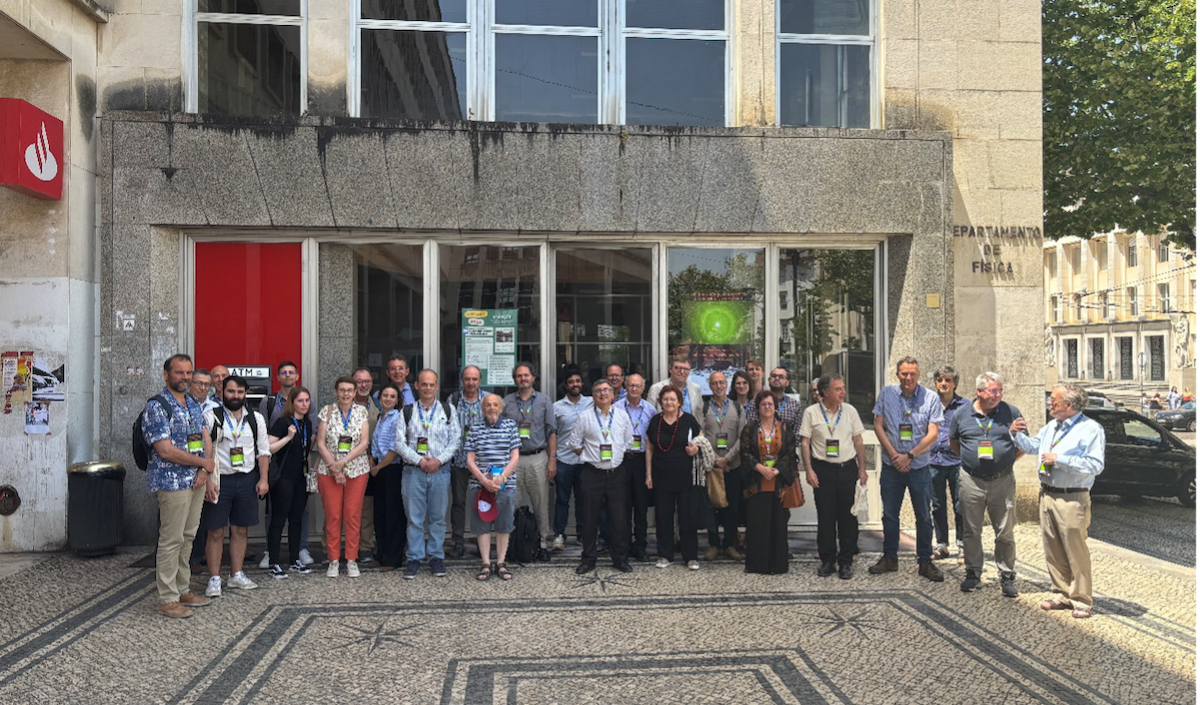
The 5th International Conference on the History of Physics took place in Coimbra from 29 to 31 May 2025, under the sponsorship of the Institute of Physics, the History of Physics Group of the European Physical Society, Springer, and the Portuguese Physical Society—represented locally by Professor José Paixão, who enthusiastically and promptly offered his support for hosting the event at his university. The central theme of the conference was “Physics of the Early Decades of the Twentieth Century,” in alignment with the United Nations General Assembly’s designation of 2025 as the International Year of Quantum Science and Technology (IYQ). This commemorates the centenary of two foundational developments in quantum mechanics: the matrix formulation by Werner Heisenberg, Max Born, and Pascual Jordan, and the wave-mechanics formulation by Erwin Schrödinger. This conference marked the fifth edition in an ongoing series aimed at bringing together physicists interested in the history of their discipline with professional historians of science. It is founded on the belief that these two communities—each with its own perspectives and methodologies—can greatly benefit from dialogue and collaboration. The history of physics has the power to inspire future generations: by shedding light on the lives and achievements of past scientists and deepening our understanding of enduring conceptual challenges, it serves both as a guide and a source of inspiration. The programme featured four plenary lectures. The opening talk was given by renowned historian of science Helge Kragh, titled “Antimatter: Its Early History, ca. 1930–1970.” The second lecture, by Dr Michael Jewess, was titled “From the Old Quantum Theory to Quantum Mechanics and Chemical Bonding in the First Half of the Twentieth Century.” Roberto Lalli presented “European Cooperation in Nuclear Fusion Research from the 1950s to the 1970s: The Mutual Impact of Plasma Physics and Controlled Thermonuclear Technology.” The final plenary, delivered by Carlos Fiolhais, was “A Brief History of Science at the University of Coimbra.” (Photo) Over two and a half days, several engaging oral presentations—and a few posters—offered insights into recent research on the history of physics. A book of abstracts was also produced and can be accessed here. A highlight of the conference was the award of the Peter Schuster History of Physics Prize to Dr Michael Eckert, who has devoted most of his career to the history of physics at the Research Institute of the Deutsches Museum. (Photo.) The award was given by Professor Heinz Krenn representing theAustrian Physical Society and Professor Malcolm Cooper representing the Institute of Physics, who read a tribute to the awardee written by Professor Dieter Hoffmann (in absentia). The social programme included a visit to the old University, namely the “Paço das Escolas”, built on the site of Coimbra’s ancient citadel (“Alcáçova”). Participants also visited the Baroque Library, which includes a former student prison in its basement, and the Old Physics Cabinet, an EPS-recognised historical site housing a rich collection of 18th- and 19th-century scientific instruments. The richness of the presentations and the warm, collegial atmosphere among participants were key to the success of this memorable event. Authors: Isabel Malaquias José António Paixão
Art and Science relation
Author: Dina Izadi By combining art and science, we can create powerful learning experiences that foster curiosity, understanding, and appreciation for the world around us. In the early 1920s, Niels Bohr was struggling to reimagine the structure of matter. Previous generations of physicists had thought the inner space of an atom looked like a miniature solar system with the atomic nucleus as the sun and the whirring electrons as planets in orbit. This was the classical model. But Bohr had spent time analyzing the radiation emitted by electrons, and he realized that science needed a new metaphor. The behavior of electrons seemed to defy every conventional explanation. As Bohr said, “When it comes to atoms, language can be used only as in poetry.” Ordinary words couldn’t capture the data. How can we change the world by combination art and science? Supporting methods of science learning that are connected to imagination and artistic process can change the world of science and industry in future. Implementing such methods in interactive learning, can extend and develop innovative practices in science education. What is ISAC Talk Community? Imagination in Science by Art in different Cultures (ISAC) Talk, is an international Community. It started with the sparks of our own interests in Ariaian Young Innovative Minds Institute (AYIMI) and ADIB Science and Technology Institute (ADIB) jointly, to excite others by fascinating topics hoping that enthusiasm comes through for all who are working in science and art but with different cultures. To inspiring all to fall in love with science needs to know the art which can be combined with it. To improve this community, it should be accessible to others and creating more documents that’s much better anyone can use. To keep going we should hear the story of students, teachers and faculties then making a clear service across the countries who are interested to join this community. This collaboration may lead us to remove constraints that push our students and teachers to be creative. ISAC Talk Community Structure Volunteers from all countries may gather in our different working groups and categories as a way to improve the main aim of ISAC Talk Community while taking or giving experience and sharing knowledge which help others to learn more.This community is divided in different working groups as follows: Artistic Working Group This working group form and foster new relationships with artists from all over the world and work with the existing Local Committees, to ensure good communication with ISAC Talk Community. The relationships with artists are in the following categories: Scientific Working Group This working group focus on the use of different tools can make things a lot easier in various phases of scientific work. • Searching and summarizing key findings from scientific studies and research,• Tool for searching, summarizing key findings from scientific papers and supporting the scientific writing process• For Courses and events on the scientific topics Affiliated Organizations in ISAC Talk Community Our Partners consist of all communities, unions, societies,… who join in different sections and categories by filling the ISAC Talk MOU. Volunteers from all countries may gather in our different working groups . ISAC Talk Executive Committee consist of volunteer members of affiliated organizations in their own countries who are willing to hold this event . The main members are as follows (it depends on affiliated members if any other members or changes are needed): – President – Vice president – Secretary – Treasurer – IT & Social media manager Each Executive Committee is responsible to collect the registration fee for providing prize, medals, certificates, and also awards to the selected projects in their own country. The Grants Every year, ISAC Talk Community awards grants to the applicants who develop the main aims in supporting interactions between this community and other societies and organizations in other countries. Successful applicants which have been selected by the Executive Committee, can be announced publicly. International ISAC Talk Festival and Rules We are going come together to hold various events in ISAC Talk Community which are useful in explaining scientific concepts by art especially when those concepts are complex. What are the Main Aims That’s a great question! Art can be incredibly useful in explaining scientific concepts, especially when those concepts are complex. Here are some items that are particularly helpful to answer: ” Why is art so effective in explaining science?” By combining art and science, we can create powerful learning experiences that foster curiosity, understanding, and appreciation for the world around us. This event is often used as practice for those are planning to do well in Art and Science but in a novelty method. This program is going to investigate: ISAC Talk Community holds festival in different categories. Ariaian Young Innovative Minds Institute (AYIMI) and ADIB Science and Technology Institute (ADIB) jointly in Iran, are the main organizers of this event. All who are interested are invited to join us and compete in identified groups (3-6 members) or individually in various offered categories every year. Any invited countries are represented by an Affiliation Organization (AO) which has accepted to cooperate with our institutes. The Aos are accepted as the volunteers to be the LOC of International ISAC Talk Festival too. Our partners in each country act as the LOC in this festival and collect the registration fee to award the participants in the event and as the grants which are devoted each year to support more students from different countries. Grants are awarded to those who are going to attend tournaments, conferences or events and their applications have been accepted by vote among all the partners. Categories Submission the projects and artwork in different patterns and categories are accepted. Categories both in science and art: All research articles in any field of science are accepted to be presented in our contest as in conference and the best articles will be given prizes. The articles will be published on our journal but as the rules the participants who have been awarded in IAC are free
Spring into Discovery Space
Author: Michael Gregory Over the past few months, the European Physical Society ran “Spring into Discovery Space” – a webinar series and contest to introduce teachers across Europe to the Discovery Space Project. Discovery Space is an EU-funded project to develop an Exploratory Learning Environment to facilitate students’ inquiry and problem-solving through learning scenarios featuring virtual and remote labs. Students are guided through differentiated learning pathways, customized by their input as they progress through learning scenarios covering a variety of topics. For more information on Discovery Space, please see: https://discoveryspace.eu/. The EPS congratulates the two 1st Prize winners: Combined, these two enthusiastic teachers used the Discovery Space platform for over 400 student-implementations of learning scenarios! In recognition of their efforts, and to support them to go further, they have been awarded a trip to Marathon, Greece, to attend the Discovery Space Summer School from July 6-11th. (For more information on the summer school, see: https://esia.ea.gr/discovery-space-summer-school/) The Spring into Discovery Space webinar series featured weekly webinars throughout April and May, hosted by EPS project officer Michael Gregory and guest hosts from Discovery Space Partners across Europe. NUCLIO (Núcleo Interativo de Astronomia e Inovação em Educação, Portugal) generated the most enthusiasm, with over 150 teachers registered for their webinars on the Mission to Mars and Earth’s Annual Journey Learning Scenarios. Recordings of the webinars are published in a playlist on the EPS YouTube channel: Spring Into Discovery Space Playlist: https://www.youtube.com/playlist?list=PLNQWWp2JS_aRW80n8EBpzFgrzG0T_6emF EPS will follow-up with another webinar series, “Fall into Discovery Space,” in September and October, culminating with an in-person workshop at EPS headquarters in Mulhouse, France, October 18-19th. For more information, check out the August issue of e-EPS, and check back on our Current Projects: https://eps.org/what-we-do/education/current-projects/ Discovery Space is funded by the European Union under grant agreement No 101086701. Views and opinions expressed are however those of the author(s) only and do not necessarily reflect those of the European Union or the European Education and Culture Executive Agency (EACEA). Neither the European Union nor EACEA can be held responsible for them.
Responsible community-led publishing at EPL
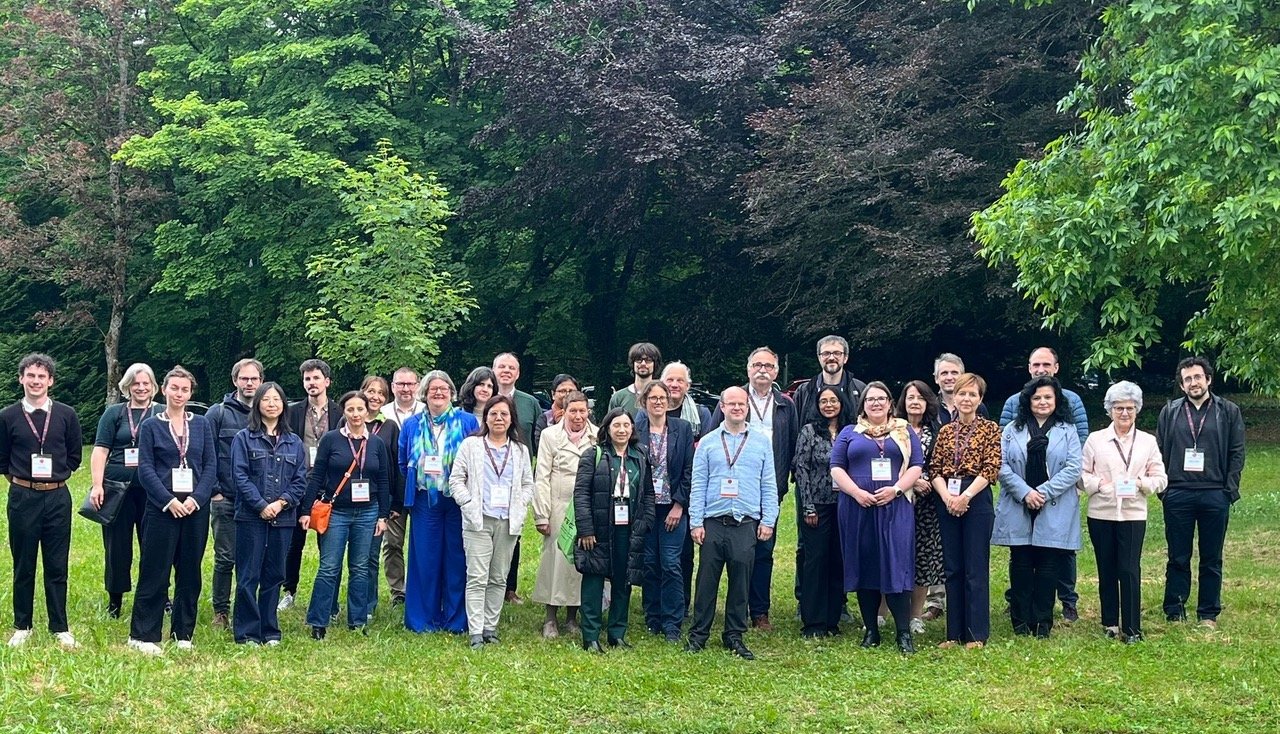
Author: Richard Blythe EPL is a respected non-profit journal that publishes letters at the frontiers of physics. On May 22nd 2025, its editorial board convened at the headquarters of the European Physical Society (EPS) in Mulhouse, France, to share their experience of handling manuscripts and discuss the journal’s strategic direction. The meeting opened with Anne Pawsey, EPS Secretary General, explaining the society’s scientific responsibility for EPL. Uniquely it is owned by multiple national physical societies through the EPL Association. Petra Rudolf, chair of the Association, set out how the societies work together to ensure financial stabiity, independence from commercial interests, and deliver benefits to the participating societies. As the day progressed, discussions covered many topics, ranging from the meticulous process of securing prompt, high-quality reviews to broader questions of maintaining trust in the scientific literature in an ever-changing technological and political context. Several key themes emerged that demonstrate how EPL is poised to meet these challenges. A key strength is that the editorial board, led by Richard Blythe as Editor-in-Chief, is composed entirely of practising researchers drawn from all fields of physics and across the globe. Alongside their individual subject expertise, board members bring their own experiences and expectations they have of how a journal should serve both authors and reviewers. They discussed how to support authors and each other to ensure manuscripts reach high standards, and learnt how to be vigilant to recent trends that threaten the integrity of the scientific record. Perhaps the biggest difference between EPL now and when it was founded 40 years ago is the transition from print to online publication, and with it the shift towards open-access publishing. Whilst the principle that scientific research outputs should be shared freely for the benefit of humanity is sound, this model is vulnerable to commercial exploitation. The editorial board showed strong commitment to the EPL’s values as a community-led journal, ensuring that they will continue be upheld as the conduct of research and its relationship with wider society evolves. Although no-one knows what the next 40 years will bring, either in terms of scientific discoveries or how they will be reviewed and communicated, we look forward to EPL maintaining a high-quality service to authors, reviewers and readers. We thank everyone who has played a part in this over the past four decades, especially the EPS editorial staff for their hard work in making a complex board meeting run just as smoothly as the editorial process itself.

Parla Potabile: Keep science within reach of people
A report from Lorenzo Unich, PONYS (Physics and Optics Naples Young Students) As young scientists we are often challenged to destroy what our certainties and beliefs are, even if they’re very rooted. On many occasions we have to completely change the point of view on things. But during these years the PONYS association never changed views on a basic principle: the fundamental mission to share science and to make it accessible to everyone. This endeavour pushes us to improve what we have done and to continue what we see as effective. Parla Potabile – Science for Everybody is a format now in its fourth edition. Hosted by the cultural centre Scugnizzo Liberato, in the heart of Naples’ city centre, it is a science fair that features a wide range of exhibitions: from university researchers to student associations, from members of research centres to PhD students from our section. This cultural centre has become a hub during the years for organising events and providing cultural services that would otherwise not be present in the area. Each exhibitor is free to bring different kinds of activities, shaped by three essential principles: they must be adaptable to different audiences, they should introduce a field of science or technology, and – most importantly – they must be engaging for the public. The strength of the event lies in the variety of activities offered, allowing each visitor to find something that interests them. For example, we host hands-on workshops, science-themed board games, quizzes, and more.This really broadens the public of this event: school children, young teenagers, adults, people walking in just to take a look at what is going on.This year’s numbers were really impressive: we had more than 20 associations involved and 75 volunteers that helped us welcome more than 2000 visitors.For this edition, we wanted to broaden our demographics, trying to attract young adults to the event, so we added a final concert to the event. Our idea was to merge the spirit of science outreach with the festive energy of a live show. This blend worked well: some attendees, initially drawn by the music, took the opportunity to explore the scientific exhibitions and interact with the activities around them. We estimate that for the concert alone, more than 100 additional visitors came, helping us to mix science with a social and cheerful occasion.

The EPS Emmy Noether Distinction 2024 is announced!
Mulhouse, 23rd May 2025. The European Physical Society is pleased to announce that Daniela Bortoletto studied Physics at the University of Pavia, specializing in particle physics with a thesis entitled “Study of states with hidden strangeness at the Omega’ spectrometer”. She then obtained her master’s degree at the University of Syracuse, U.S.A. and also did her PhD there, defending a thesis entitled “Exclusive and Inclusive Semileptonic decays of the B meson”. She moved on to Purdue University, first as a postdoc, and then was assistant, associate, and full professor, and finally E. M. Purcell Distinguished Professor. Twelve years ago, she came back to Europe as Professor of Particle Physics at the University of Oxford; since 2015 she has been Senior Kurti Fellow in Physics at Brasenose College and since 2018 head of Particle Physics at the University of Oxford. Professor Bortoletto played a pivotal intellectual role in two of the most significant discoveries in particle physics over the past 30 years: the discovery of the top quark at Fermilab near Chicago, USA, in 1995, and the discovery of the Higgs boson at CERN in Geneva, Switzerland, in 2012. These groundbreaking achievements were made possible, in part, by her visionary leadership in the development of silicon-based detector technologies. From early in her career, Professor Bortoletto recognised the potential of silicon detectors –then an emerging technology – and was instrumental in advancing them into the highly sophisticated systems that now lie at the heart of modern particle physics experiments. Professor Bortoletto harnessed the unique advantages of silicon integrated circuits – namely their speed, low power consumption, and radiation resistance – to design advanced particle detectors. She established a dedicated silicon detector laboratory at Purdue University where she spearheaded the development of the SVX II detector which was crucial to advancing top quark studies. She went on to make major contributions to the development of the radiation-hard silicon vertex detector for the CMS experiment at the Large Hadron Collider. Her work was instrumental in enabling the high-precision measurements that culminated in the discovery of the Higgs boson and has had a transformative impact on experiments at CERN. Beyond her research, Daniela Bortoletto has been a member of many advisory panels to UK and US funding agencies, laboratories, and experiments, a leader in all the major community roadmap planning exercises in the US and Europe in the last decade. She has inspired future particle physicists by extensively teaching worldwide about silicon detectors. Daniela Bortoletto has worked with resolve and continuous commitment for the recognition of women in physics and has created a unique yearly occasion for young women physicists in the UK, the Conference for Undergraduate Women in Physics in the UK, where they can feel their strength and become more confident thanks to meeting inspiring role models. These conferences have empowered over a thousand young women in the past decade. Doris Reiter studied Physics at the University of Münster and received her Ph.D. there in 2010 with a thesis entitled “All-Optical Spin Manipulation of a Single Manganese Atom in a Single Quantum Dot: A Theoretical Study”. During her PostDoc phase, she continued to study quantum dots and analysed the impact of electron-phonon interaction when using quantum dots for quantum information technology. She also spent one year at Imperial College London, where she expanded her work to light-matter interaction and plasmonics. In 2016 she was appointed as Junior Professor at the University of Münster and in 2022 she moved to the Technical University of Dortmund where she was awarded an extraordinary professorship in 2024. She now leads a research group in Theory of solid-state nanostructures for quantum technologies. Doris Reiter’s work is situated at the interface between quantum optics and solid-state physics. She has developed groundbreaking theoretical models for non-classical light generation in various nanostructures, like semiconductor quantum dots, 2D materials, photonic crystals and plasmonic systems that shaped modern photonics research. Her most impactful discovery has been the SUPER scheme, a two-colour coherent excitation scheme for quantum emitters. This scheme is really the first that can excite an emitter with light that is entirely on the red, i.e., low-energy side of a transition. The fact that at first glance this appears to be violating energy conservation makes it clear that this is not only a technical feat, but also fundamentally novel physics. This radically new method has transformed the field, with multiple research groups adopting and applying this concept to advance quantum optics and semiconductor photonics. Alongside her scientific research, Prof. Reiter has distinguished herself as an exceptional leader and mentor. She actively advocates for improved leadership practices within academia, recognizing the importance of effective communication and supportive research environments. She has taken on key roles in professional societies, serving as co-chair of the Semiconductor Division of the German Physical Society and founding AGyouLeaP (for young leaders in Physics), a groundbreaking initiative supporting young group leaders with networking opportunities, enhanced visibility, and leadership resources. Her “Physics and Pizza” lecture series exemplifies her commitment to knowledge-sharing and community building. Prof. Reiter’s passion for outreach and science communication is evident in her leadership of QuanTour, an innovative project designed to engage the public with photonic quantum technologies. Through creative content and strategic outreach, QuanTour, where she also highlights female scientists, has amassed an impressive 700,000 views on social media, effectively promoting the International Year of Quantum Science and Technology and fostering public understanding of quantum research. Given her topic of research and public engagement for International Year of Quantum Science and Technology, the EPS committee is particularly delighted to award her with the distinction now. More info
News from the EPS Council in Copenhagen
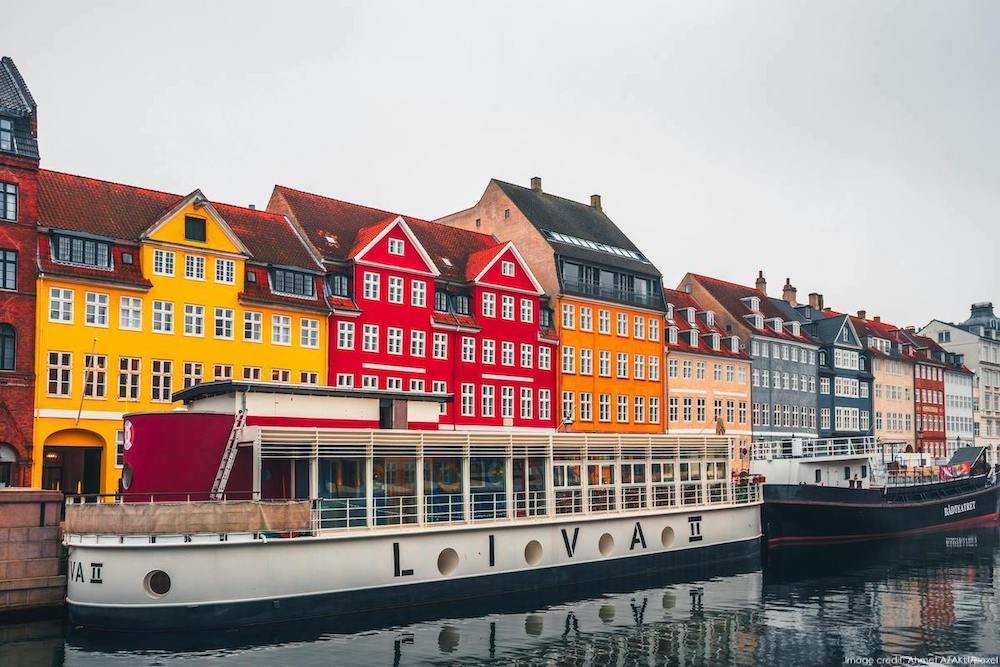
José María De Teresa is the new EPS President-Elect Prof. José María De Teresa leads the group of Nanofabrication and Advanced Microscopies (Nanomidas) at the Instituto de Nanociencia y Materiales de Aragón (INMA, CSIC-Universidad of Zaragoza) in Spain. He is the Coordinator of the Spanish network on Nanolithography (Nanolito) and the FIB-SEM area in the Spanish National facility for Advanced Microscopies. He was the past Chair of the Condensed Matter Division Board in the European Physical Society (EPS). His main research interests are nanofabrication with focused electron and ion beams, magnetic nanostructures, nano-superconductivity and quantum technologies. He has co-authored 240 research articles (11600 citations in Scopus) and given more than 100 invited conferences, being the supervisor of 20 PhD thesis (5 of them in progress). He has national and international distinctions, such as being Fellow of the APS (2021), of the EPS (2023) and of EURASC (2024). During the EPS Council meeting in Copenhagen, Prof. De Teresa set out his plans for when he takes up office in 2026; he will work to implement the EPS’s mission, vision, and core values. Together with the EPS governing bodies and EPS stakeholders, he plans to develop actions along several axes, all serving the overarching goal to make EPS an even more dynamic society with increased direct impact on more than a hundred thousand European physicists. Regarding the commitment of the EPS with the society, the focus will be put on using the knowledge of its members about Physics and the tools and networks available at the EPS to reinforce the European values and to contribute to the sustainable development of Europe. The Gero Thomas Medal Awarded to Professor Els de Wolf The EPS council 2025 has awarded Professor Els de Wolf the EPS Gero Thomas Medal for “Her leadership of EuroPhysics News and her sustained contributions to EPS particular for diversity and inclusion”. The Gero Thomas Medal is awarded to individuals who have contributed very considerably to the EPS. Prof. de Wolf has been involved in EPS for many years, serving on the Executive Committee from 2009 to 2014 during which period she was a key player in the foundation of the Equal Opportunities Committee and the establishment of the EPS Emmy Noether Distinction. More recently, Prof. de Wolf served as the Editor in Chief of Europhysics News, the print magazine of the society. During her time in the role, she indroduced the idea of so called “mini-themes” focussing the magazine’s output on a specific topics or themes which ranged from “Probing the Universe” to “Physics of Living Matter”, “Urban and Green Physics” to “Teaching Physics online”. Dr Antigone Marino, who succeeded Prof. de Wolf at the helm of EPN congratulated her on the award of the medal, underlining that “Her outstanding achievements make her a most deserving awardee of this prestigious honour” Prof. de Wolf made her substantial contributions to the EPS in parallel with a distinguished scientific career as an experimental particle and astroparticle physicist. She has made significant contributions to neutrino physics, deep inelastic scattering, and neutrino astronomy. After earning her PhD from the University of Amsterdam in 1982, she transitioned seamlessly between academia and industry. Her work at International Shell Petroleum Maatschappij on software for seismic analysis honed her expertise in computational techniques. As a senior physicist at Nikhef, National Institute for Subatomic Physics, and associate professor at the University of Amsterdam, Els played leading roles in large-scale international collaborations. First in deep-inelastic scattering research using the ZEUS detector at the HERA electron-proton collider at DESY, Hamburg, Germany, . In 2000, although she was already a member of the ATLAS Collaboration at CERN, she decided to join the ANTARES Collaboration for cosmic neutrino research using a neutrino telescope in the Mediterranean Sea. Since 2003, she was involved in the design and construction of the successor of ANTARES, the KM3NeT neutrino telescope in the Mediterranean Sea. Until her retirement, from Nikhef she was project leader of the design and construction of the optical modules and the fibre optical network of the telescope and represented the University of Amsterdam in the KM3NeT Institutes’ Board. The EPS Executive Committee has been renewed during the EPS Council meeting
Alessandro Volta Prize announcement
The European Physical Society and Acinque launch the Alessandro Volta Prize to celebrate excellence in physics Copenhagen, Denmark / Como, Italy – 16th May 2025 – The European Physical Society (EPS), in collaboration with Acinque S.p.A., is pleased to announce the launch of the Alessandro Volta Prize, a new and prestigious award aimed at recognizing outstanding achievements in the field of physics. Named after Alessandro Volta, the renowned Italian physicist whose invention of the electric battery revolutionized science and technology, the prize seeks to celebrate innovation, discovery, and the significant impact of physics on society. The Alessandro Volta Prize will be awarded to individual scientists or groups (up to three members) who have made innovative contributions to physics, ranging from theoretical research to instrumental development and practical applications. Winners will receive a monetary award of €10,000, a medal, and a diploma. The call for nominations for the first edition will open on 20 May 2025. The award ceremony will take place in Como, Volta’s hometown, and will be organized by Acinque. The event will be complemented by an international symposium focused on the scientific fields of the awardees, with support from Acinque. The prize winners will be announced during the next EPS Council meeting. “The Alessandro Volta Prize reflects our joint commitment to celebrating scientific excellence and raising public awareness of the importance of physics as a driver of societal progress,” said Mairi Sakellariadou, President of the European Physical Society. The award also reflects strong local roots, a hallmark of the multi-utility company, whose mission is to generate cultural and scientific value in the communities in which it operates. “Alessandro Volta,” said Acinque President Matteo Barbera, “is a pivotal figure in the history of international chemistry and physics. His work firmly placed Como on the global map of scientific excellence. The 2027 celebrations will offer a major economic impact and cultural promotion opportunity.” “Acinque plays an active role in the energy transition,” emphasized Stefano Cetti, CEO of Acinque. “Establishing strategic partnerships with universities and research institutes is therefore essential. We envision this relationship as an incubator of new ideas and technologies aimed at the responsible use of resources, renewable energy, circular economy, and sustainable growth.” “The establishment of such a significant prize in Acinque’s name underlines the company’s presence and responsibility in supporting the communities where we were born and have grown,” concluded Barbera and Cetti. The selection committee, chaired by the EPS President, will include representatives from both EPS and Acinque. Details regarding the nomination process will be announced shortly and shared via the official channels of EPS and Acinque. This new initiative follows in the footsteps of a previous prize, last awarded in 2020, reaffirming the lasting importance of Volta’s contributions to science. The second edition of the Prize will be held in 2027, on the bicentennial of Volta’s death, and will be accompanied by an international congress. For further information, including application guidelines and updates, please visit:• www.eps.org/• www.gruppoacinque.it About the European Physical Society (EPS) The European Physical Society is a well-established organization with a long-standing tradition of promoting physics in Europe and facilitating collaboration among physicists. It functions as a federation of national societies and as a learned society for individual members, with a dual mission: to promote scientific excellence and influence science policy. The Society’s goal is to contribute to advancing physics in Europe and neighboring countries by all appropriate means. In particular, it provides a forum for discussion on topics of common interest and offers tools to take action on issues requiring attention at the international level. About Acinque S.p.A. Acinque is the leading multi-utility company in the areas of Como, Lecco, Monza, Sondrio, and Varese, with operations also in the provinces of Udine and Venice. The company was formed through the merger of well-established local entities, and A2A is its reference shareholder and industrial partner. Acinque operates in electricity and gas sales, energy production, district heating and waste-to-energy, water and gas distribution, and energy solutions, guided by circular economy principles and sustainability. The Group is committed to fostering opportunities for growth and innovation in the energy sector by building networks with local stakeholders, universities, and the research community, focused on optimizing consumption and protecting the environment. Media Contacts European Physical Society (EPS)Anne C. Pawsey, Secretary General of the European Physical Society6, rue des Frères Lumière68200 Mulhouse, France+33 3 89 32 94 41anne.pawsey@eps.org Acinque S.p. A.Gian Pietro Elligiampietro.elli@acinque.it+39 335 5800630

ALICE detects the conversion of lead into gold at the LHC
Near-miss collisions between high-energy lead nuclei at the LHC generate intense electromagnetic fields that can knock out protons and transform lead into fleeting quantities of gold nuclei Geneva, 8th May 2025. In a paper published in Physical Review Journals, the ALICE collaboration reports measurements that quantify the transmutation of lead into gold in CERN’s Large Hadron Collider (LHC). Transforming the base metal lead into the precious metal gold was a dream of medieval alchemists. This long-standing quest, known as chrysopoeia, may have been motivated by the observation that dull grey, relatively abundant lead is of a similar density to gold, which has long been coveted for its beautiful colour and rarity. It was only much later that it became clear that lead and gold are distinct chemical elements and that chemical methods are powerless to transmute one into the other. With the dawn of nuclear physics in the 20th century, it was discovered that heavy elements could transform into others, either naturally, by radioactive decay, or in the laboratory, under a bombardment of neutrons or protons. Though gold has been artificially produced in this way before, the ALICE collaboration has now measured the transmutation of lead into gold by a new mechanism involving near-miss collisions between lead nuclei at the LHC. Extremely high-energy collisions between lead nuclei at the LHC can create quark–gluon plasma, a hot and dense state of matter that is thought to have filled the universe around a millionth of a second after the Big Bang, giving rise to the matter we now know. However, in the far more frequent interactions where the nuclei just miss each other without “touching”, the intense electromagnetic fields surrounding them can induce photon–photon and photon–nucleus interactions that open further avenues of exploration. The electromagnetic field emanating from a lead nucleus is particularly strong because the nucleus contains 82 protons, each carrying one elementary charge. Moreover, the very high speed at which lead nuclei travel in the LHC (corresponding to 99.999993% of the speed of light) causes the electromagnetic field lines to be squashed into a thin pancake, transverse to the direction of motion, producing a short-lived pulse of photons. Often, this triggers a process called electromagnetic dissociation, whereby a photon interacting with a nucleus can excite oscillations of its internal structure, resulting in the ejection of small numbers of neutrons and protons. To create gold (a nucleus containing 79 protons), three protons must be removed from a lead nucleus in the LHC beams. “It is impressive to see that our detectors can handle head-on collisions producing thousands of particles, while also being sensitive to collisions where only a few particles are produced at a time, enabling the study of rare electromagnetic ‘nuclear transmutation’ processes,” says Marco Van Leeuwen, ALICE spokesperson. The ALICE team used the detector’s zero degree calorimeters (ZDC) to count the number of photon–nucleus interactions that resulted in the emission of zero, one, two and three protons accompanied by at least one neutron, which are associated with the production of lead, thallium, mercury and gold, respectively. While less frequent than the creation of thallium or mercury, the results show that the LHC currently produces gold at a maximum rate of about 89 000 nuclei per second from lead–lead collisions at the ALICE collision point. Gold nuclei emerge from the collision with very high energy and hit the LHC beam pipe or collimators at various points downstream, where they immediately fragment into single protons, neutrons and other particles. The gold exists for just a tiny fraction of a second. The ALICE analysis shows that, during Run 2 of the LHC (2015–2018), about 86 billion gold nuclei were created at the four major experiments. In terms of mass, this corresponds to just 29 picograms (2.9 ×10⁻¹¹ g). Since the luminosity in the LHC is continually increasing thanks to regular upgrades to the machines, Run 3 has produced almost double the amount of gold that Run 2 did, but the total still amounts to trillions of times less than would be required to make a piece of jewellery. While the dream of medieval alchemists has technically come true, their hopes of riches have once again been dashed. “Thanks to the unique capabilities of the ALICE ZDCs, the present analysis is the first to systematically detect and analyse the signature of gold production at the LHC experimentally,” says Uliana Dmitrieva of the ALICE collaboration. “The results also test and improve theoretical models of electromagnetic dissociation which, beyond their intrinsic physics interest, are used to understand and predict beam losses that are a major limit on the performance of the LHC and future colliders,” adds John Jowett, also of the ALICE collaboration. Additionnal image Illustration of an ultra-peripheral collision where the two lead (208Pb) ion beams at the LHC pass by close to each other without colliding. In the electromagnetic dissociation process, a photon interacting with a nucleus can excite oscillations of its internal structure and result in the ejection of small numbers of neutrons (two) and protons (three), leaving the gold (203Au) nucleus behind (Image: CERN)

Report on the 13th PYNT
The 13th Persian Young Naturalists’ Tournament, PYNT was held on 1st-2nd May 2025 , by the Ariaian Young Innovative Minds Institute, AYIMI and the ADIB institute , (http://www.ayimi.org) among 12-16 years old students. Participants challenged with each other on problems were selected from international part, IYNT (International Young Physicists’ Tournament.) Three best teams got medals as follows: Two students participated individually: All participants received certificates and the best performance in each team received encouragement certificate too. All the best students are selected and educated to participate in IYNT which will be held in Almaty, Kazakhstan, from 17th-23rd August 2025.