Author: Christian Haecker
The small town of Benediktbeuern in southern Germany is best known for its location at the foot of the Benediktenwand, which rises to over 1,800 metres. However, the latest EPS Historic Site illustrates that this part of the Bavarian Alpine foothills is not only home to mountains and forests but is also where groundbreaking scientific discoveries originated.
On 18 September 2026, the Fraunhofer glassworks in Benediktbeuern was officially included among the special places where physics history was made. On the grounds of the local monastery, Joseph von Fraunhofer observed a sequence of dark lines in the solar spectrum whilst conducting experiments with prism glass in 1814 and mapped them. At that time, the glassworks and the associated optical institute were among the most important production sites for scientific glass and optical precision instruments. Although the scientific significance of Fraunhofer’s observations was not recognised until the spectra of chemical elements were understood in the second half of the nineteenth century, his work made a major contribution to the emergence of astrophysics as a new scientific discipline.
By awarding it the status of an EPS Historic Site, the EPS is therefore recognising both the excellent craftsmanship of the Benediktbeuern workshops and the outstanding contribution made by Fraunhofer’s work to the development of physics.
The ceremony marking the reopening of the glassworks, which had been severely damaged in a storm in 2023, was attended, amongst others, by Prof. Dr.-Ing. Holger Hanselka, President of the Fraunhofer-Gesellschaft, the Bavarian Minister-President Markus Söder and the Director-General of the Deutsches Museum, Prof. Dr Michael Decker. The EPS commemorative plaque in front of the glassworks was ceremonially unveiled by Prof. Dr José María De Teresa, President of the European Physical Society, and Prof. Dr Ulrike Woggon, a member of the Executive Board of the German Physical Society.
The glassworks illustrious history began in the early 19th century. Initially still working in Munich, Joseph von Fraunhofer shifted the focus of his work to Benediktbeuern in Upper Bavaria in 1808. One of Fraunhofer’s patrons had previously acquired the secularised monastery there and built the now-distinguished glassworks on the associated lands. Initially reporting to the Swiss optician Pierre-Louis Guinand, Fraunhofer took over the overall management of the glassworks from 1811 onwards, and with it responsibility for the melting and processing of the glass. Using new production methods and standards, he succeeded in significantly improving the optical quality of the lenses produced. Apparatus and instruments crafted by Fraunhofer himself thus became highly sought-after goods.
This pursuit of perfection also led Joseph von Fraunhofer to his scientific discovery – for his primary aim had actually been to determine the quality of his lenses. Using a telescope, he observed sunlight being refracted through a prism. Contrary to expectations, he found black gaps in the spectrum of colours produced. Fraunhofer systematically examined the lines, measured them and published his findings. Ultimately, however, they remained for him above all a benchmark for the production of consistently high-quality lenses.
Today, the glassworks houses a museum. On display there are, among other things, the old melting furnaces with agitators, as well as tools and optical exhibits from Fraunhofer’s workshop. Visitors are welcomed by an AI-based avatar of Joseph von Fraunhofer, who answers questions about his life and work.
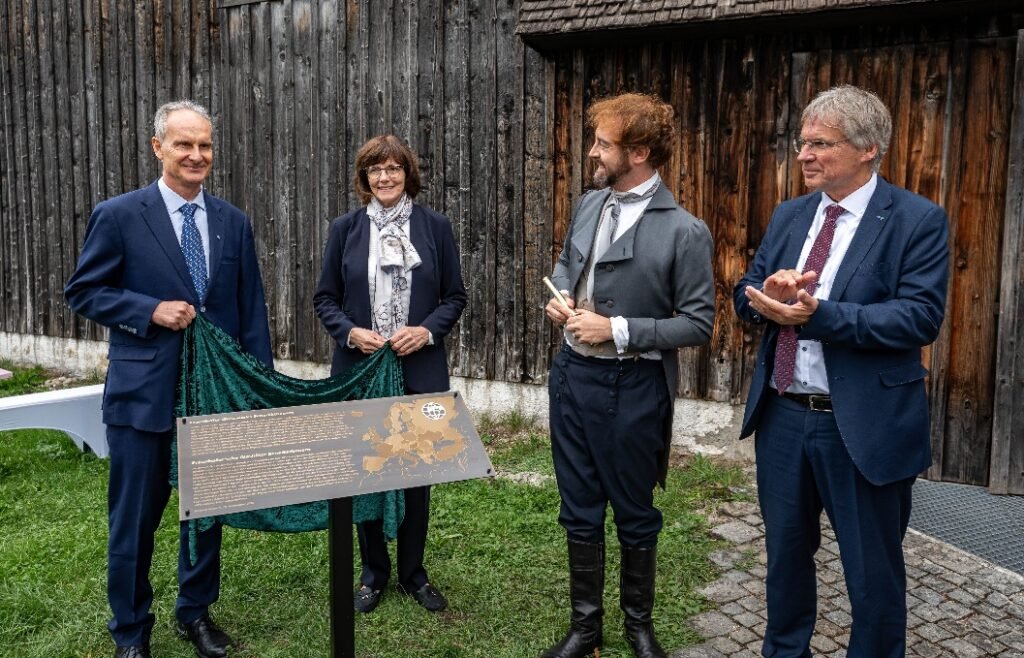
Unveiling of the commemorative plaque designating the site as an EPS Historic Site by Prof. Dr José María De Teresa, President of the European Physics Society; Prof. Dr Ulrike Woggon, member of the Executive Board of the German Physical Society; actor Andreas Bräu, playing the role of Joseph von Fraunhofer; and Prof. Dr-Ing Holger Hanselka, President of the Fraunhofer-Gesellschaft (from left to right) – © Marc Conzelmann/M8 Media House
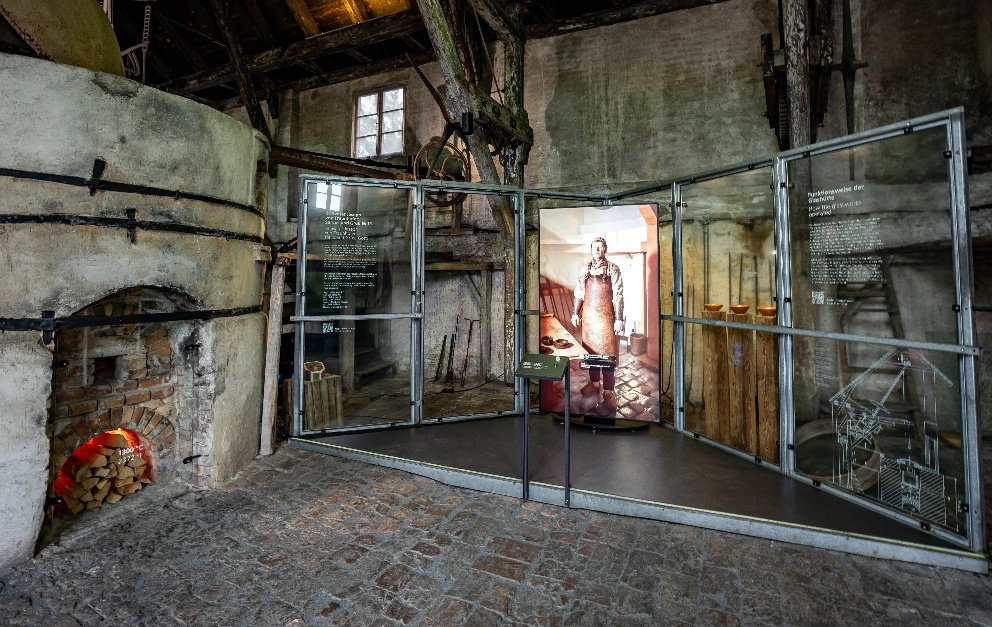
The glassworks now houses a museum. On display there are the old melting furnaces with their stirring mechanisms, as well as tools and optical exhibits from Fraunhofer’s workshop. An AI-based avatar of Joseph von Fraunhofer answers questions about his life and work. – © Marc Conzelmann/M8 Media House
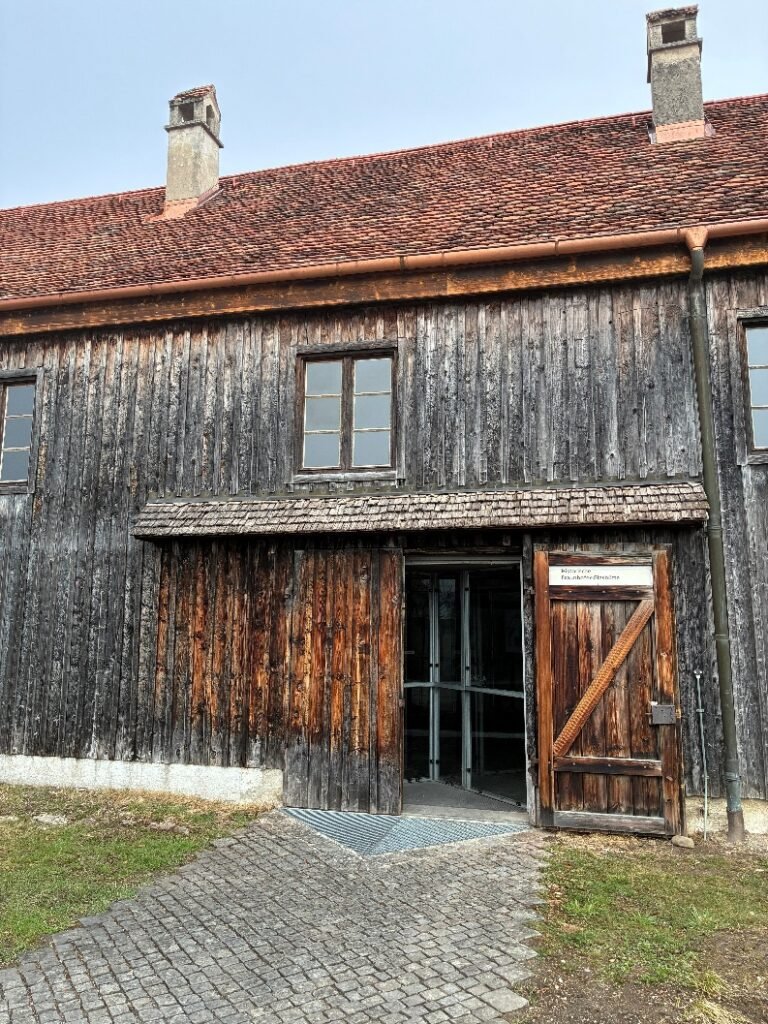
The glassworks in Benediktbeuern was severely damaged during a storm and subsequently underwent extensive renovation – © Fraunhofer-Gesellschaft