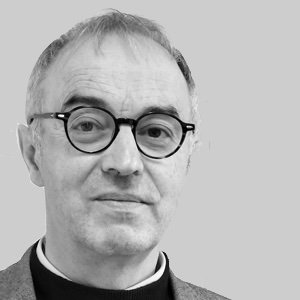
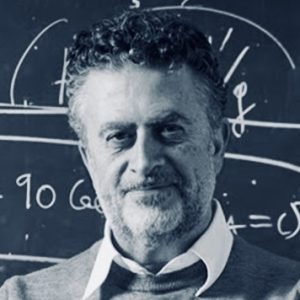
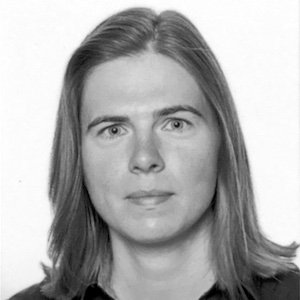
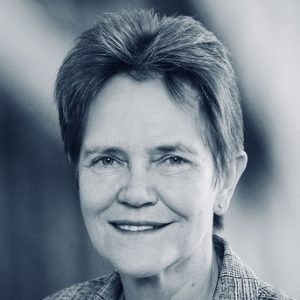
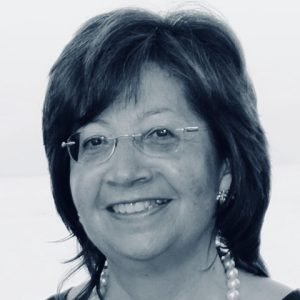
The Executive Committee is elected by Council for a two-year term. Members serve for a maximum of two terms. The Executive Committee meets four times a year and establishes priorities, reviews and develops budgets and pilots EPS activities. The EPS President, also elected by Council, chairs the Executive Committee meetings.
President
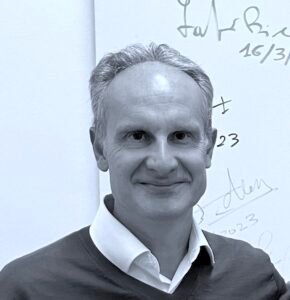
José María De Teresa
INMA, CSIC-Universidad de Zaragoza, Spain
Vice-president
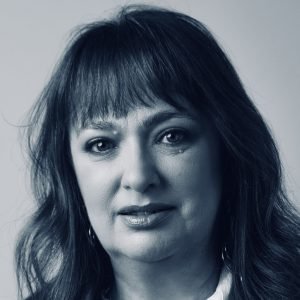
Mairi Sakellariadou
King’s College London, United Kingdom
Honorary Treasurer
Alessandra Fantoni
INFN – LNF, Frascati, Italy
Oversees: Albania, Croatia, Cyprus, Greece, Italy, Physics Education Division, Division of Physics in Life Sciences, Accelerators Group, EPJ / EPJ TI, e-EPS
Honorary Secretary
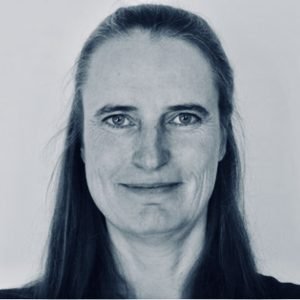
Katharina Lorenz
Instituto Superior Technico (IST), Lisbon, Portugal
Oversees: Turkey, Israel, Slovenia, EPS Conferences Committee, Statistical and Non-linear Physics Division, Environmental Physics Division, Computational Physics Group
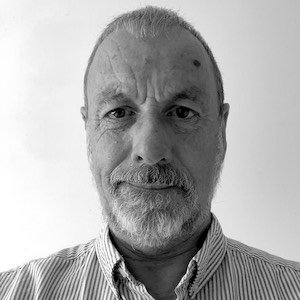
Brian Fulton
University of York, United Kingdom
Oversees: Denmark, Finland, Sweden, Estonia, Latvia, Lithuania, UK and Ireland, Equal Opportunities, Nuclear Physics Division, EPL
Gabriel Chardin
APC (Astroparticle and Cosmology laboratory, CNRS and Université Paris-Cité), France
Oversees: France, Forum Physics and Society, Quantum Electronics and Optics Division, Energy Group
Ulrich Husemann
Deutsches Elektronen-Synchrotron (DESY), Germany
Oversees: Iceland, Norway, Hungary, Slovakia, Young Minds, Europhysics News
Eugenio Coccia
Gran Sasso Science Institute, L’Aquila, Italy
Oversees: Bulgaria, Romania, Spain, Gravitational Physics Division, History of Physics
Sascha Schmeling
CERN, Geneva, Switzerland
Oversees: Liechtenstein, Switzerland, Austria, Armenia, Georgia, Moldova, Atomic Molecular and Optical Physics Division, Technology and Innovation Group
Oversees: Belgium, Luxembourg, Netherlands, Joint European Solar Physics Division, Energy Group
Karin Zach
Deutsche Physikalische Gesellschaft
Oversees:
Germany, Czech Republic, Poland, CEI
Anna Di Ciaccio
University of Roma Tor Vergata, Roma, Italy
Oversees: Republic of Macedonia (North), Montenegro, Serbia, High Energy and Particle Physics Division, Physics for Development Group
The Secretary General
Anne Pawsey
The Secretary General is a member of the Executive Committee and most Committees by virtue of her office.
The EPS Council
The EPS Council is held annually and reviews the activities of the Society, approves the annual accounts and discusses priorities for the future. Each of the 42 Member Societies is represented. The 12 Divisions and 6 Groups are also represented. Associate Members and Individual Members are represented by five elected delegates each.
Associate Members are represented in the EPS Council by 5 delegates elected from EPS Associate Members. Delegates are elected for one 4 years term. Elections are organised as necessary, normally every year between January and March. Only Associate Members are able to make nominations for Associate Member Delegates.
Individual Members are represented in the EPS Council by 5 delegates elected from EPS Individual Members. Delegates are elected for one 4 year term. Elections are organised as necessary, normally every year between January and March. Only Individual Members are able to make nominations for Individual Member Delegates.
EPS Annual Reports, Constitution, and Bylaws
Each Annual Activity Report describes the overall activity of the EPS during the year, provides a summary of the EPS accounts, and includes information regarding the members. Modifications to the EPS Constitution and Bylaws were made November 2023.
We serve cookies. If you think that's OK, just click "Accept all". You can also choose what kind of cookies you want by clicking "Settings".
Read our cookie policy